
What This Calculator Does
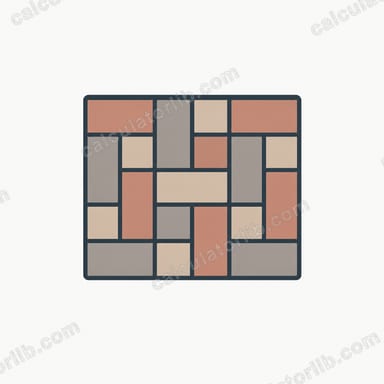
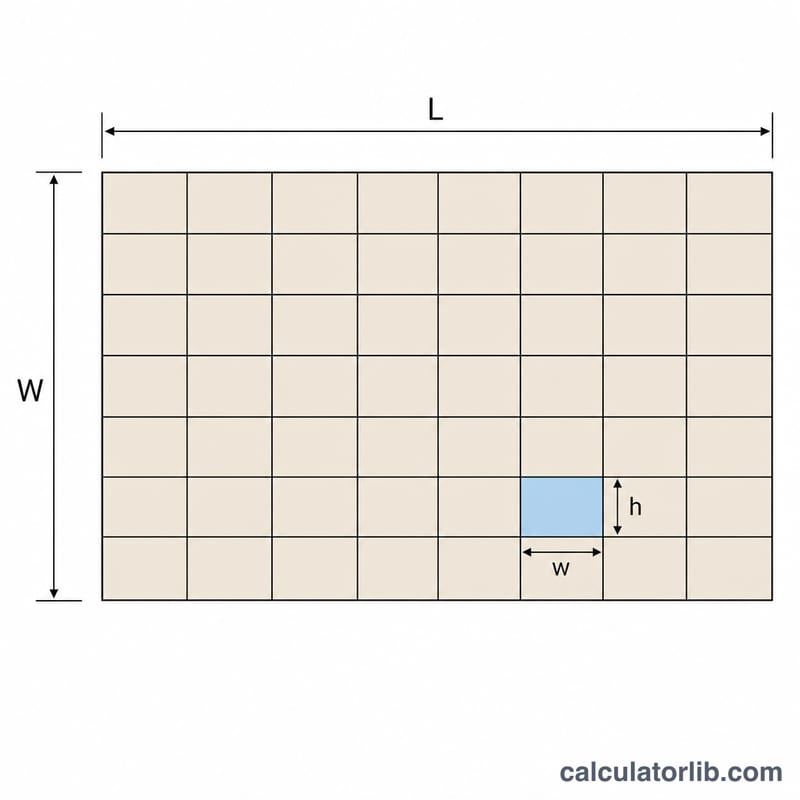
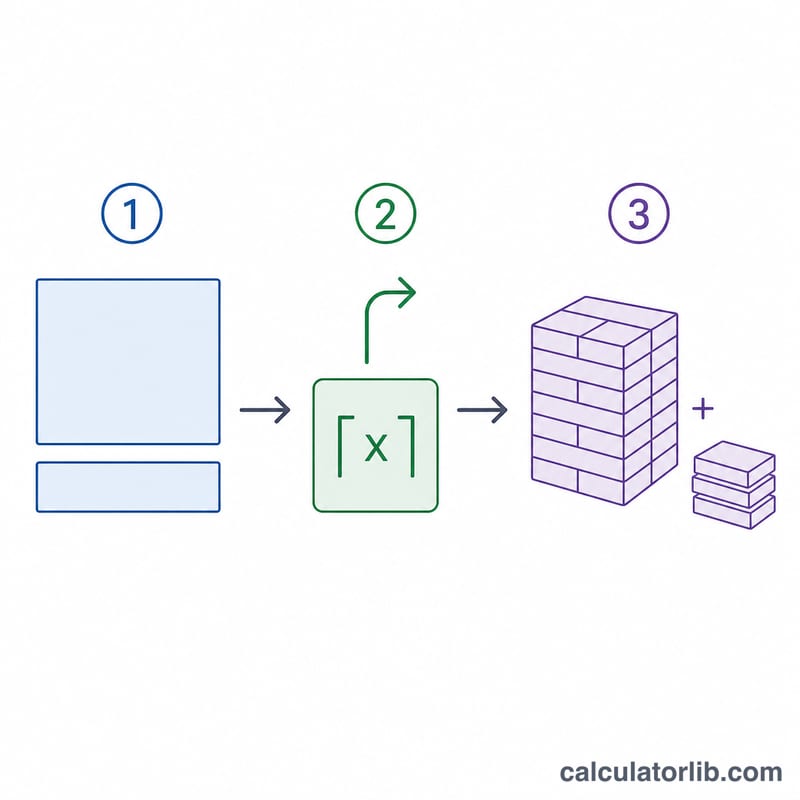
This tool tells you how many pavers you need to cover a rectangular patio. You enter the patio's length and width in feet and the dimensions of a single paver in inches. The calculator finds the total patio area, divides it by the area of one paver, and rounds up so you are never short. An optional waste/overage percentage adds extra units for cuts, breakage, and future repairs.
How to Use It
Measure your patio and enter the length and width in feet. Enter the length and width of one paver in inches (a common patio paver is 12 × 12 in). Add a waste percentage — 5% to 10% is typical for straight, rectangular layouts, and more for diagonal or herringbone patterns. The result shows the bare count and the recommended count with overage included.
The Formula Explained
Patio area equals length × width (square feet). Each paver's area is converted from inches to square feet: (paver length ÷ 12) × (paver width ÷ 12). The number of pavers is the patio area divided by the paver area, rounded up to the next whole paver because you cannot buy a fraction of one.
$$\text{Pavers} = \left\lceil \frac{\text{Length (ft)} \times \text{Width (ft)}}{\dfrac{\text{Paver L (in)}}{12} \times \dfrac{\text{Paver W (in)}}{12}} \times \left(1 + \frac{\text{Waste (\%)}}{100}\right) \right\rceil$$
Worked Example
A 12 ft × 10 ft patio has 120 sq ft. A 12 in × 12 in paver covers exactly 1 sq ft. So \(120 \div 1 = 120\) pavers. With 5% waste:
$$120 \times 1.05 = 126$$
rounded up to 126 pavers.
FAQ
Does this account for gaps or joints? No — it assumes pavers are laid edge to edge. If you use wide sand joints, the real count is slightly lower, but the small surplus acts as useful overage.
Why round up? Partial pavers must be cut from full ones, so you always buy whole units.
How much waste should I add? 5–10% for simple rectangular layouts, and 10–15% for diagonal or intricate patterns.