
What This Calculator Does
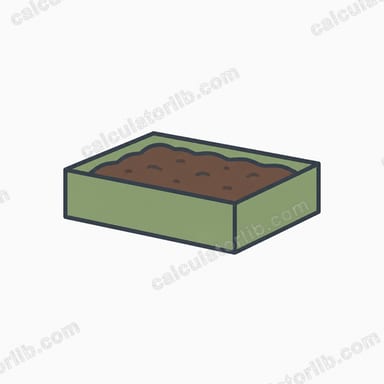
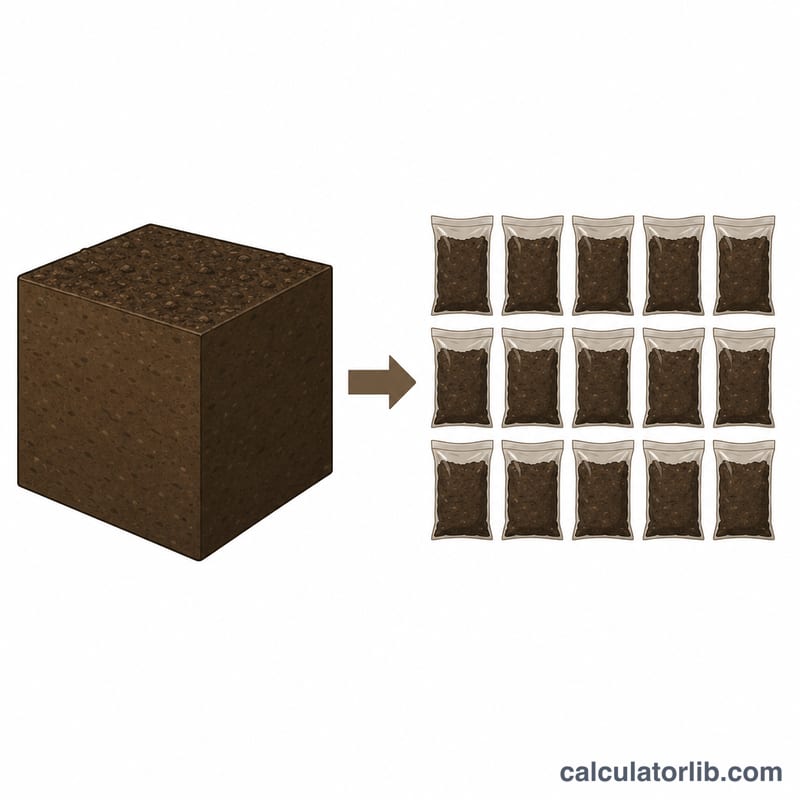
The Rectangular Raised Garden Bed Soil Calculator tells you exactly how much soil you need to fill a box-shaped raised bed. Enter the bed's length and width in feet and the soil depth in inches, and the tool returns the volume in cubic feet, cubic yards, the number of standard 1.5-cubic-foot bags, and liters so you can buy the right amount without overspending or running short.
How to Use It
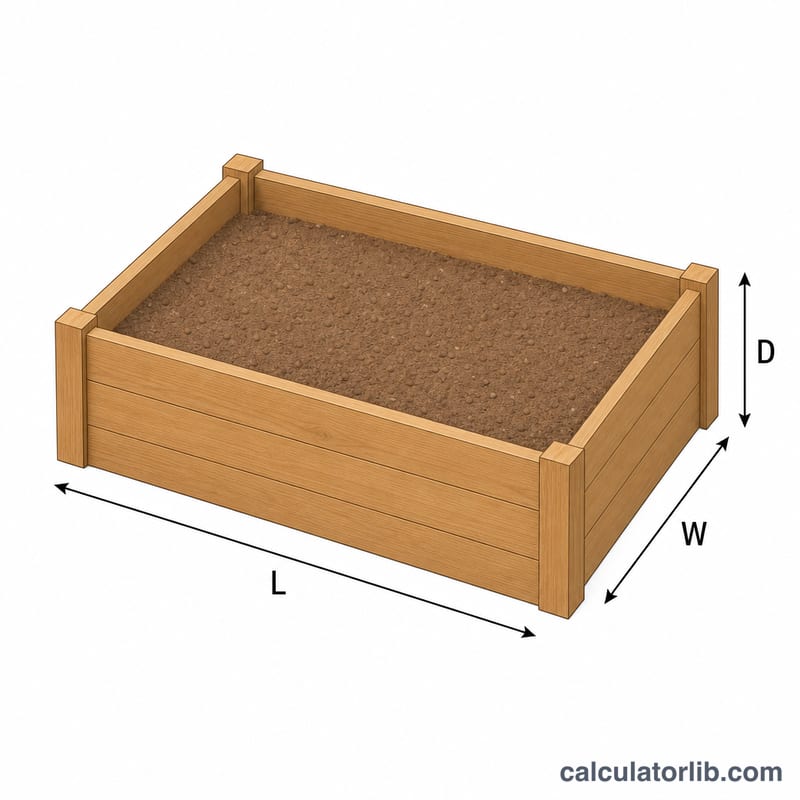
Measure the inside length and width of your bed in feet. Decide how deep you want to fill it with soil in inches — most vegetable beds use 8 to 12 inches. Type the three values and read your results instantly. Buying bagged soil? Use the "bags needed" row. Buying in bulk from a landscape supplier? Use the cubic yards figure.
The Formula Explained
Volume is length × width × depth. Since length and width are in feet but depth is entered in inches, the depth is divided by 12 to convert it to feet: $$V = L \times W \times \left(\frac{D}{12}\right)$$ The result is in cubic feet. Dividing cubic feet by 27 gives cubic yards, and dividing by 1.5 gives the count of common bags.
Worked Example
For an 8 ft × 4 ft bed filled 12 inches deep: depth in feet = \(12 \div 12 = 1\) ft. Volume:
$$V = 8 \times 4 \times 1 = 32 \text{ cubic feet}$$That is \(32 \div 27 \approx 1.19\) cubic yards, or \(32 \div 1.5 \approx 21.3\) bags of 1.5 cu ft soil.
FAQ
How deep should a raised bed be? For most vegetables and flowers, 8–12 inches of soil is plenty. Deep-rooted crops like carrots or tomatoes benefit from 12+ inches.
Should I fill the whole bed with soil? Many gardeners fill the bottom with cheaper material or compost and reserve premium soil for the top 8–12 inches, which can reduce the amount of soil you buy.
Why round up on bags? Soil settles and compresses, so it's wise to buy slightly more than the exact calculated amount.