
What This Calculator Does
This tool tells you how much topsoil to buy or move to fill a rectangular garden bed, raised bed, or planting area. By multiplying the bed's length, width and the desired soil depth, it returns the total volume in cubic metres and converts it to cubic yards so you can match supplier quotes regardless of the units they use.
How to Use It
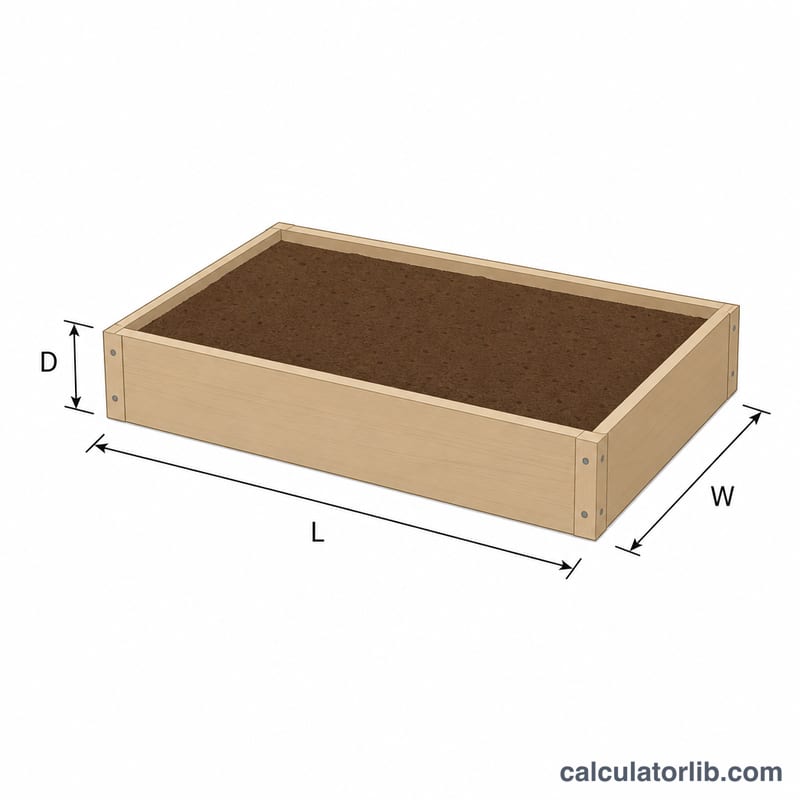
Measure your bed's length and width along the inside edges, in metres. Decide how deep you want the topsoil — typically 0.10–0.30 m for planting beds and lawns. Enter all three values and the calculator returns the volume instantly. For an irregular shape, split it into rectangles and add the results together.
The Formula Explained
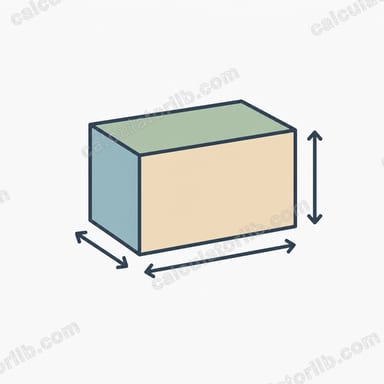
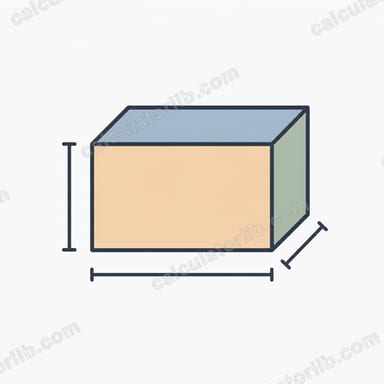
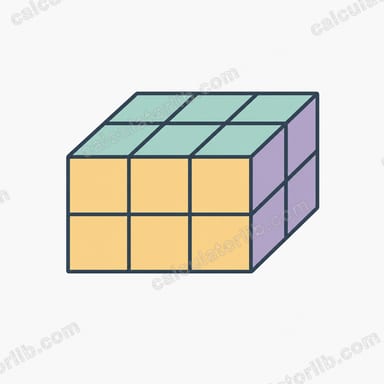
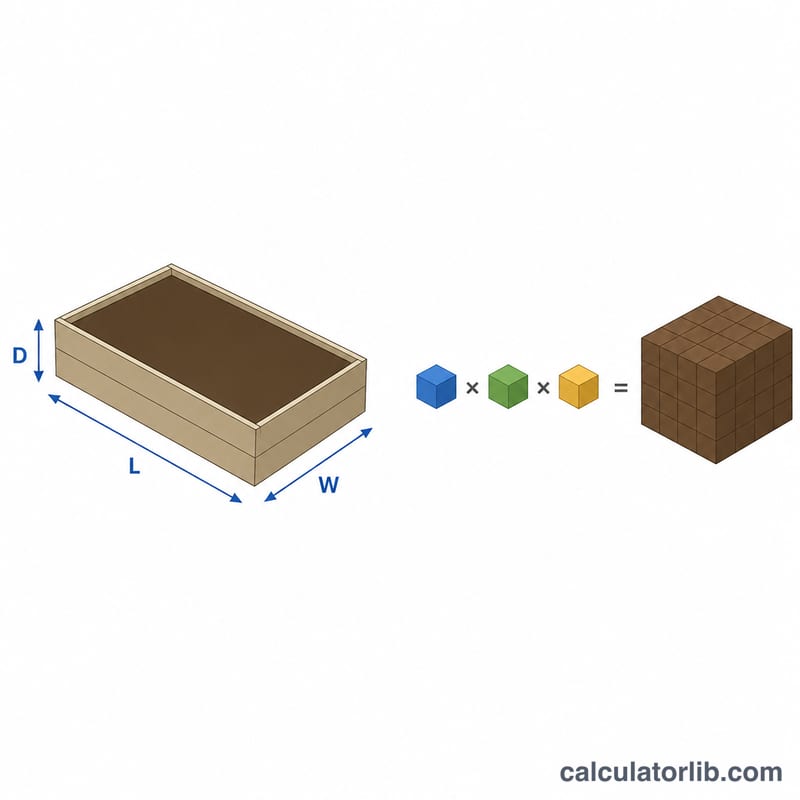
The volume of a rectangular box (a "cuboid") is simply $$V = \text{length} \times \text{width} \times \text{depth}$$ Because all three measurements are in metres, the answer comes out in cubic metres (m³). To express it in cubic yards, divide the cubic-metre result by \(0.764554857984\), since one cubic yard equals that many cubic metres.
Worked Example
Suppose your bed is 5 m long, 3 m wide, and you want 0.15 m (15 cm) of topsoil. Then $$V = 5 \times 3 \times 0.15 = 2.25 \text{ m}^3$$ Converting: \(2.25 \div 0.764554857984 \approx 2.94\) cubic yards. Ordering 2.25–2.5 m³ would comfortably cover the bed, allowing a little for settling.
FAQ
How deep should topsoil be? For lawns, 10–15 cm is common; for vegetable and flower beds, 20–30 cm gives roots room to grow.
Should I order extra? Yes — add about 5–10% for compaction and uneven ground so you don't fall short.
Can I use it for soil, compost or mulch? Absolutely. The geometry is the same for any loose fill material spread to a uniform depth.