
What Is Break-Even CPA?
Break-even cost per acquisition (CPA) is the maximum amount you can spend to acquire a single new customer without losing money on that sale. Spend less than the break-even CPA and the order is profitable; spend more and you lose money. It is one of the most important guardrails in paid advertising, helping marketers set bids, budgets, and target CPAs that protect the bottom line.
How to Use This Calculator
Enter two numbers: your average order value (AOV) — the typical revenue from one sale — and your profit margin as a percentage. The calculator multiplies them to reveal the gross profit per order, which is exactly the most you can afford to pay to win that customer at break-even.
The Formula Explained
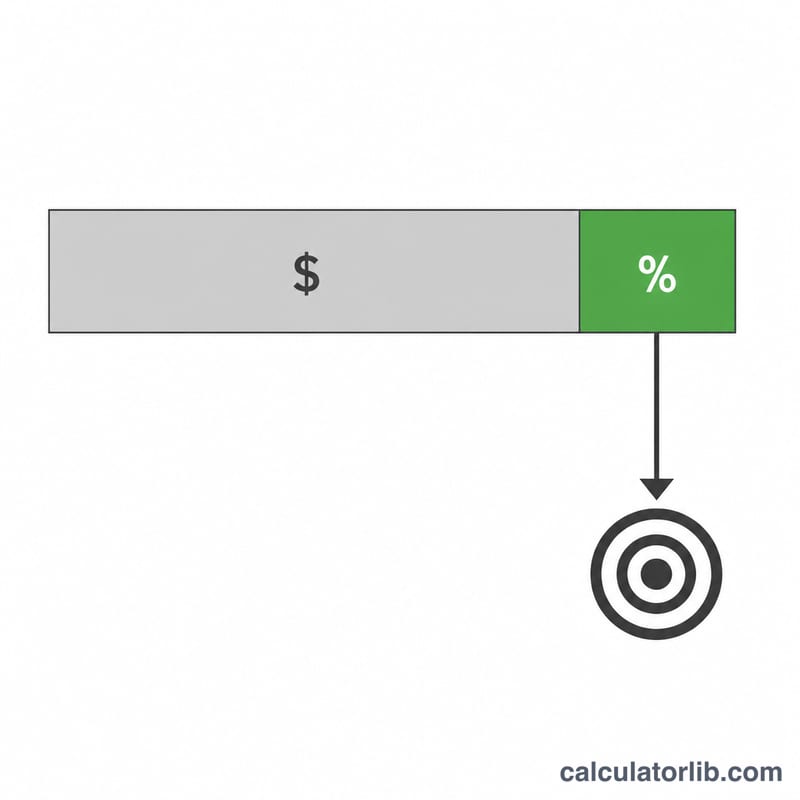
$$\text{Break-Even CPA} = \text{AOV} \times \frac{\text{Margin (\%)}}{100}$$ The profit margin captures everything left over after the cost of goods and delivery. Because acquisition cost comes out of that margin, the gross profit dollars per order set the ceiling for ad spend before you start losing money on each acquisition.
Worked Example
Suppose your store has an AOV of $120 and a 30% profit margin. Your gross profit per order is $$\$120 \times 0.30 = \$36$$ That means your break-even CPA is $36. If a campaign acquires customers for $30 each, you earn $6 profit per order; if it costs $45 each, you lose $9 per order.
Interpreting Your Break-Even CPA
Your break-even cost per acquisition (CPA) is the maximum amount you can spend to acquire one customer before that customer becomes unprofitable on their first order. It is calculated by multiplying your average order value (AOV) by your profit margin:
$$\text{Break-Even CPA} = \text{AOV} \times \frac{\text{Margin (\%)}}{100}$$
For example, with an AOV of $80 and a 35% profit margin, the break-even CPA is $28.00. This figure represents the gross profit generated by an average order — exactly the amount available to cover the cost of winning that customer.
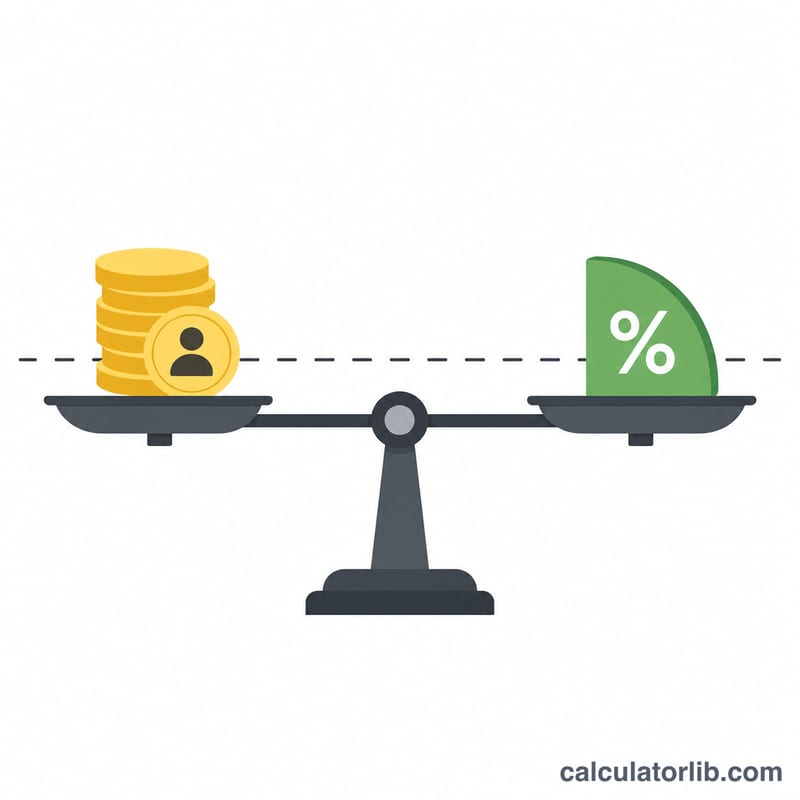
Think of break-even CPA as a ceiling, not a target:
- Actual CPA below break-even: Each acquired order contributes positive profit. If you spend $20 to acquire a customer whose order yields $28 in margin, you keep $8 per order.
- Actual CPA equal to break-even: You exactly recoup your acquisition cost with no profit and no loss on that order. All gross profit is consumed by marketing.
- Actual CPA above break-even: Each order loses money on a first-purchase basis. Spending $35 to acquire an order that produces only $28 in margin results in a $7 loss per order.
A sound practice is to set your target CPA below the break-even point, leaving a profit cushion. The gap between break-even CPA and your target CPA is the margin you retain after acquisition costs. The larger that gap, the more resilient your campaigns are to fluctuations in conversion rates, ad costs, and refunds. Businesses with strong repeat-purchase behavior or high customer lifetime value (LTV) sometimes accept a CPA close to — or temporarily above — first-order break-even, because future orders make the customer profitable over time. Without that repeat revenue, exceeding break-even erodes profit on every sale.
This is general educational information about how the metric works, not personalized financial advice. Validate inputs against your own accounting before making spending decisions.
Key Terms & Definitions
- Cost Per Acquisition (CPA)
- The total amount spent to acquire one paying customer or conversion, calculated as total acquisition cost divided by the number of customers acquired. Also called cost per acquisition or cost per action.
- Average Order Value (AOV)
- The average revenue generated per order over a given period, found by dividing total revenue by the number of orders. It is the top-line value of a typical purchase before costs are deducted.
- Profit Margin (Contribution Margin)
- The percentage of an order's value that remains after the variable costs of producing and delivering it (cost of goods, payment processing, shipping) are subtracted. In this calculator it is the share of AOV available to fund customer acquisition and contribute to fixed costs and profit.
- Break-Even CPA
- The maximum CPA at which an acquired order produces neither profit nor loss; equal to AOV multiplied by the profit margin. Spending more than this loses money on a first-order basis.
- Target CPA
- The planned or desired cost per acquisition you aim to stay at or below, set deliberately under the break-even CPA to preserve a profit margin on each acquired customer.
- Gross Profit Per Order
- The actual dollar profit from a single average order before acquisition spend, equal to AOV times the margin percentage. It is the same figure as the break-even CPA and is the pool of money from which acquisition costs are paid.
- Customer Lifetime Value (LTV)
- The total profit a business expects to earn from a customer across all of their purchases, not just the first. A high LTV can justify a higher first-order CPA because repeat orders recover the acquisition cost over time.
FAQ
Should I target my break-even CPA? No — aim below it. Break-even leaves zero profit, so set a target CPA under this figure to bank a margin.
Does this include repeat purchases? No. This is a single-order break-even. If customers buy repeatedly, use lifetime value (LTV) instead of AOV for a more generous allowable CPA.
What margin should I use? Use your contribution margin after product, shipping, and payment processing costs but before fixed overhead and ad spend.