
What Is Gross Profit?
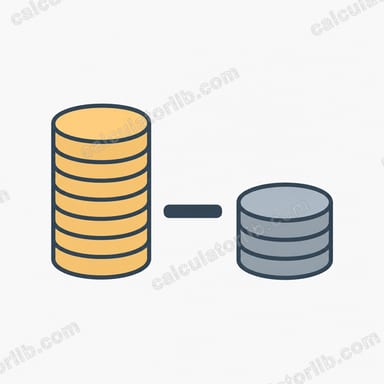
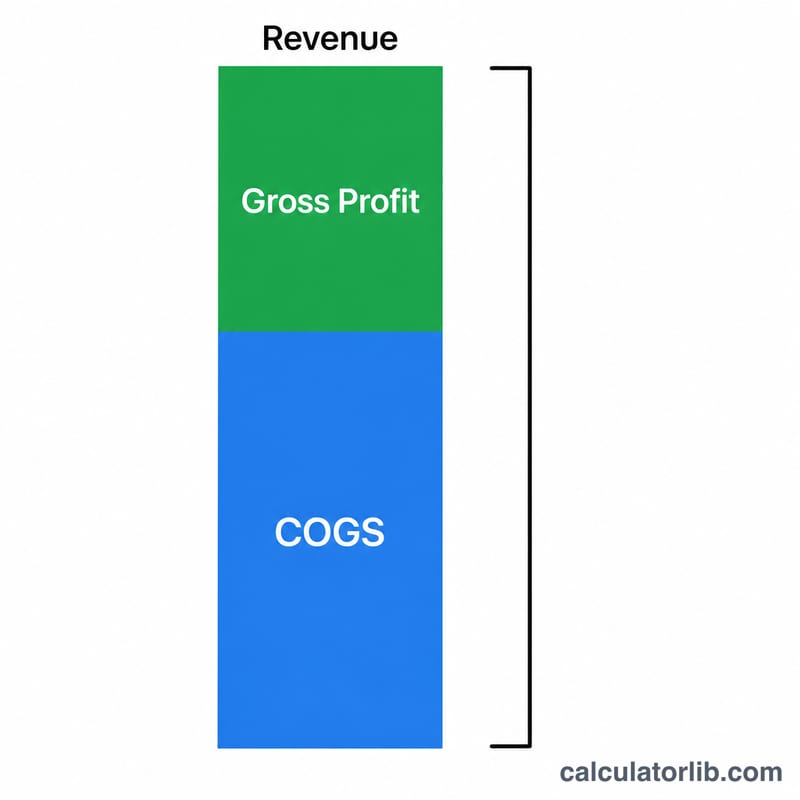
Gross profit is the money a business keeps from sales after paying for the direct costs of producing the goods or services it sold. It is one of the most fundamental measures of profitability and appears near the top of every income statement. The formula is simple: subtract the cost of goods sold (COGS) from total revenue.
How to Use This Calculator
Enter your total Revenue (sales income for the period) and your Cost of Goods Sold (direct costs such as materials, manufacturing labor, and freight in). The calculator instantly returns your gross profit in dollars and your gross profit margin as a percentage of revenue.
The Formula Explained
Gross Profit = Revenue − COGS. To express it as a margin, divide gross profit by revenue and multiply by 100. A higher margin means more of every sales dollar is retained to cover operating expenses, taxes, and net profit.
$$\text{Gross Profit} = \text{Revenue} - \text{COGS}$$
$$\text{Margin} = \frac{\text{Revenue} - \text{COGS}}{\text{Revenue}} \times 100$$
Worked Example
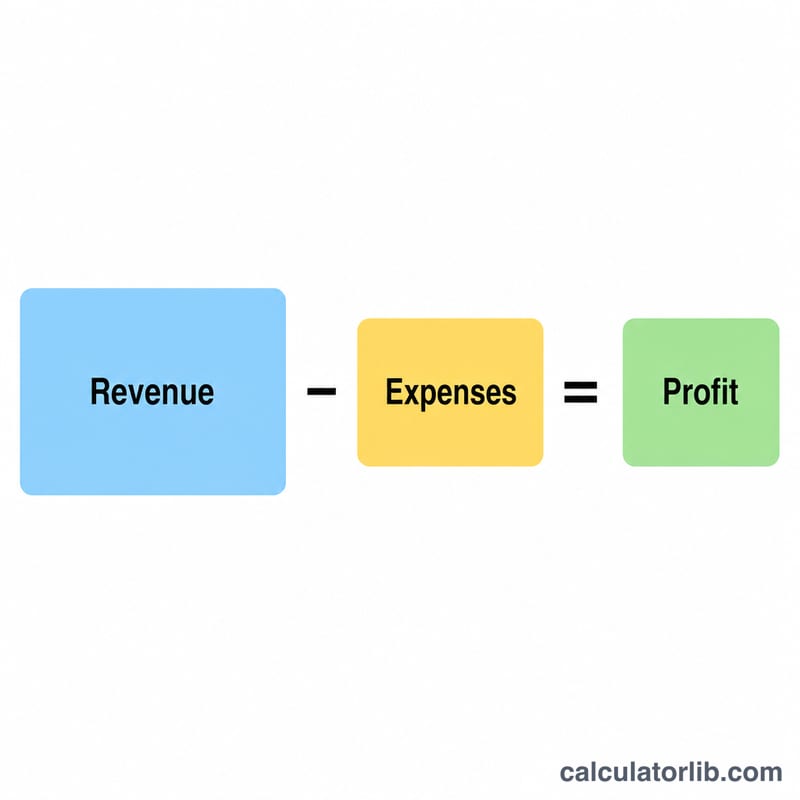
Suppose a shop earns $10,000 in revenue and spends $6,000 on the products it sold. Gross profit \(= \$10{,}000 - \$6{,}000 = \$4{,}000\). The gross profit margin \(= (\$4{,}000 \div \$10{,}000) \times 100 = 40\%\). That means the business keeps 40 cents of every dollar in sales before covering overhead.
FAQ
Does gross profit include operating expenses? No. Gross profit only subtracts the direct cost of goods. Rent, salaries, marketing, and taxes are deducted later to reach operating and net profit.
What is a good gross profit margin? It varies by industry. Software firms can exceed 70%, while grocery retailers may run under 25%. Compare against peers in your sector.
Can gross profit be negative? Yes. If COGS exceeds revenue, gross profit is negative, signaling that products are being sold below their direct cost.