
What Is the Cake Pricing Calculator?
Pricing a cake is one of the trickiest parts of running a home or professional bakery. Charge too little and you lose money on every order; charge too much without justification and customers walk away. This calculator gives you a clear, repeatable price by adding up your ingredient cost, the value of your time, your overhead, and a profit markup. The result is a number you can defend and use consistently across every cake you sell.
How to Use It
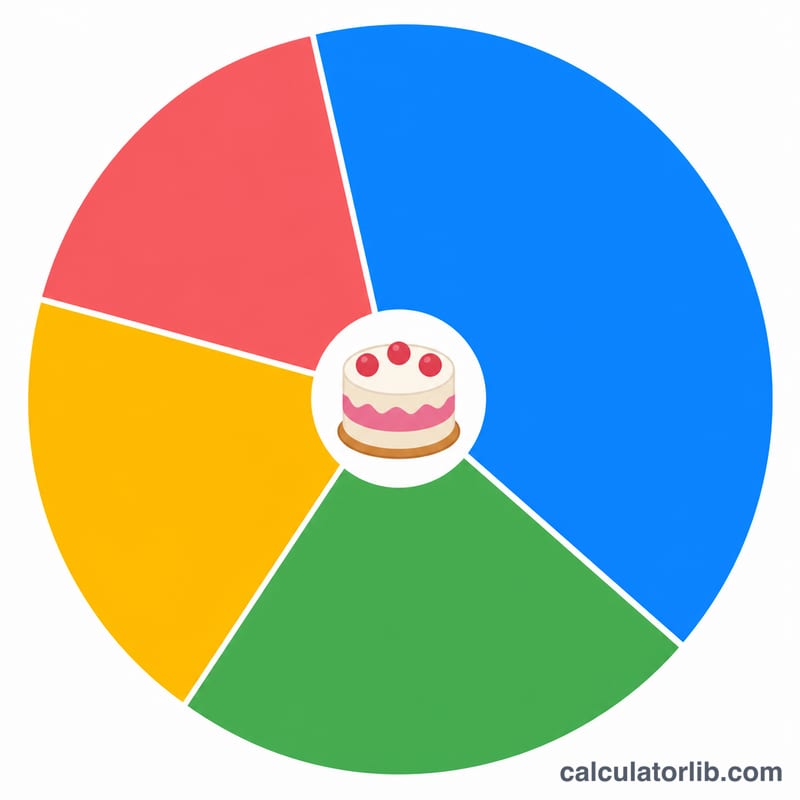
Enter five values: the total ingredient cost for the cake, the number of labor hours you spend baking and decorating, your hourly rate, your overhead (electricity, equipment wear, packaging, rent share, etc.), and the profit markup percentage you want on top of your base cost. The calculator returns the recommended price plus a breakdown of labor, base cost, overhead, and profit so you can see exactly where the money goes.
The Formula Explained
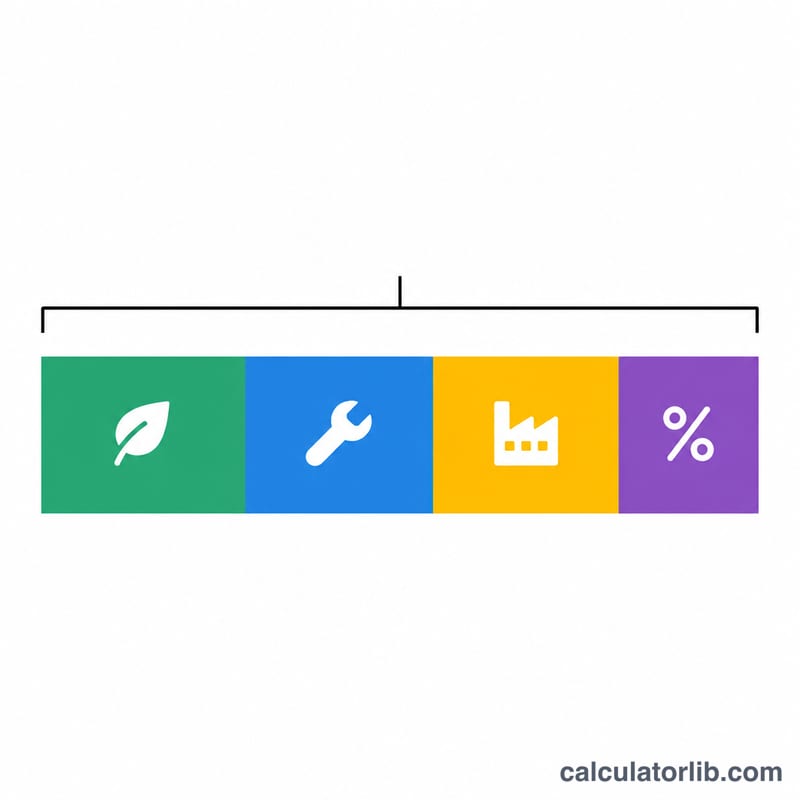
First the base cost is the ingredients plus labor, where labor equals hours times rate. Overhead is added on top. The profit markup is calculated as a percentage of the base cost (ingredients + labor) and added last:
$$\text{Price} = (\text{Ingredients} + \text{Labor}) + \text{Overhead} + \frac{\text{Markup\%}}{100}\times(\text{Ingredients} + \text{Labor})$$
Worked Example
Suppose ingredients cost $20, you spend 3 hours at $25/hour, overhead is $10, and you want a 30% markup. Labor = \(3 \times 25 = \$75\). Base cost = \(20 + 75 = \$95\). Profit = \(30\% \times 95 = \$28.50\). Total cost = \(95 + 10 = \$105\). Final price = \(105 + 28.50 =\) $133.50.
Practical Pricing Tips
The calculator gives you a defensible base number — these habits turn that number into a price that protects your time and your margins.
- Round up to a clean price. If the formula returns $120.50, charge $125, not $120. Rounding up captures small costs you forgot and makes quoting and change easier. Never round down — that comes straight out of your profit.
- Build overhead into your hourly rate (or charge it separately, not neither). The most common pricing mistake is undercharging for time. Decide whether recurring costs live in your hourly rate or in the overhead field, then be consistent so you never accidentally leave them out.
- Charge a deposit on custom orders. For wedding and specialty cakes, collect 25–50% up front to cover ingredient purchases and reserve the date. Make the deposit non-refundable inside a stated cancellation window so a late cancellation doesn't leave you out of pocket.
- Price large and tiered cakes per serving. Quoting a per-serving rate (commonly a few dollars per serving for standard cakes, more for sculpted or fondant work) scales cleanly and is easy for clients to compare. Multiply your per-serving rate by the guest count, then sanity-check it against the full ingredient-plus-labor calculation.
- Re-run your prices when costs change. Butter, eggs, flour and chocolate prices move with the market. Review your ingredient cost at least seasonally and re-price; a 20% jump in dairy can quietly erase your entire markup if your prices stand still.
- Track your real labor time. Time a few bakes honestly — including shopping, baking, decorating and cleanup. Most bakers dramatically underestimate hours, which is the single biggest source of unprofitable orders.
- Set a minimum order price. Small custom cakes can take nearly as long as large ones; a floor (for example, a minimum charge per custom cake) ensures even small jobs are worth your time.
This is general business information, not professional financial advice. Your local cost of living, licensing requirements and market will affect the right numbers for you.
FAQ
Should overhead be marked up too? In this model markup is applied only to ingredients and labor, then overhead is added separately. You can fold overhead into your hourly rate if you prefer to mark it up as well.
What markup should I use? Many bakers use 20–40% profit on top of costs, but this varies by market, skill, and demand.
Do I include my own labor if I'm a hobbyist? Yes — always value your time, even at a modest rate, so pricing stays sustainable if you grow.