
What Is a Checkbook Balance Calculator?
A checkbook balance calculator helps you reconcile your account register by taking your starting balance, adding up every deposit, and subtracting every withdrawal or check written. The result is your current available balance — the real amount of money you have to spend. Keeping an accurate running balance protects you from overdraft fees and bounced checks.
How to Use It
Enter three numbers: your starting balance (the figure from your last reconciliation or statement), your total deposits (paychecks, transfers, and any money added), and your total withdrawals (checks, debit purchases, ATM cash, and fees). Click calculate to see your current balance and the net change for the period.
The Formula Explained
The math is straightforward addition and subtraction:
$$\text{Balance} = \text{Starting Balance} + \sum(\text{deposits}) - \sum(\text{withdrawals})$$
The \(\Sigma\) (sigma) symbol simply means "the sum of." Add together every deposit, add the total to your starting balance, then subtract the sum of every withdrawal. The calculator also reports the net change, which is total deposits minus total withdrawals — a positive number means your balance grew.
Worked Example
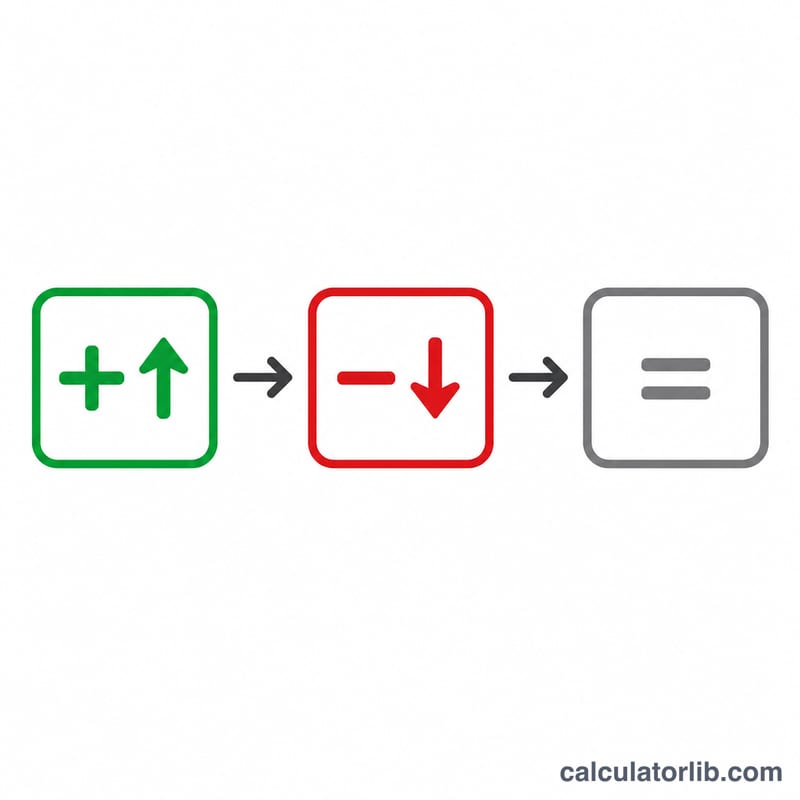
Suppose your last statement showed a starting balance of $1,000. During the month you deposited two paychecks totaling $500, and you withdrew $300 in checks and debit purchases. Your current balance is:
$$\$1{,}000 + \$500 - \$300 = \mathbf{\$1{,}200}$$ The net change for the month is $$\$500 - \$300 = +\$200$$
FAQ
Should I include pending transactions? Yes — for the most accurate "available" balance, include any deposits and withdrawals you know about, even if they have not yet cleared the bank.
What if my result is negative? A negative balance means you have spent more than you have, which can trigger overdraft fees. Add a deposit or pause spending until the balance is positive.
How is this different from my bank's balance? Banks may show a "ledger" balance that excludes pending items. Your reconciled checkbook balance accounts for everything you have recorded, so it is often the more reliable figure.