
What Is the Flooring Square Footage Calculator?
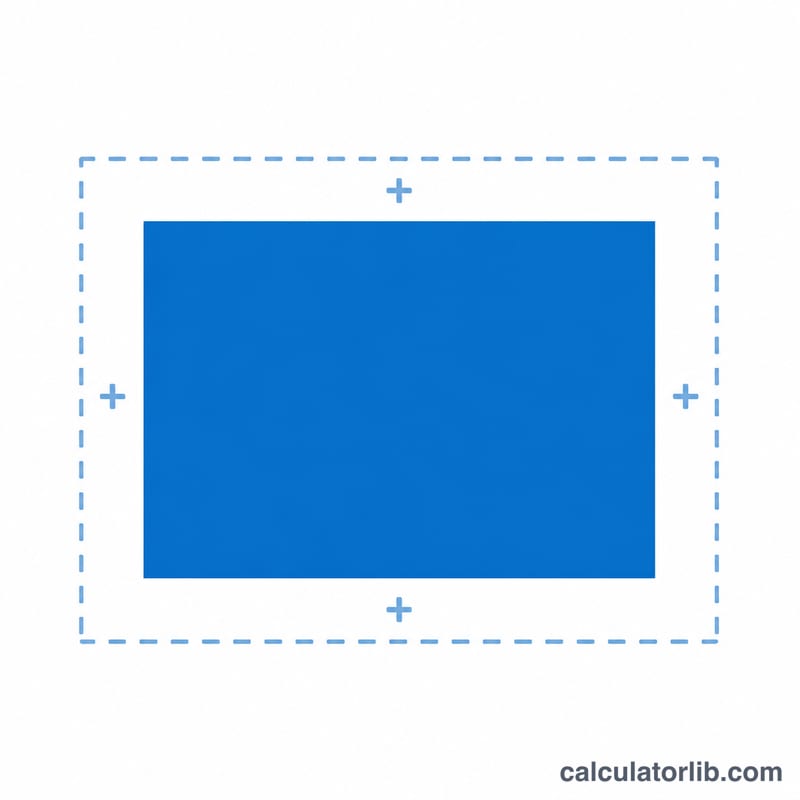
This calculator estimates how much flooring material you need for a room, including a waste allowance for cuts, mistakes, and pattern matching. Enter the room's length and width plus an expected waste percentage, and it returns both the base floor area and the recommended purchase quantity.
How to Use It
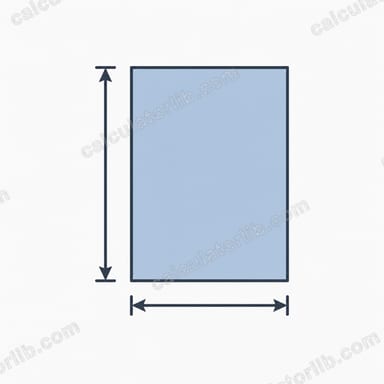
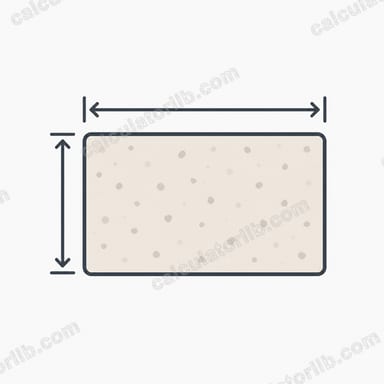
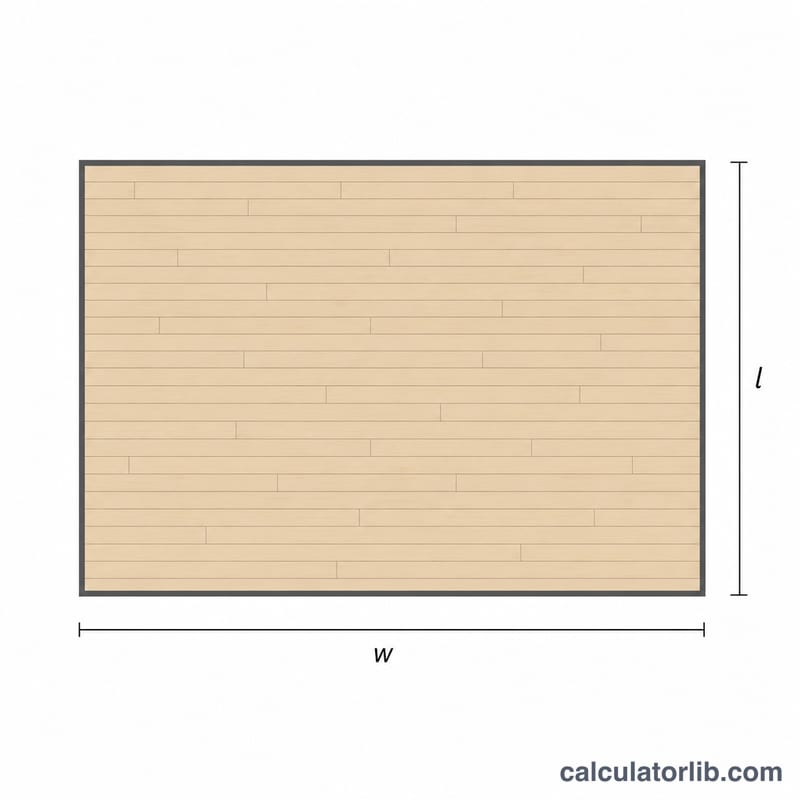
Measure the room's length and width in feet. Enter both values. Set a waste percentage — 10% is standard for simple rectangular rooms, while diagonal layouts, herringbone patterns, or rooms with many angles may need 15–20%. The calculator multiplies length by width to get the base area, then adds your waste factor to give the total square footage to buy.
The Formula
The math is straightforward:
$$\text{Area} = \text{Length} \times \text{Width}$$
$$\text{Total with Waste} = \text{Area} \times \left(1 + \frac{\text{Waste\%}}{100}\right)$$
The waste factor ensures you have extra material on hand, which is important because dye lots can vary between purchases and running short mid-project causes delays.
Worked Example
Suppose a room is 12 ft long and 10 ft wide with a 10% waste allowance. The base area is $$12 \times 10 = 120 \text{ sq ft}.$$ Adding 10% waste: $$120 \times 1.10 = 132 \text{ sq ft}.$$ You should buy approximately 132 square feet of flooring.
FAQ
How much waste should I add? Use 10% for straight-lay installations in square rooms, 15% for diagonal patterns, and up to 20% for complex layouts or expensive material where a future repair stock matters.
Should I buy whole boxes? Yes. Flooring is sold by the box, so round the total up to the next full box and keep a few spare planks for repairs.
Does this work for any flooring type? Yes — laminate, hardwood, vinyl, and tile all use square footage. Just adjust the waste percentage to suit the material and pattern.