
What Is the Wall Square Footage Calculator?
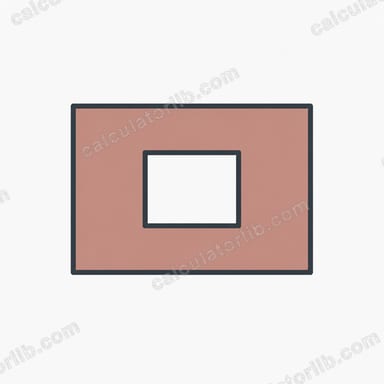
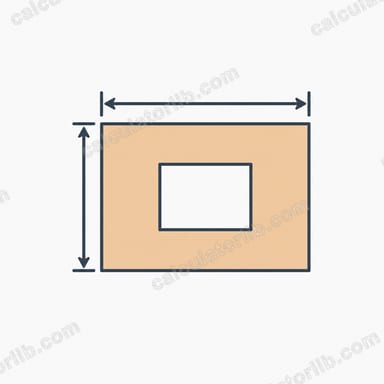
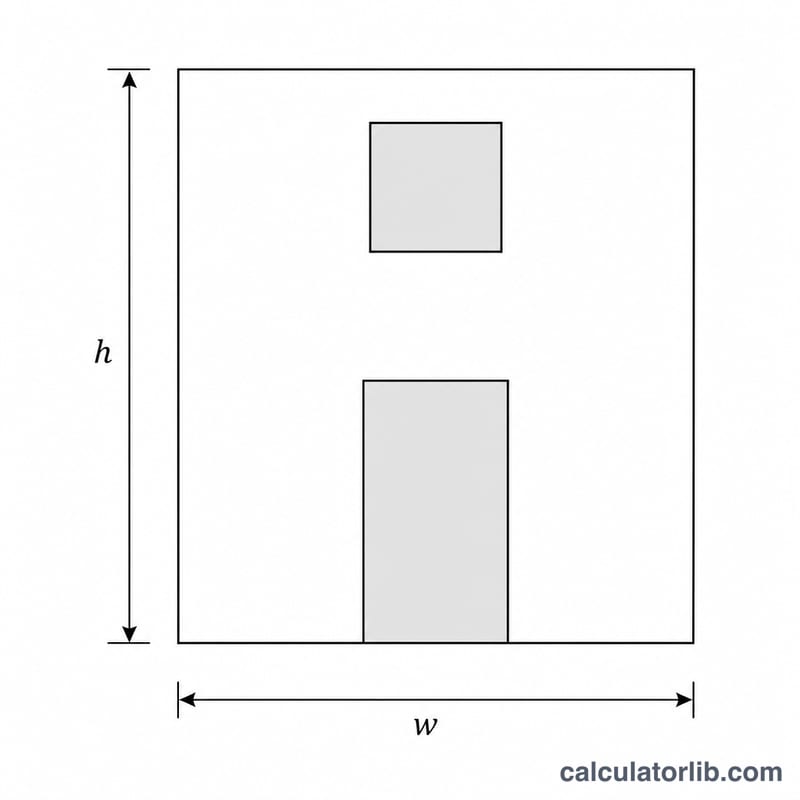
This tool finds the usable surface area of a wall in square feet. It multiplies the wall's width by its height to get the gross area, then subtracts the area taken up by doors, windows, and other openings. The result is the net square footage you actually need to paint, tile, panel, or cover with wallpaper.
How to Use It
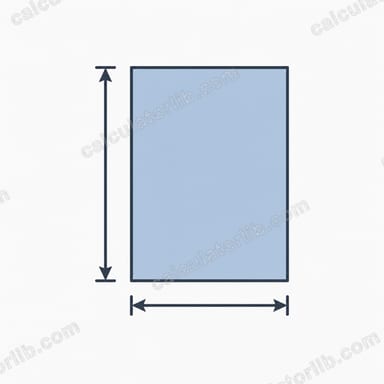
Measure your wall's width and height in feet and enter both values. Then add the combined area of any openings — for a standard door that is roughly 21 sq ft (3 ft \(\times\) 7 ft) and a typical window around 12 sq ft (4 ft \(\times\) 3 ft). Add them together for the total openings figure. Leave openings at 0 for a solid wall.
The Formula Explained
The calculation is straightforward:
$$\text{Area} = (\text{Width} \times \text{Height}) - \text{Openings}$$Width \(\times\) Height gives the full rectangular face of the wall. Subtracting the openings removes the regions you don't need material for, giving an accurate estimate that avoids over-buying paint or wallpaper.
Worked Example
Suppose a wall is 12 ft wide and 9 ft tall, with one door (21 sq ft) and one window (12 sq ft). Gross area:
$$12 \times 9 = 108 \text{ sq ft}$$Openings:
$$21 + 12 = 33 \text{ sq ft}$$Net area:
$$108 - 33 = \mathbf{75} \textbf{ sq ft}$$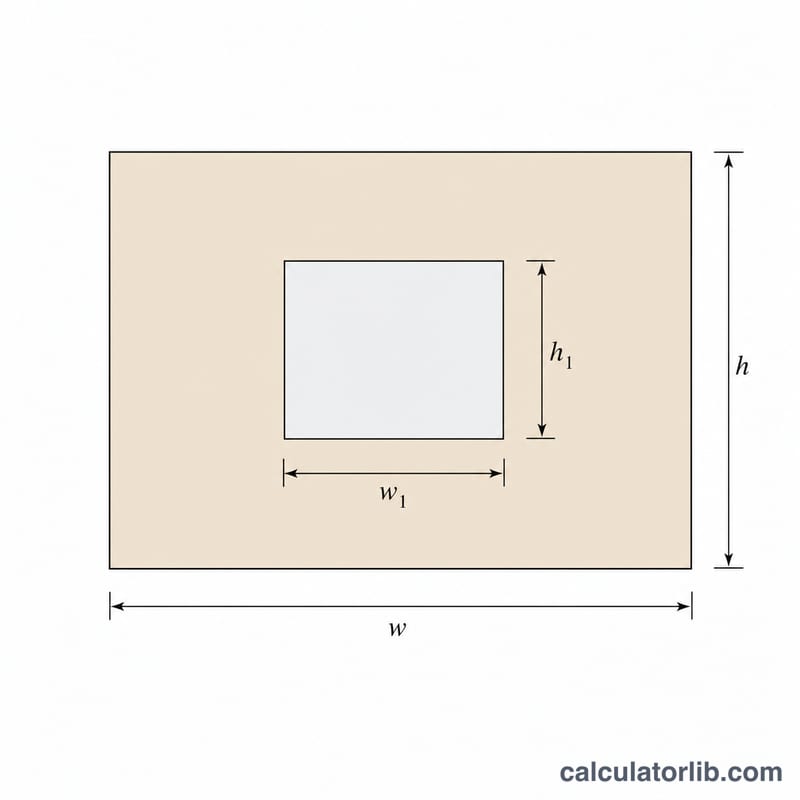
FAQ
Should I subtract small openings? For paint estimates, many people skip openings under about 10 sq ft to add a small buffer. For tile or expensive wallpaper, subtract everything.
What units does this use? All measurements are in feet, and the result is in square feet. Convert inches to feet by dividing by 12 before entering.
How do I handle multiple walls? Calculate each wall separately and add the net areas, or treat one combined width if heights are equal.