What Is a Square Footage Calculator?
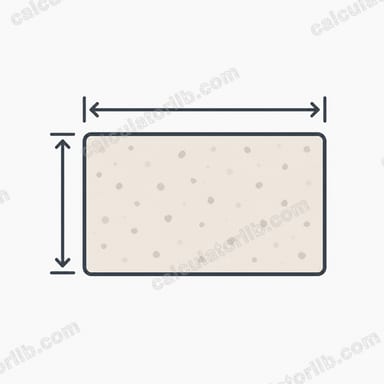
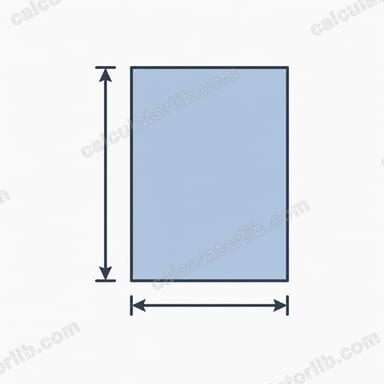
A square footage calculator finds the area of a rectangular space by multiplying its length by its width. Square footage (sq ft or ft²) is the standard measure of floor area used in real estate, construction, flooring, painting, and landscaping projects across many countries that use imperial units. Knowing the exact area helps you buy the right amount of materials and estimate costs accurately.
How to Use It
Measure the length and width of your room or space in feet. Enter both values and the calculator returns the total area in square feet, along with handy conversions to square yards and square meters. For an L-shaped or irregular space, split it into rectangles, calculate each separately, and add the results together.
The Formula Explained
The core formula is simply $$\text{Area} = \text{Length} \times \text{Width}$$ If a room is 12 feet long and 10 feet wide, the area is \(12 \times 10 = 120\) square feet. To convert to square yards, divide by 9 (since one yard equals 3 feet, one square yard equals 9 square feet). To convert to square meters, multiply by \(0.09290304\).

Worked Example
Suppose a living room measures 15 feet by 20 feet. The area is \(15 \times 20 = \) 300 square feet. That equals \(300 \div 9 \approx 33.33\) square yards, or \(300 \times 0.0929 \approx 27.87\) square meters. If carpet costs $4 per square foot, you would budget around $1,200 for the room.

Practical Tips for Ordering Materials
Once you know the area from length × width, these habits help you buy the right amount of flooring, tile, carpet, paint or sod.
- Add a waste allowance. Add about 5-10% extra for straight-lay flooring and 10-15% for diagonal or patterned layouts. The extra covers cuts, damaged pieces and future repairs.
- Round up to full boxes or rolls. Materials are sold in whole units, so never round down. Divide the total area (including waste) by the coverage per box, then round up.
- Check coverage per box. Coverage varies by product, for example 20 sq ft in one box of planks and 12 sq ft in a box of tile. Read the label rather than assuming.
- Measure at the longest points. Walls are rarely perfectly square, so measure the longest length and width. Double-check each measurement, ideally twice or with a second person.
- Account for closets and alcoves. Measure them separately and add their areas to the main room. Include them if the material will run through them.
Example: a 12 ft × 15 ft room is \(12 \times 15 = \) 180 sq ft. With a 10% waste allowance, order \(180 \times 1.10 = 198\) sq ft. If a box covers 20 sq ft, \(198 \div 20 = 9.9\), so buy 10 boxes.
This is general guidance. Always follow the manufacturer's instructions and your installer's advice.
Typical Room Sizes in Square Feet
The table lists approximate, commonly seen room dimensions. They are typical values for illustration, not a formal standard. Actual rooms vary widely by home and region, so always measure your own space.
| Room type | Typical dimensions (ft) | Approx. area (sq ft) |
|---|---|---|
| Bathroom | 5 × 8 | 40 |
| Small bedroom | 10 × 10 | 100 |
| Kitchen | 10 × 12 | 120 |
| Master bedroom | 14 × 16 | 224 |
| Single-car garage | 12 × 20 | 240 |
| Living room | 15 × 20 | 300 |
Each area is length × width. For example, a 14 ft × 16 ft master bedroom is \(14 \times 16 = \) 224 sq ft.
FAQ
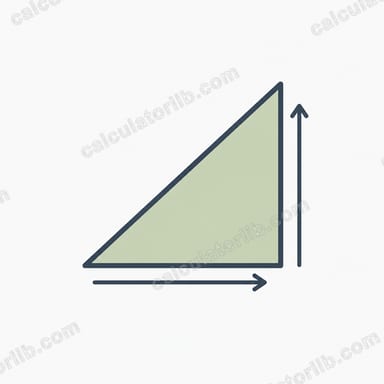
How do I measure square footage of an odd-shaped room? Break the space into rectangles, find each area, and sum them. For triangular sections, use \(\frac{1}{2} \times \text{base} \times \text{height}\).
Why convert to square yards? Carpet and some flooring are often sold by the square yard, so the conversion helps with ordering.
Does this include walls or ceilings? No — this calculates floor area only. For painting walls, multiply wall length by ceiling height for each wall.