What Is the Square Feet to Linear Feet Calculator?
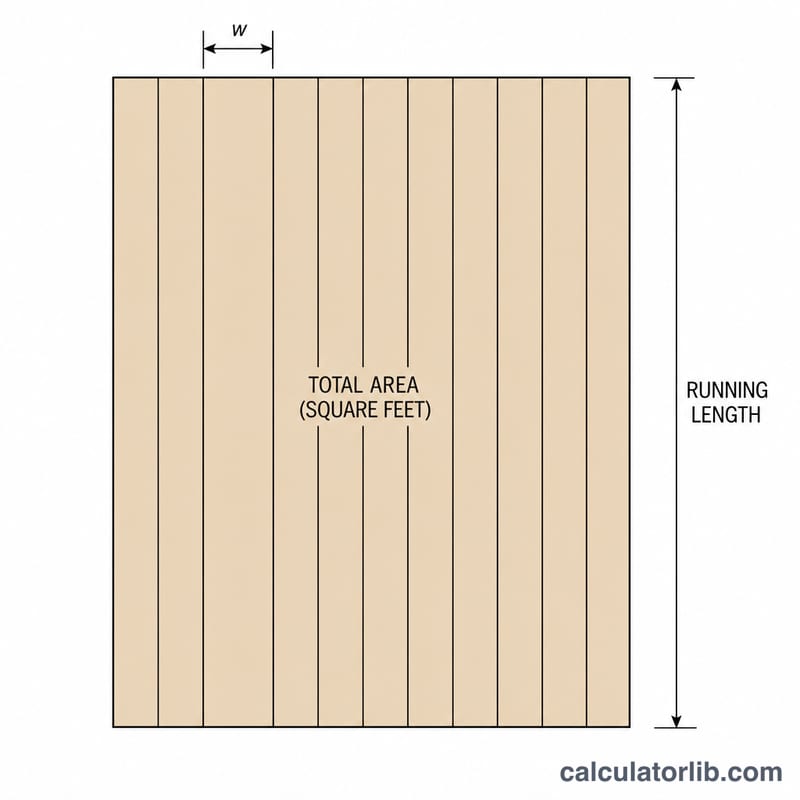
This calculator converts a coverage area measured in square feet into the linear feet of material you need, based on the width of the boards or planks. It is useful for flooring, decking, fencing, paneling, and lumber projects where products are sold by the linear foot but you know your area in square feet.
How to Use It
Enter the total area in square feet you want to cover, then enter the board width in inches (the actual face coverage of a single board or plank). The calculator returns the total linear feet of material required. Remember to add a waste allowance (typically 5–10%) for cuts, defects, and pattern matching.
The Formula Explained
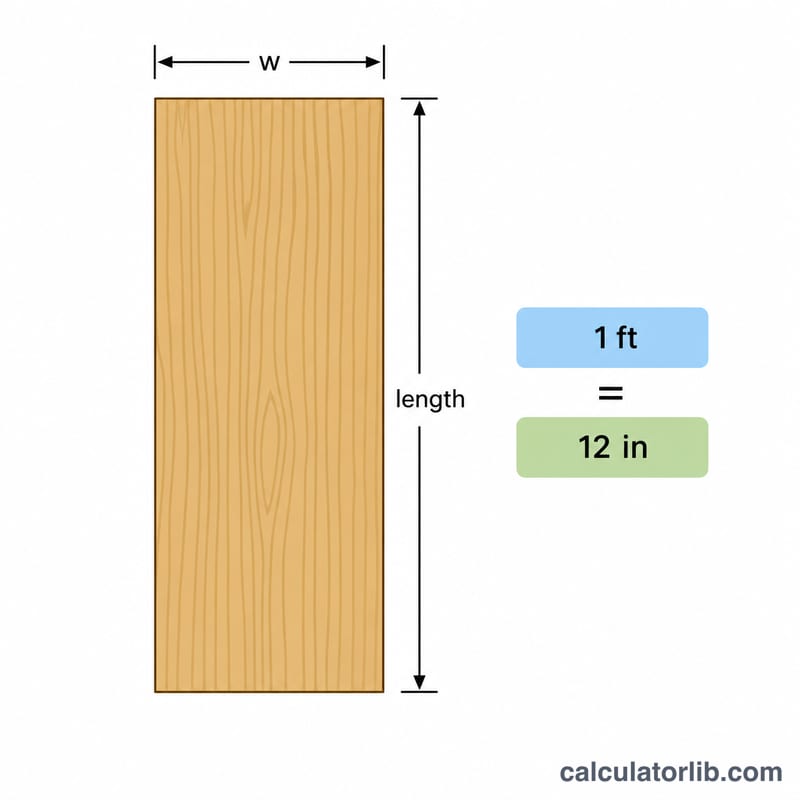
The conversion relies on a simple relationship. One square foot equals 144 square inches. A board that is w inches wide covers w square inches per inch of length. The formula is:
$$\text{Linear Feet} = \frac{\text{Area (sq ft)} \times 12}{\text{Board Width (in)}}$$
The factor 12 converts feet to inches in the numerator so the units cancel cleanly, leaving an answer in feet.
Worked Example
Suppose you need to cover 200 square feet of floor with planks that are 5 inches wide. $$\text{Linear Feet} = \frac{200 \times 12}{5} = \frac{2400}{5} = \textbf{480 linear feet}$$ If your boards come in 8-foot lengths, that is about 60 boards before adding waste.
Nominal vs. Actual Board Widths
The single biggest source of error in a square-feet-to-linear-feet conversion is using the nominal board size (the name on the label) instead of the actual width the board really covers. In the United States, softwood lumber is milled to the dimensions set by Voluntary Product Standard PS 20, American Softwood Lumber Standard, which is why a "2x4" is actually 1.5" × 3.5" after drying and surfacing. Lumber sold in other countries (for example to Canadian CSA, European EN, or Japanese JAS conventions) may be sized differently, so always measure the boards you are actually buying.
| Nominal / description | Actual width (in) | Typical use |
|---|---|---|
| 1x4 (S4S softwood) | 3.5 | Trim, sheathing, porch boards |
| 1x6 | 5.5 | Fencing, siding, shelving |
| 1x8 | 7.25 | Siding, wide trim |
| 2x4 | 3.5 | Framing, benches |
| 2x6 | 5.5 | Framing, heavy decking |
| 5/4 x 6 decking | 5.5 | Radius-edge deck boards |
| Hardwood strip flooring | 2.25 | Classic narrow oak strip |
| Hardwood strip flooring | 3.25 | Common mid-width strip |
| Hardwood plank flooring | 5 | Wide plank (face width) |
| Hardwood plank flooring | 7.5 | Extra-wide plank (face width) |
Tongue-and-groove is narrower than it looks. On a T&G board, the tongue disappears into the neighbouring groove, so the width that ends up visible on the floor — the face or coverage width — is smaller than the overall width you would measure across the board. A board measuring about 5.5" overall typically covers only about 5". Always feed the coverage width into the calculator.
Using a 200 sq ft floor as an example, the difference is easy to see:
$$\text{Linear Feet} = \frac{200 \times 12}{5.5} \approx 436.4 \ \text{lf} \qquad \text{vs.} \qquad \frac{200 \times 12}{5} = 480 \ \text{lf}$$So the same room needs 480 linear feet of 5" coverage material — roughly 44 linear feet more than the overall-width figure suggests. For engineered wood, laminate, and vinyl plank, do not measure at all: read the coverage width (and square feet per carton) printed on the carton label, since those products are sold by guaranteed coverage rather than by nominal size.
Practical Ordering Tips
Once you have a linear-foot figure, a few ordering habits keep a project from stalling one board short. These are general guidelines — your supplier's instructions and the manufacturer's installation sheet always take precedence.
- Enter actual coverage width, not nominal. A "6-inch" deck board covers 5.5", and a 5.5" tongue-and-groove floorboard covers about 5". Using the nominal number under-orders every single time.
- Add a waste allowance. For straight, square rooms and simple rectangular decks, add 5–10%. For diagonal, chevron, or herringbone layouts, angled walls, stairs, or rooms cut up by closets and cabinets, add 10–15%. Add toward the top of the range if the material has heavy grain or colour variation and you expect to cull boards.
- Convert linear feet to whole boards. Divide your total linear feet by the stock length the store sells (commonly 8, 10, 12, or 16 ft) and round up. For 480 linear feet of 12 ft stock: \(480 \div 12 = 40\) boards. With a 10% waste allowance, \(480 \times 1.10 = 528\) linear feet, \(528 \div 12 = 44\) boards. You cannot buy a partial board, so always round up.
- Match lengths to the run. Where possible pick a stock length that divides evenly into the room or deck dimension — it reduces both off-cuts and visible end joints.
- Buy from one lot or dye batch. Stain, film, and print runs vary between batches. Where colour match matters (flooring, stained decking, laminate), order the full quantity at once and check that all cartons carry the same lot or batch number.
- Keep spares. Set aside roughly one spare board per 100 sq ft installed, stored flat in the same conditioned space. Discontinued patterns are the usual reason a small repair turns into a full replacement.
- Confirm the pricing unit before you pay. Retailers variously price by the linear foot, the square foot, the board foot, the piece, or the carton. A quote of "$3.50" means very different totals depending on which unit it attaches to, so convert your linear-foot figure into the seller's unit before comparing bids.
- Let material acclimate. Most solid wood flooring and decking manufacturers specify a conditioning period on site before installation; check the installation sheet, because ordering early enough to allow it is part of the plan.
FAQ
Should I use nominal or actual board width? Use the actual coverage width. A "6-inch" board often covers only 5.5 inches, which changes the result.
Does this include waste? No. Add 5–10% extra to the linear feet for cuts and mistakes.
Can I convert linear feet back to square feet? Yes: \(\text{square feet} = \frac{\text{linear feet} \times \text{width in inches}}{12}\).