
What Is the Freight Density Calculator?
This tool applies to US LTL (less-than-truckload) shipping using the NMFC density-based classification system. It calculates your shipment's density in pounds per cubic foot from its weight and dimensions, then estimates the corresponding freight class. Carriers use density as a major factor in pricing, so knowing it before you book helps you avoid surprise reclassification fees.
How to Use It
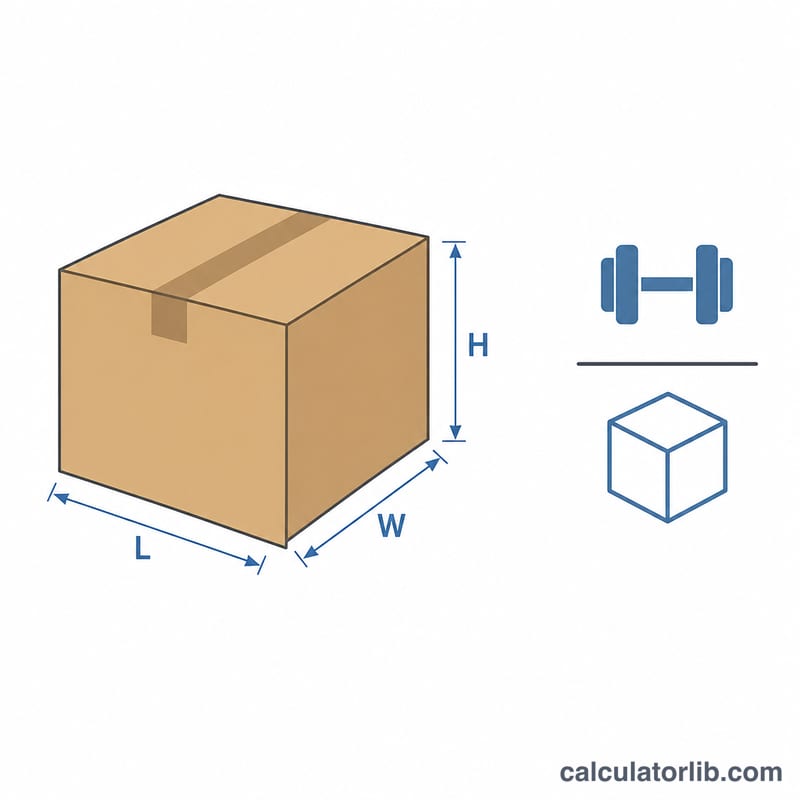
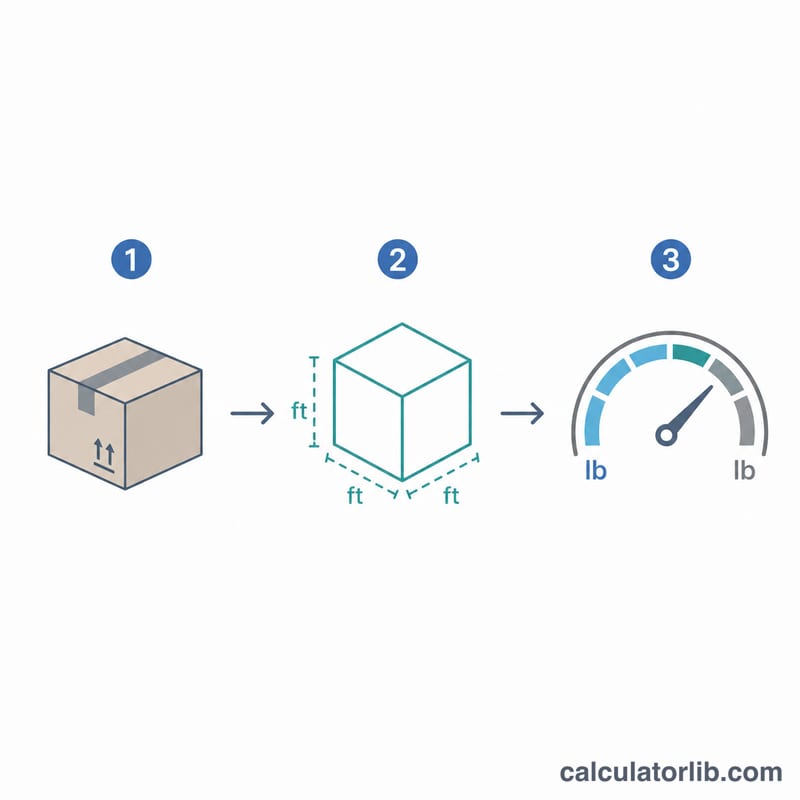
Enter the total shipment weight in pounds, the number of pieces (pallets or cartons of the same size), and the length, width, and height of one piece in inches. The calculator multiplies the dimensions to get cubic inches, converts to cubic feet (dividing by 1,728), multiplies by the piece count, and divides the weight by that volume.
The Formula Explained
Volume in cubic feet equals (L × W × H × pieces) ÷ 1728, because there are 1,728 cubic inches in a cubic foot. Density then equals weight ÷ volume. Denser shipments (more weight in less space) get a lower, cheaper freight class; light, bulky freight gets a higher class.
$$\text{Density} = \frac{\text{Weight (lb)}}{\dfrac{\text{Length} \times \text{Width} \times \text{Height} \times \text{Pieces}}{1728}}$$
Worked Example
A pallet measuring 48 × 40 × 48 inches holds 92,160 cubic inches, or 53.33 ft³. A single pallet weighing 500 lb gives a density of
$$500 \div 53.33 \approx 9.38 \ \text{lb/ft}^3$$
which falls in the 9–10.5 range and maps to freight Class 100.
FAQ
Why does density determine freight class? The NMFC density scale assigns 18 classes from 50 (very dense) to 500 (very light). Higher density means cheaper shipping.
Should I include the pallet weight? Yes — use the total gross weight including pallets and packaging, and the outer dimensions of the loaded pallet.
Is the class always exact? Many commodities are class-by-density, but some have fixed NMFC classes regardless of density. Treat this as an estimate and confirm with your carrier.