
What Is Density Altitude?
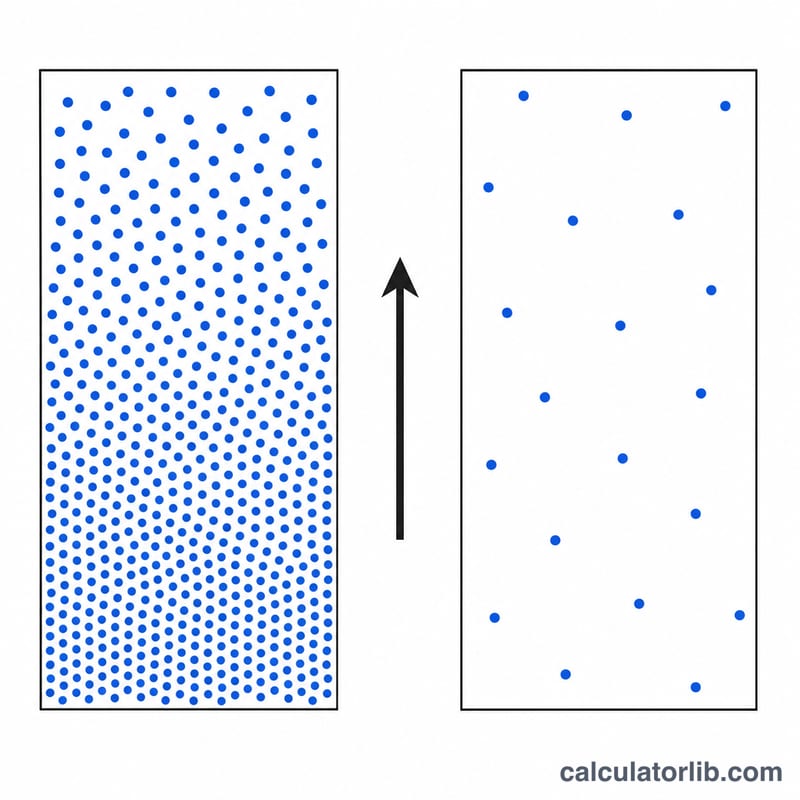
Density altitude is the altitude at which the air density would match current conditions in the International Standard Atmosphere (ISA). It tells pilots how the aircraft "feels" the air. On hot days or at high elevations, air is thinner, so the aircraft performs as though it were flying much higher than its actual altitude — reducing engine power, propeller thrust, and wing lift. This calculator uses the widely taught aviation rule of thumb to estimate density altitude from pressure altitude and outside air temperature (OAT).
How to Use This Calculator
Enter your pressure altitude in feet (set your altimeter to 29.92 inHg / 1013.25 hPa and read the indicated altitude) and the current outside air temperature in degrees Celsius. The calculator returns the density altitude along with the ISA standard temperature at your altitude and how far the actual temperature deviates from it.
The Formula Explained
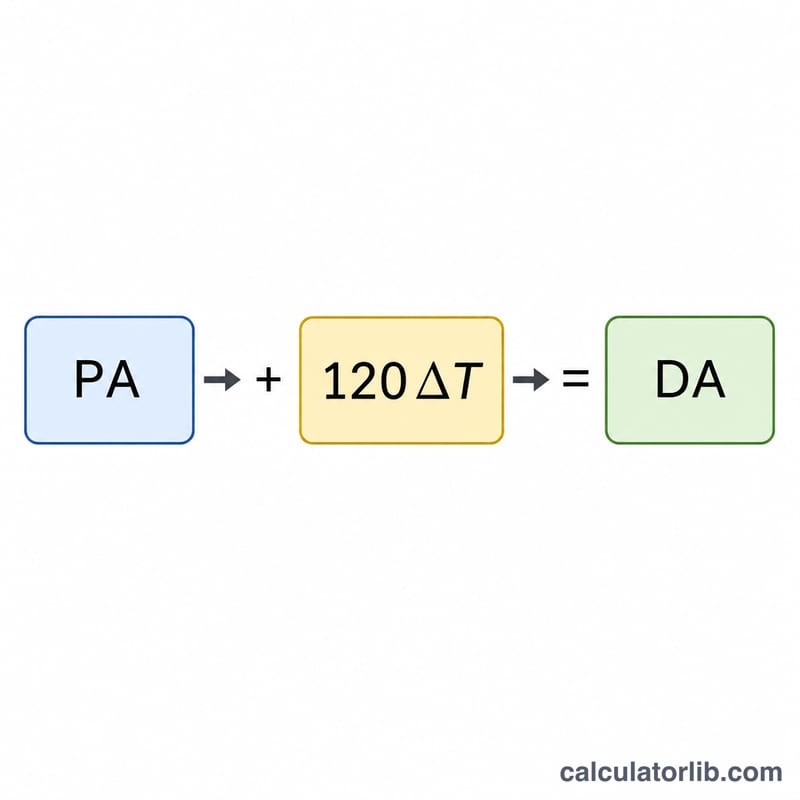
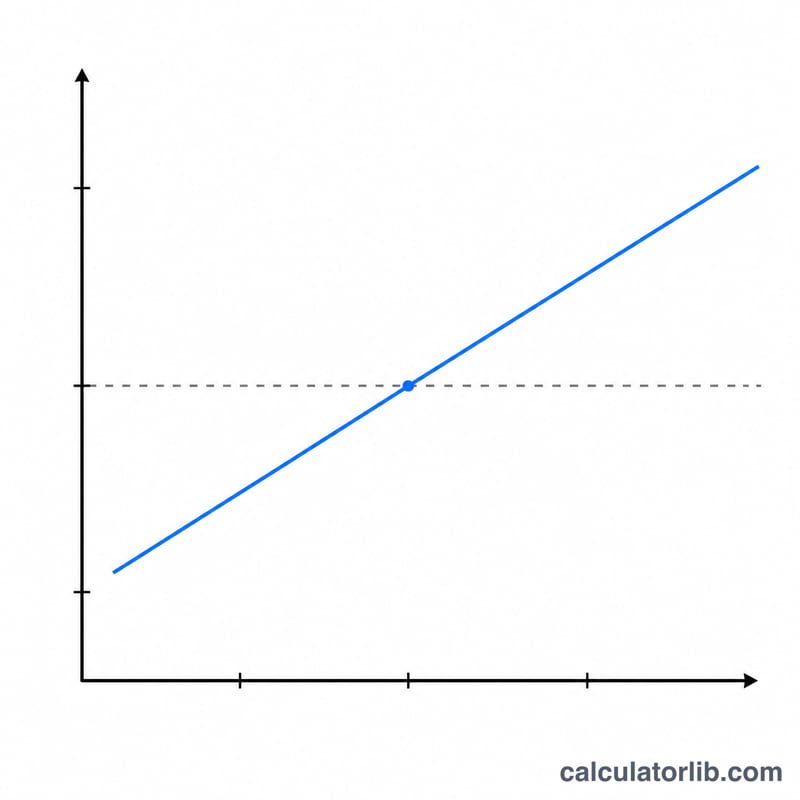
The estimate is $$\text{DA} = \text{PA} + 120 \times (\text{OAT} - \text{ISA\_temp})$$ First the ISA standard temperature is found with $$\text{ISA\_temp} = 15 - 1.98 \times \frac{\text{PA}}{1000}$$ since standard temperature is 15°C at sea level and falls roughly 2°C per 1000 ft. Then for each degree Celsius warmer than standard, density altitude rises by about 120 feet.
Worked Example
Suppose pressure altitude is 5,000 ft and OAT is 25°C. ISA temperature \(= 15 - 1.98 \times 5 = 5.1\)°C. The deviation is \(25 - 5.1 = 19.9\)°C. Density altitude $$= 5000 + 120 \times 19.9 = 5000 + 2388 = \textbf{7{,}388 ft}$$ The aircraft will perform as if it were at nearly 7,400 ft.
FAQ
Is this exact? No — it's the standard pilot's rule of thumb, accurate to within a few percent for typical conditions and ideal for quick mental cross-checks.
Why does high density altitude matter? It lengthens takeoff and landing rolls, reduces climb rate, and lowers engine power, especially for normally aspirated aircraft.
Does humidity affect it? Yes, slightly — moist air is less dense — but the rule of thumb ignores humidity for simplicity.