
What This Calculator Does
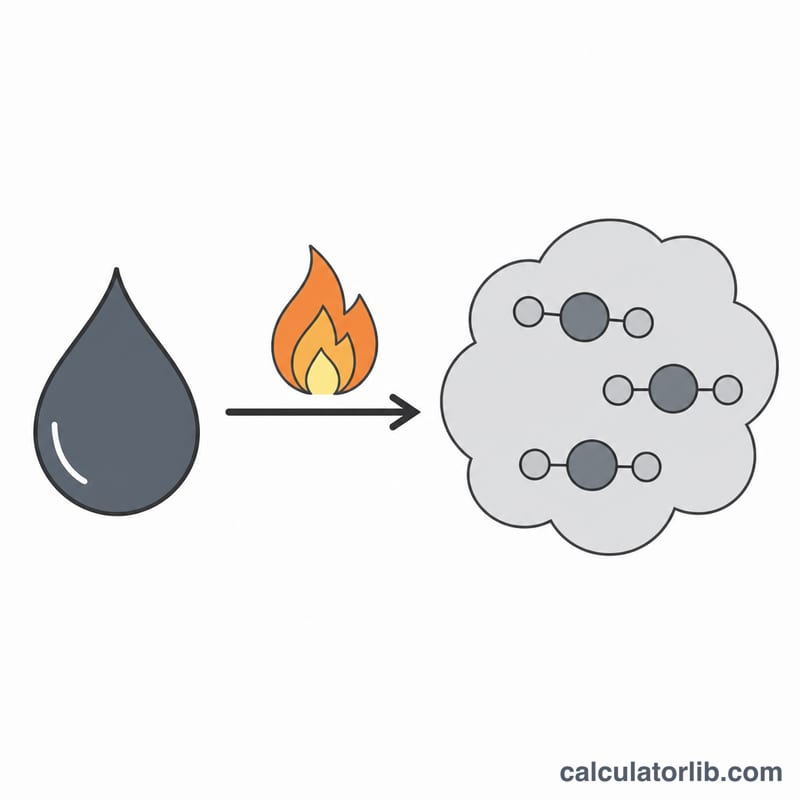
Burning fossil fuel in a car engine combines carbon in the fuel with oxygen from the air, releasing carbon dioxide (CO₂). This calculator converts the volume of petrol (gasoline) or diesel you have burned into the mass of CO₂ released, expressed in kilograms and tonnes. It works with both liters and US gallons.
How to Use It
Choose your fuel type (petrol or diesel), pick whether you are entering liters or US gallons, then type the volume of fuel burned. The result shows the total CO₂ emissions in kilograms, a tonnes equivalent, and the emission factor applied. To estimate emissions for a trip, multiply your average consumption (e.g. 7 L/100 km) by distance to get the fuel volume first.
The Formula Explained
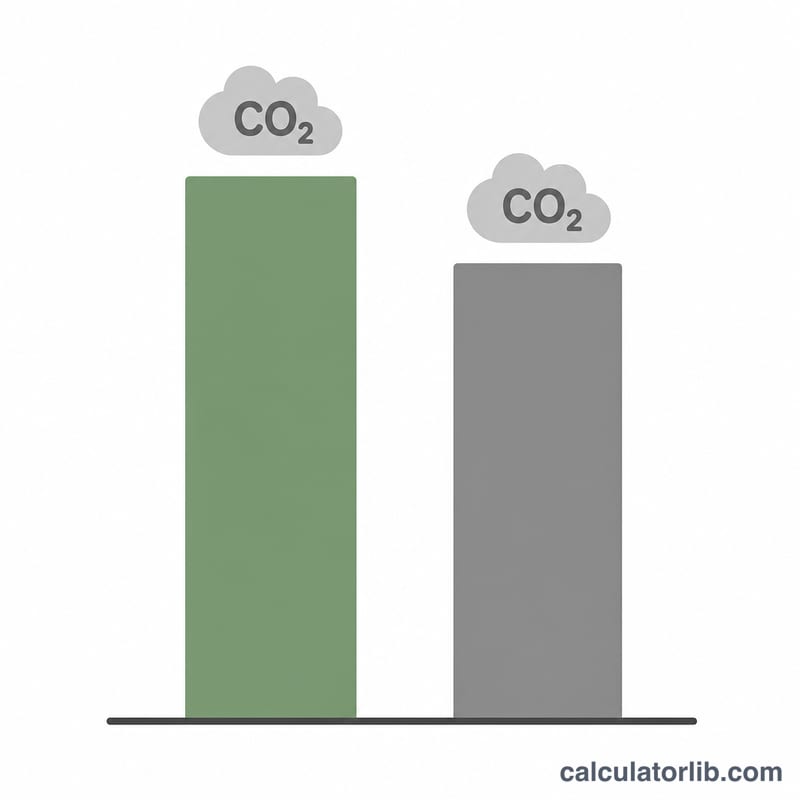
The emissions equal the fuel volume multiplied by an emission factor: $$\text{CO}_2 = V \times f$$ A liter of petrol weighs about 0.74 kg and is roughly 87% carbon; once fully combusted, each carbon atom binds two oxygen atoms, so the CO₂ mass is far higher than the fuel mass. Standard factors are 2.31 kg CO₂ per liter of petrol and 2.68 kg per liter of diesel (8.89 and 10.18 kg per US gallon respectively). Diesel is denser and more carbon-rich, so it emits slightly more CO₂ per liter.
Worked Example
You fill up and burn 50 liters of petrol. $$\text{CO}_2 = 50 \times 2.31 = 115.5\ \text{kg}$$ or 0.1155 tonnes. The same 50 liters of diesel would produce \(50 \times 2.68 = 134\) kg.
FAQ
Why is the CO₂ heavier than the fuel? Because most of the mass comes from oxygen pulled in from the air during combustion, not from the fuel itself.
Does this include well-to-tank emissions? No. These are tailpipe (tank-to-wheel) figures only; lifecycle emissions from extracting and refining the fuel are higher.
Are the factors exact? They are widely used averages. Real figures vary slightly with fuel blend, biofuel content, and density.