
What this calculator does
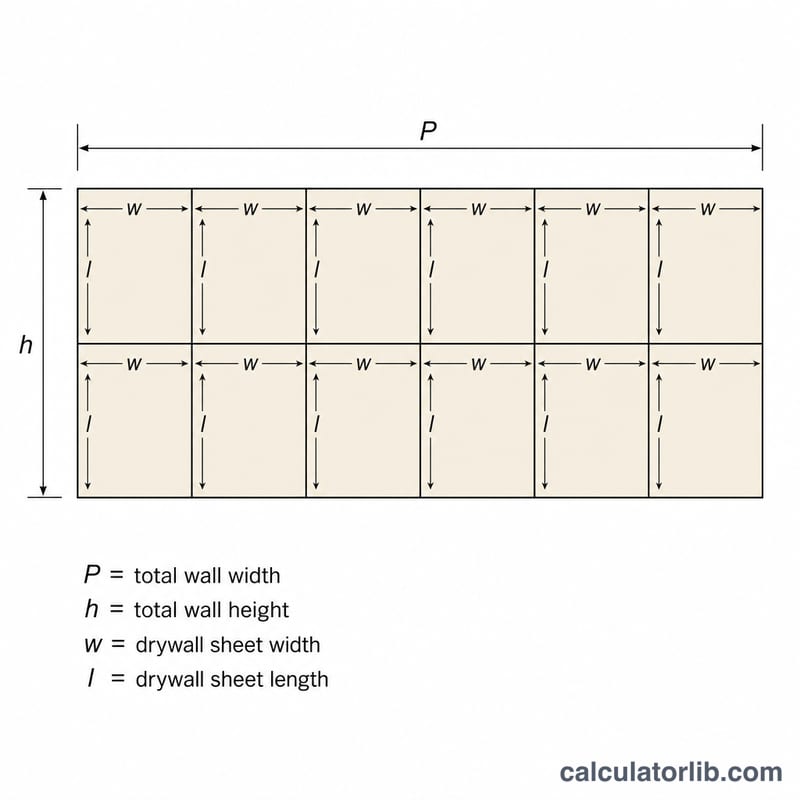
This drywall (also called sheetrock or plasterboard) calculator estimates how many sheets you need to cover your walls. It multiplies the total wall length around a room by the wall height to get the wall area, then divides by the area of a single sheet and rounds up so you always buy whole boards. It works in feet with any standard sheet size, so it suits both US and other markets.
How to use it
Enter the total wall length (perimeter) — add up the length of every wall you plan to cover. Enter the wall height, then the width and height/length of one drywall sheet (a common US sheet is 4 ft × 8 ft = 32 sq ft, while 4 × 12 = 48 sq ft). The calculator returns the total wall area, area per sheet, and the number of sheets needed.
The formula explained
The wall area is \(A = P \times h\), where P is the combined wall length and h is the height. One sheet covers \(w \times l\) square feet. Because you cannot buy a fraction of a board, the sheet count is rounded up: $$\text{Sheets} = \left\lceil \frac{A}{w \times l} \right\rceil$$ This is a quick estimate — it does not subtract windows and doors, so it leaves a built-in margin for cutting waste.
Worked example
A room with a 40 ft perimeter and 8 ft walls has 40 × 8 = 320 sq ft of wall. Using 4 × 8 sheets (32 sq ft each): $$320 / 32 = 10 \text{ sheets}$$ exactly, so you need 10 sheets.
FAQ
Should I subtract doors and windows? This calculator does not, which conveniently provides waste allowance. For large openings you can reduce the perimeter slightly.
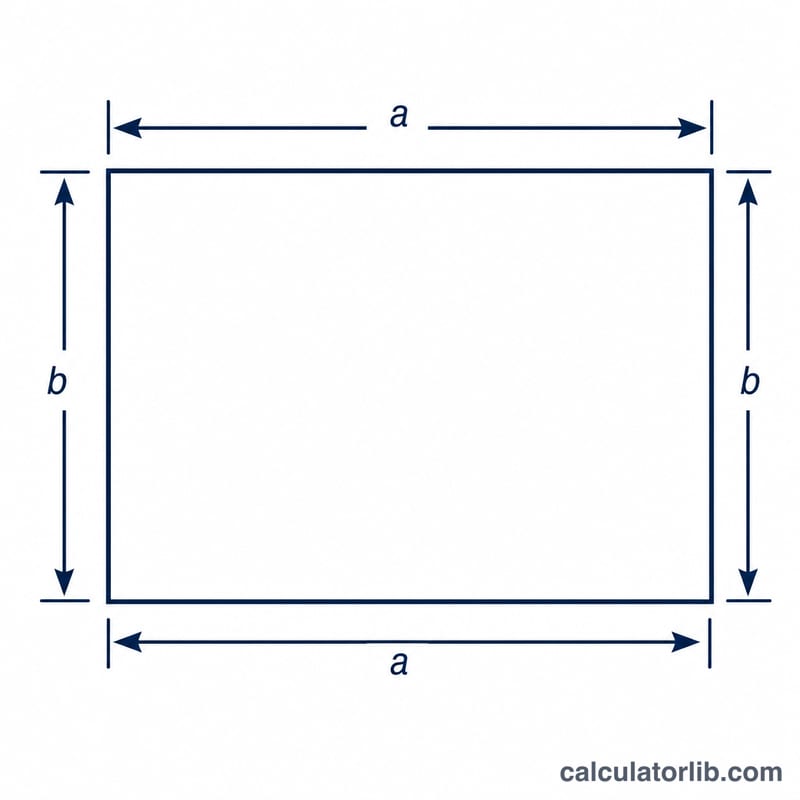
What about ceilings? Add the ceiling area separately by computing room length × width and dividing by the sheet area.
How much extra should I buy? Adding 10–15% for cuts and mistakes is a common rule of thumb; this tool's round-up already covers small jobs.