

What This Calculator Does
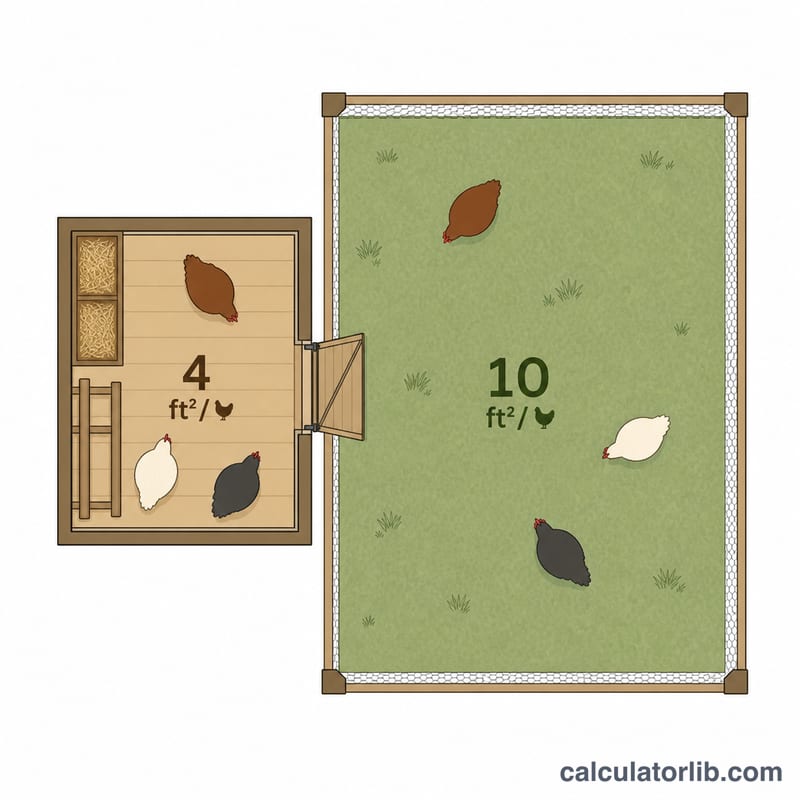
The Chicken Coop Size Calculator estimates how much space a backyard flock needs to stay healthy, calm, and clean. It splits the requirement into two parts: the enclosed coop (where hens roost and lay) and the outdoor run (where they scratch, dust-bathe, and forage). Overcrowding is the leading cause of stress, feather-picking, and disease in home flocks, so sizing the housing correctly from the start saves a lot of trouble.
How to Use It
Enter the number of hens you keep or plan to keep. The defaults assume 4 square feet of coop floor and 10 square feet of run per standard-sized hen — widely recommended figures for breeds like Rhode Island Reds or Orpingtons. You can adjust the per-hen rates: bantams need less (about 2–3 sq ft coop), while large or confined birds that never free-range benefit from more.
The Formula Explained
The math is simple multiplication:
$$\text{Coop sq ft} = \text{Hens} \times \text{Coop rate}$$ and $$\text{Run sq ft} = \text{Hens} \times \text{Run rate}$$. The total footprint adds the two together. Because the relationship is linear, doubling your flock doubles the space required.
Worked Example
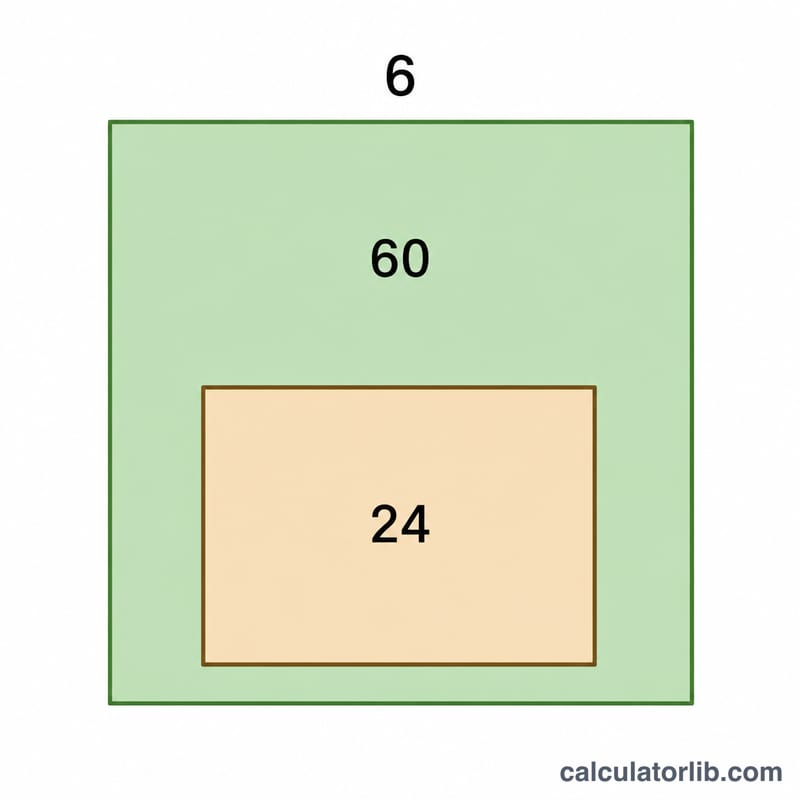
Suppose you keep 6 hens at the default rates. Coop area = $$6 \times 4 = 24 \text{ sq ft}$$ (for example a 4 ft × 6 ft coop). Run area = $$6 \times 10 = 60 \text{ sq ft}$$ (such as 6 ft × 10 ft). Total enclosed space is 84 sq ft. That gives each hen comfortable room to move without crowding the nest boxes or roosts.
FAQ
Is 4 square feet per hen really enough? It is a sensible minimum for standard hens that also get daily run or free-range time. Birds confined indoors all day do better with 8–10 sq ft each.
What about roosts and nest boxes? Plan roughly 8–12 inches of roost bar per hen and one nest box per 3–4 hens; these are inside the coop floor area calculated here.
Can I free-range instead of building a run? Yes — if hens spend the day ranging in a fenced yard, the run figure becomes a minimum for bad-weather days rather than a strict requirement.