
What This Calculator Does
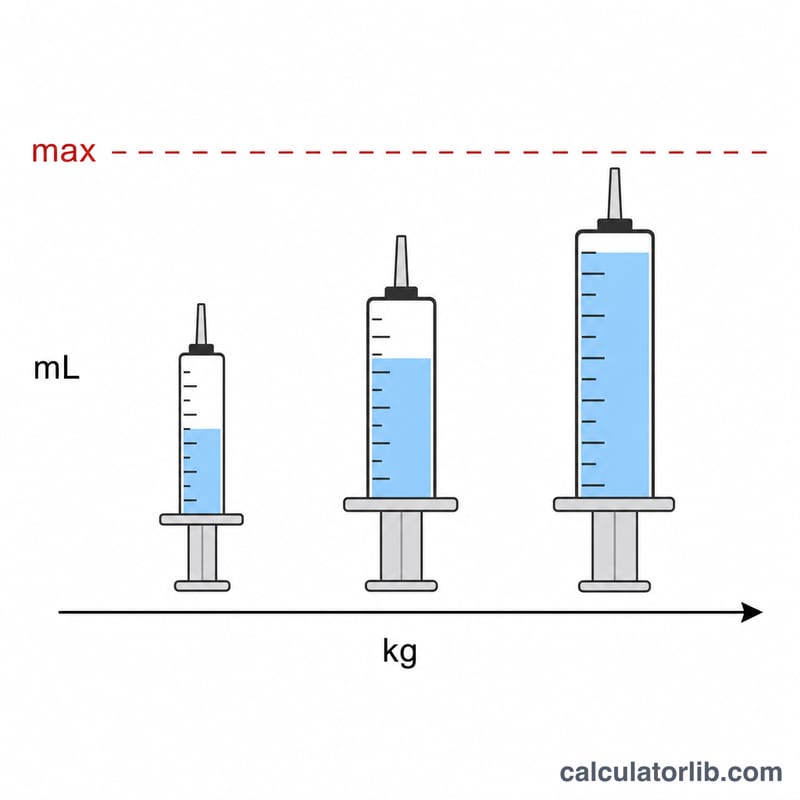
This tool estimates how much 3% hydrogen peroxide may be used to induce vomiting in a dog that has swallowed something potentially harmful. The standard veterinary guideline is roughly 1 to 2 mL of 3% hydrogen peroxide per kilogram of body weight, with a hard maximum of about 45 mL regardless of size. Enter your dog's weight, pick a dose rate, and the calculator returns the volume in millilitres and approximate teaspoons (1 tsp \(\approx\) 5 mL).
Critical Safety Note
Always contact your veterinarian or a pet poison control hotline before inducing vomiting. Do NOT induce vomiting if your dog has swallowed a caustic substance (acids, alkalis, bleach), a petroleum product, a sharp object, or if the dog is unconscious, seizing, struggling to breathe, or already vomiting. Use only 3% hydrogen peroxide — stronger concentrations are dangerous. Never repeat more than once.
How to Use It
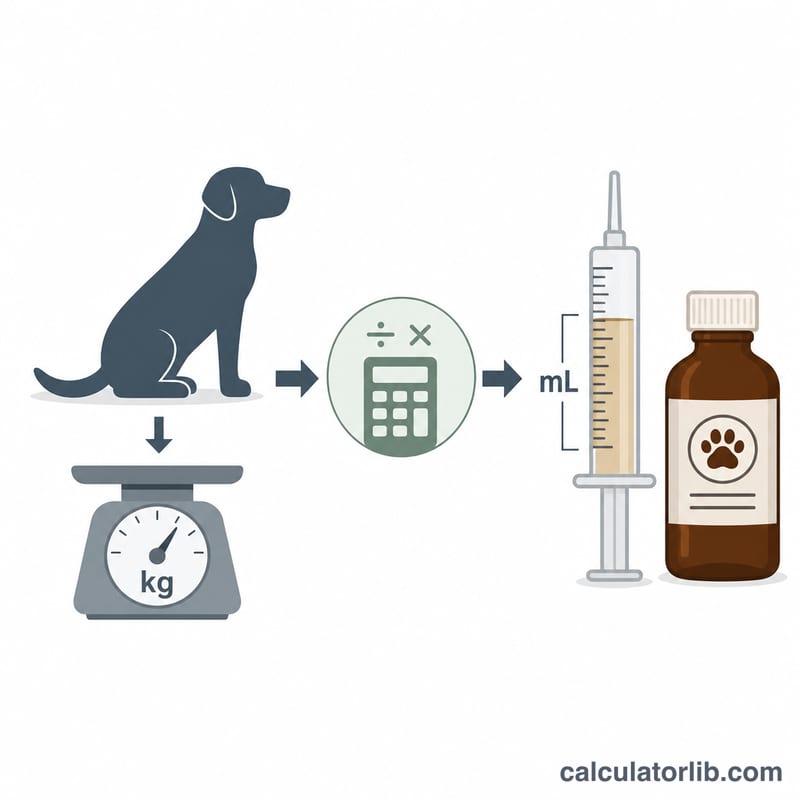
1. Enter the dog's weight and choose kilograms or pounds. 2. Choose a dose rate between 1 and 2 mL/kg (1 mL/kg is a common conservative starting point). 3. Read the recommended dose and the full 1–2 mL/kg range. Administer with a syringe (no needle), then walk the dog gently; vomiting usually occurs within 10–15 minutes.
The Formula Explained
Dose (mL) = Weight (kg) × rate, where rate is between 1 and 2 mL/kg, and the result is capped at 45 mL. If you enter pounds, the calculator first converts using kg = lb × 0.4536.
$$\text{Dose (mL)} = \min\left(\text{Weight (kg)} \times \text{Rate},\ 45\right)$$$$\text{kg} = \text{lb} \times 0.4536$$
Worked Example
A 10 kg dog at 1 mL/kg needs 10 mL of 3% hydrogen peroxide, which is about 2 teaspoons. The valid range (1–2 mL/kg) would be 10–20 mL. A 30 kg dog at 2 mL/kg would calculate to 60 mL, but this exceeds the 45 mL maximum, so the dose is capped at 45 mL.
$$10 \times 1 = 10\ \text{mL}$$$$\min\left(30 \times 2,\ 45\right) = \min\left(60,\ 45\right) = 45\ \text{mL}$$
FAQ
Can I use 6% or food-grade peroxide? No. Only 3% hydrogen peroxide is appropriate; higher strengths can cause serious internal injury.
What if it doesn't work? Do not give a second dose without veterinary direction. Repeated doses can severely irritate the stomach.
Does this work for cats? No — hydrogen peroxide is not recommended for cats. This tool is for dogs only, and always under veterinary guidance.