
What this calculator does
The Gabapentin for Dogs Dosage Calculator estimates a per-dose range of gabapentin for a dog based on its body weight. Gabapentin is commonly prescribed by veterinarians for chronic pain (especially neuropathic pain and osteoarthritis), seizure management, and to reduce anxiety before stressful events like vet or car visits. A frequently cited dosing range is approximately 5–10 mg per kilogram of body weight, given every 8 to 12 hours, though your veterinarian may use a higher or lower rate depending on the condition being treated.
How to use it
Enter your dog's weight and pick the unit (kilograms or pounds). The default dosing rate is 5 mg/kg on the low end and 10 mg/kg on the high end, but you can adjust both fields if your vet recommends a different range. The calculator converts pounds to kilograms automatically and shows the low and high milligram amount for a single dose.
The formula explained
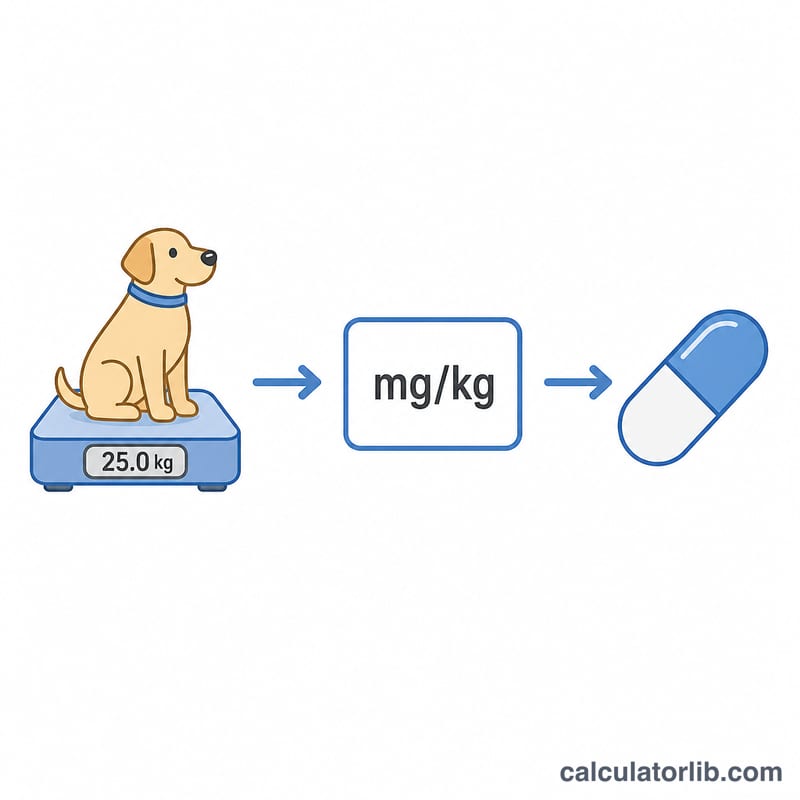
The math is simple: dose in milligrams equals body weight in kilograms multiplied by the mg/kg rate.
$$\text{Dose (mg)} = \text{Weight (kg)} \times \text{mg/kg}$$If your dog weighs in pounds, weight is first converted using \(\text{kg} = \text{lb} \times 0.4536\). The result is the amount per administration, not per day — gabapentin is usually repeated every 8–12 hours.
Worked example
A 20 kg dog at the standard range:
$$\text{low} = 20 \times 5 = 100 \text{ mg}, \quad \text{high} = 20 \times 10 = 200 \text{ mg}$$So a single dose would be roughly 100–200 mg, given every 8–12 hours. The exact amount within that range and the dosing frequency should be set by your veterinarian.
FAQ
Is this a substitute for veterinary advice? No. This is an educational estimate. Gabapentin capsules and liquids come in specific strengths, and some liquid formulations contain xylitol, which is toxic to dogs. Always follow your vet's prescription.
How often is gabapentin given? Typically every 8 to 12 hours, but it varies by condition and your dog's response.
Can the dose be higher than 10 mg/kg? Vets sometimes use higher doses for refractory seizures or severe pain, adjusting upward gradually. Only do so under veterinary guidance.