What this calculator does
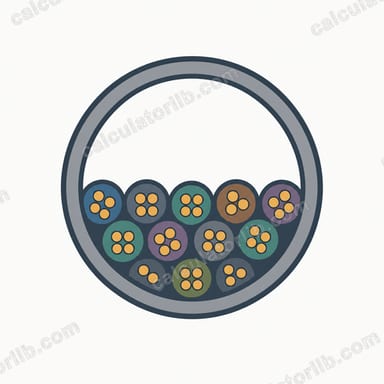
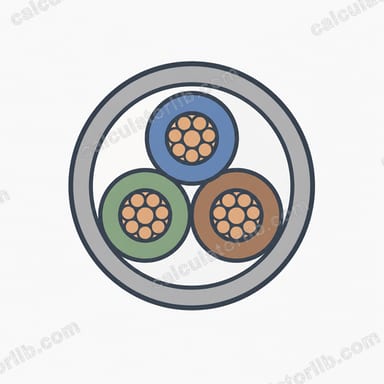
This tool estimates the maximum number of conductors you may pull into a single conduit or raceway under the fill rules of the Canadian Electrical Code (CEC). Overfilling a conduit traps heat, makes pulling difficult and can damage insulation, so the code caps how much of the conduit cross-section the conductors may occupy.

The formula
The number of conductors is the permitted fill area divided by the area of one conductor, rounded down:
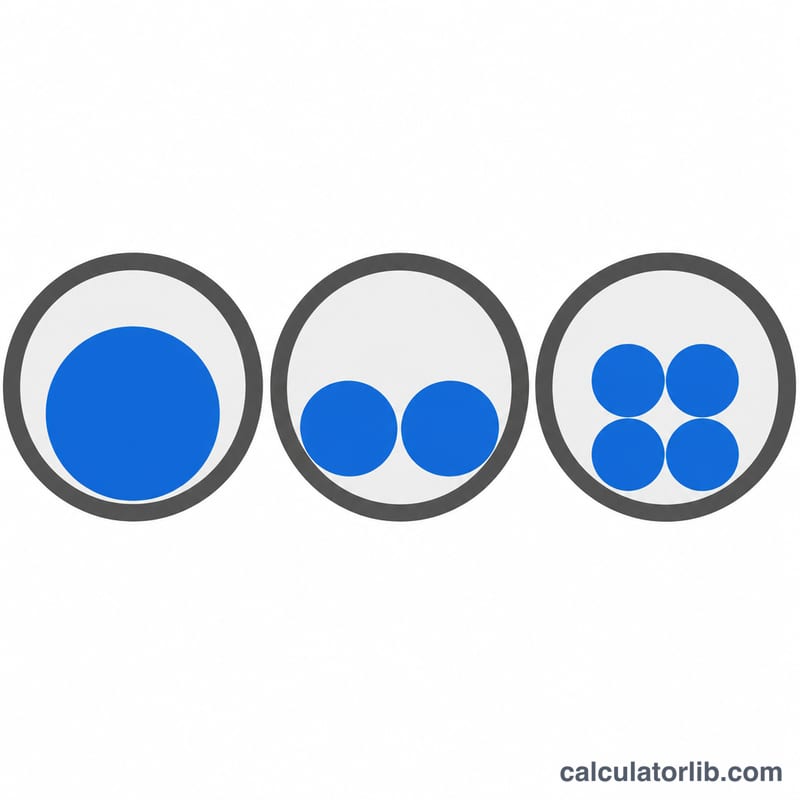
$$N = \left\lfloor \frac{A_c \times F}{A_w} \right\rfloor$$where \(A_c\) = conduit internal cross-sectional area in mm², \(A_w\) = total cross-sectional area of one conductor (including insulation) in mm², and \(F\) = permitted fill ratio. The CEC sets \(F = 0.53\) for a single conductor, \(F = 0.31\) for two conductors, and \(F = 0.40\) for three or more.
How to use it
Read the conduit internal area from CEC Table 8 and the insulated conductor area from CEC Table 10, enter both in mm², and the calculator selects the correct fill ratio and returns the maximum conductor count plus the spare area remaining.
Worked example
With a conduit area \(A_c = 500\) mm² and a conductor area \(A_w = 40\) mm², more than two conductors fit, so the 40% rule applies:
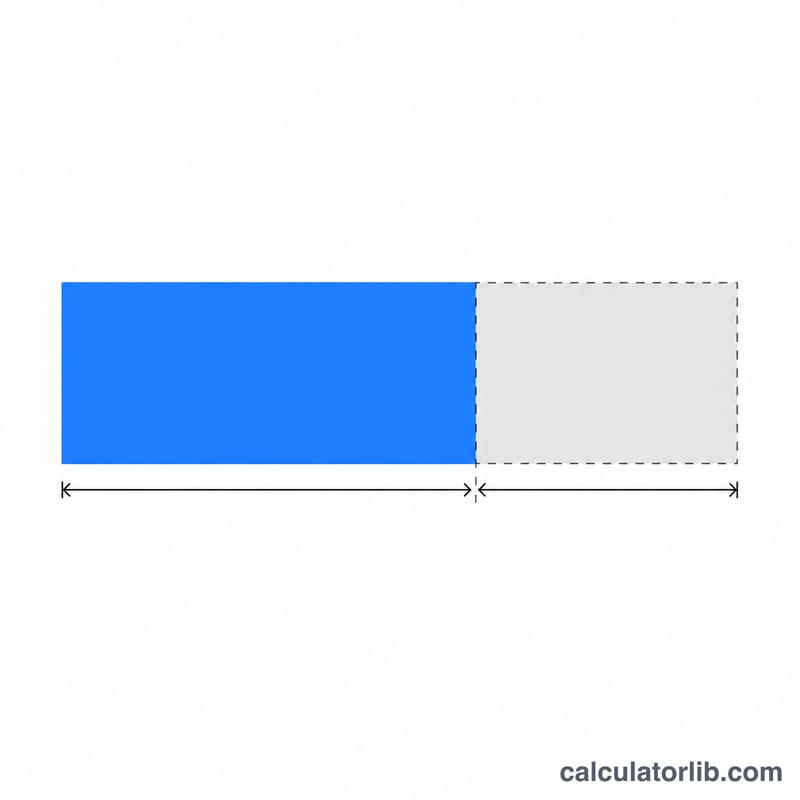
$$N = \left\lfloor \frac{500 \times 0.40}{40} \right\rfloor = \left\lfloor \frac{200}{40} \right\rfloor = 5$$Five conductors use \(5 \times 40 = 200\) mm², exactly the 200 mm² permitted, leaving no spare area.
FAQ
Why does the fill ratio change with count? A single conductor may fill 53% because there is no jam or bundling; two conductors drop to 31% to ease pulling, and three or more settle at 40%.
Do I include insulation? Yes. Always use the total conductor area with insulation, not the bare copper area.
Is this a substitute for the code book? No. Use it for quick planning and always verify against the current CEC tables and your local authority.