
What Is the Hot Tub Cost Calculator?
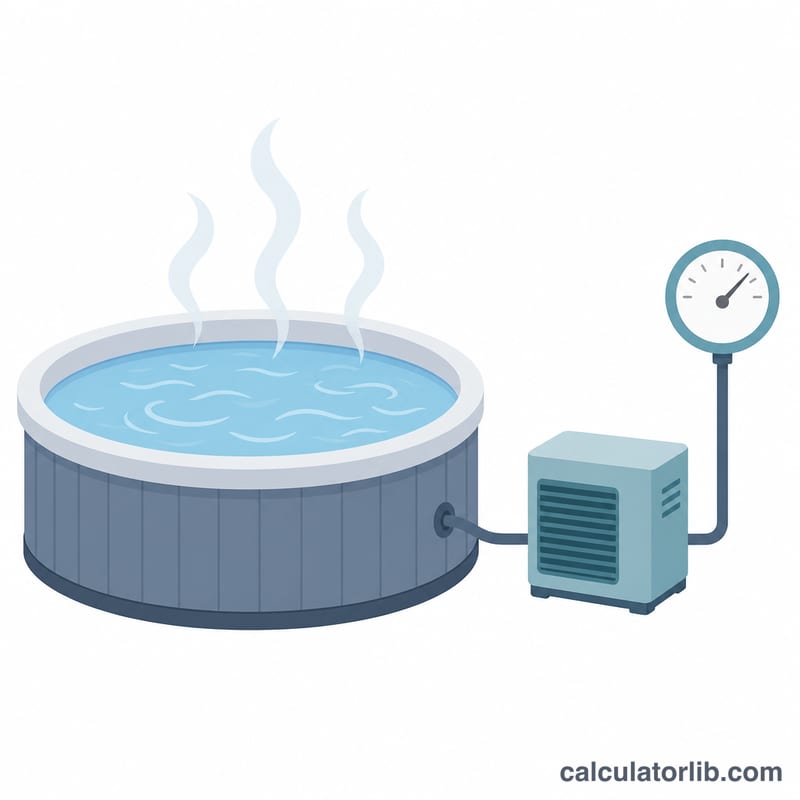
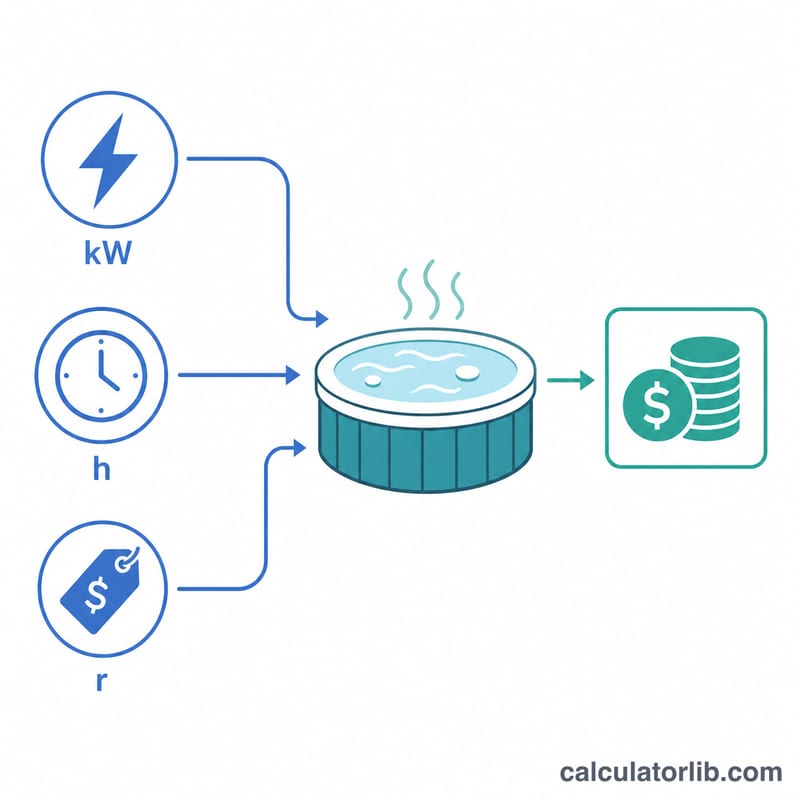
A hot tub is relaxing, but the heater is one of the biggest hidden energy users in a home. This calculator estimates how much electricity your hot tub uses and what it costs per day, month, and year. Enter your heater's power rating, how many hours per day it actively runs, and your electricity price, and you'll get a clear running-cost breakdown.
How to Use It
Find your heater rating on the spec plate or manual — most residential tubs use a 3–6 kW heater. Estimate the hours the heater is actually drawing power each day (this is usually far less than 24, because the tub only heats to maintain temperature). Then enter your electricity rate; check a recent utility bill for the price per kilowatt-hour (kWh). The calculator multiplies these together.
The Formula Explained
The core equation is:
$$\text{Monthly Cost} = \text{Heater Power (kW)} \times \text{Hours per Day} \times 30 \times \text{Price per kWh}$$
First, power times hours gives the energy used per day in kWh. Multiplying by the price gives the daily cost, and by 30 gives the monthly cost (365 for the yearly figure). Because energy is the product of power and time, reducing either the heater wattage or the daily run time directly lowers your bill.
Worked Example
Suppose you have a 4 kW heater that effectively runs 4 hours a day, and you pay $0.15 per kWh. Daily energy = \(4 \times 4 = 16\) kWh. Daily cost = \(16 \times \$0.15 = \$2.40\). Monthly cost = $$\$2.40 \times 30 = \mathbf{\$72},$$ and yearly cost = \(\$2.40 \times 365 = \$876\).
FAQ
How many hours per day does the heater really run? It depends on insulation, cover quality, ambient temperature, and target temperature. Many well-insulated tubs average 2–6 active heating hours per day, even though they are "on" 24/7.
Does this include the pump and jets? The estimate focuses on the heater, which dominates energy use. Add the pump's kW and its run hours to the heater figure for a fuller picture.
How can I lower the cost? Use a tight-fitting insulated cover, lower the set temperature a few degrees, and run during off-peak electricity rates if your utility offers them.