
What Is the Vehicle Mileage Tax Deduction Calculator?
This calculator applies to the United States (IRS) and estimates the tax deduction you can claim for using a personal vehicle for business. Instead of tracking every gas receipt and repair bill, the IRS lets eligible taxpayers use the standard mileage rate — a single cents-per-mile figure that bundles fuel, depreciation, insurance, and maintenance into one number. For business driving from 1 July 2026 the rate is $0.76 per mile; it was 72.5¢ from 1 January to 30 June 2026, 70¢ in 2025 and 67¢ in 2024. Rates can change, so confirm the current figure on IRS.gov before filing.
How to Use It
Enter the total number of business miles and choose when you drove them: 2026 from 1 July (76¢, the default), 1 January–30 June 2026 (72.5¢), 2025 (70¢) or 2024 (67¢). The calculator applies the matching IRS standard rate (or pick “Other rate” to enter your own) and multiplies to show your estimated deduction. Be sure to keep a contemporaneous mileage log — date, destination, purpose, and miles — to support your claim. Commuting between home and your regular workplace generally does not count as business mileage.
The Formula Explained
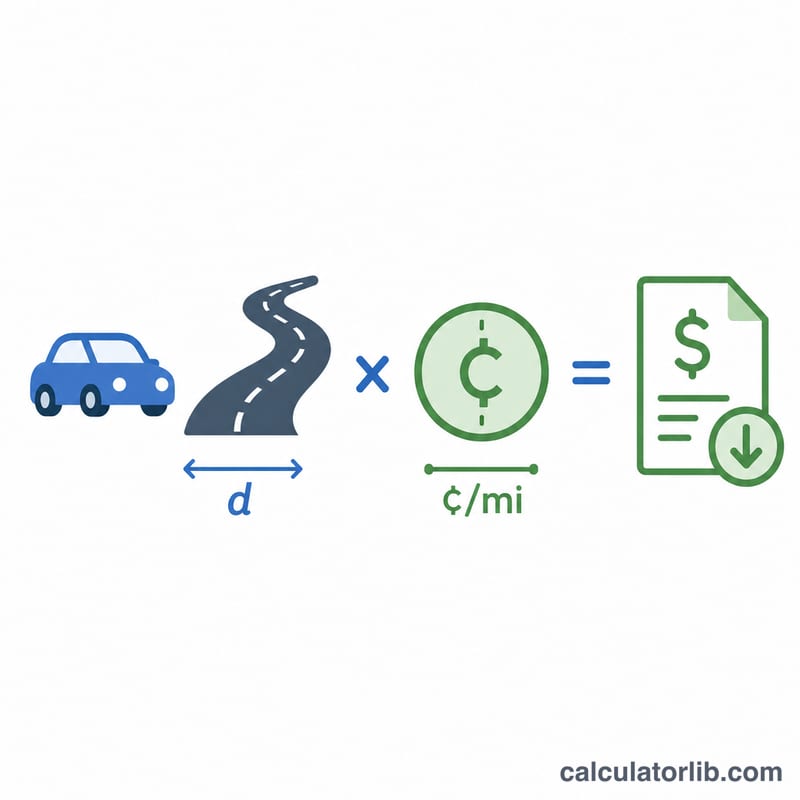
The math is simple multiplication:
$$\text{Deduction} = \text{Business Miles} \times \text{Standard Rate}$$If you switch between the standard mileage method and the actual-expense method, special rules apply, and you generally must use the standard rate in the first year a vehicle is placed in business service to keep that option open later.
Worked Example
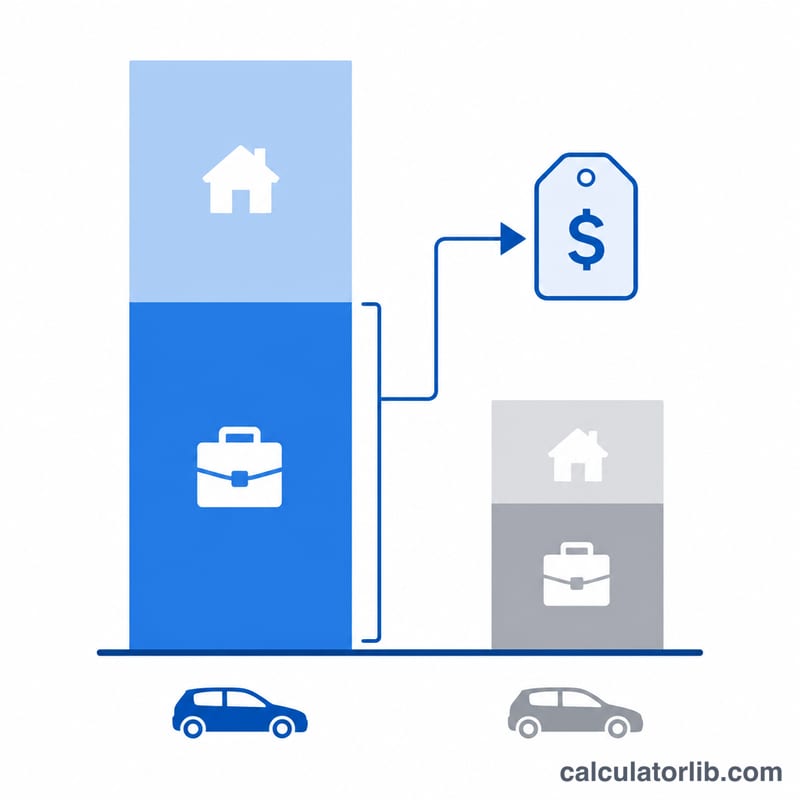
Suppose you drove 12,000 business miles from 1 July 2026, when the standard rate is $0.76/mile. Your deduction is $$12{,}000 \times 0.76 = \$9{,}120$$ If you also drove 3,000 personal miles, those are simply excluded — only the business portion is deductible.
FAQ
Is this the same as actual vehicle expenses? No. The standard mileage method is an alternative to tracking actual costs. You choose one method per vehicle.
Can I deduct tolls and parking too? Yes — business-related parking fees and tolls can usually be added on top of the standard mileage deduction.
Is this tax advice? No. This tool is an estimate for planning. Consult a tax professional and the current IRS guidance for your specific situation.