

What Is Total Compensation?
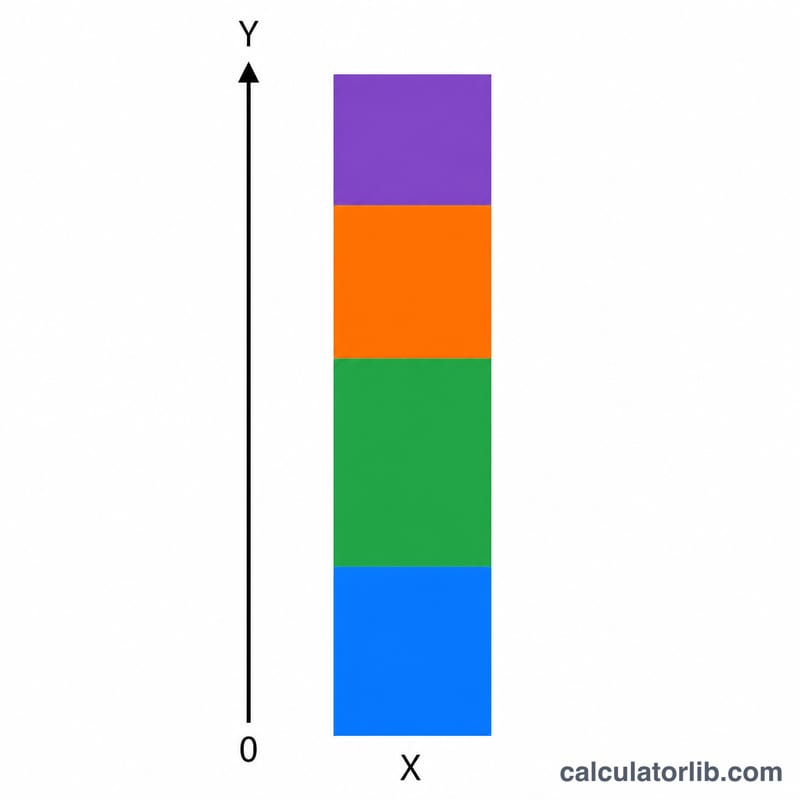
Total compensation is the complete annual value of a job offer or your current role — not just the headline salary. It combines your fixed base salary, any performance or signing bonus, the cash value of employer-paid benefits (health insurance, retirement matching, life and disability coverage, perks), and the annualized value of any equity (stock options or RSUs). Comparing offers by base salary alone can be misleading; this calculator reveals the true number.
How to Use It
Enter the four amounts as annual figures. For benefits, add up the employer's yearly contribution to your health premium, 401(k)/pension match, and any other paid perks. For equity, divide your grant value by its vesting period to get an annual figure. The calculator returns your total compensation, a breakdown of each component, the percentage that comes from base pay, and the monthly equivalent.
The Formula Explained
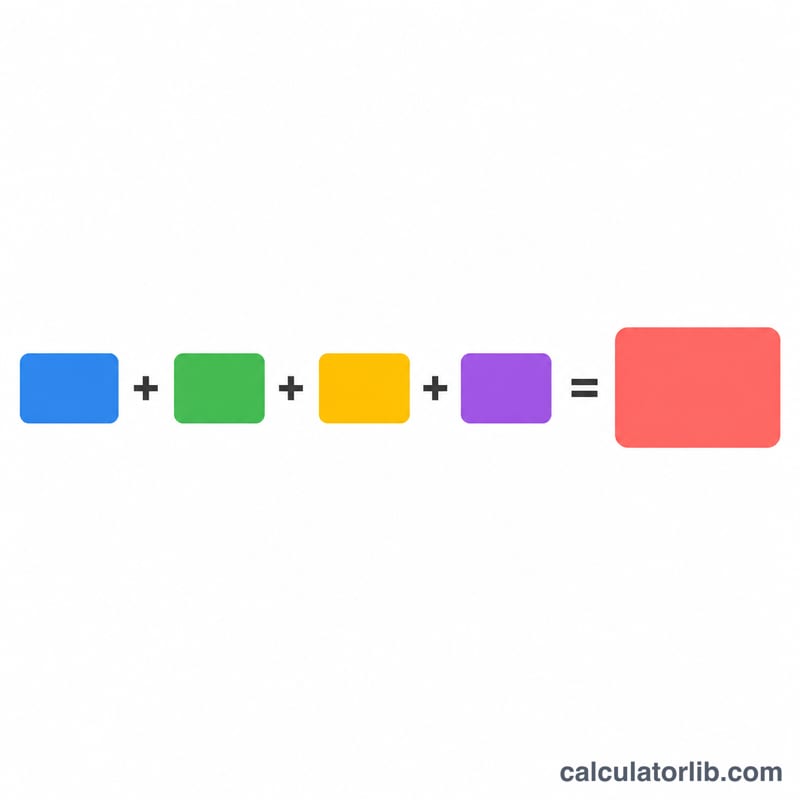
The math is a straightforward sum: $$\text{Total Compensation} = \text{Base Salary} + \text{Bonus} + \text{Benefits} + \text{Equity}$$ We also compute base salary as a percentage of the total, which helps you judge how much of the package is guaranteed versus variable, and a monthly equivalent (total ÷ 12) for budgeting.
Worked Example
Suppose your base salary is $85,000, your annual bonus is $8,000, employer benefits are worth $12,000, and equity vests at $10,000 per year. Total compensation = $$85{,}000 + 8{,}000 + 12{,}000 + 10{,}000 = \$115{,}000$$ Base is \(85{,}000 / 115{,}000 = 73.91\%\) of the total, and the monthly equivalent is $9,583.33.
FAQ
Should I include my own 401(k) contributions? No — only count the employer's match or contribution, since your own deferrals already come out of base salary.
How do I value stock options? Use the expected annual value (current fair value of the grant divided by the vesting period). It is an estimate and can change with company performance.
Is this before or after tax? These are gross (pre-tax) figures. Total compensation is typically quoted gross; your take-home pay will be lower after taxes and deductions.