
What Is a Wainscoting Calculator?
Wainscoting is decorative wood paneling applied to the lower portion of interior walls. This calculator helps you estimate two essential numbers for a paneling project: how many individual panels you need to wrap a room, and the total surface area the wainscoting will cover. Knowing both up front saves trips to the store and prevents over-buying.
How to Use It
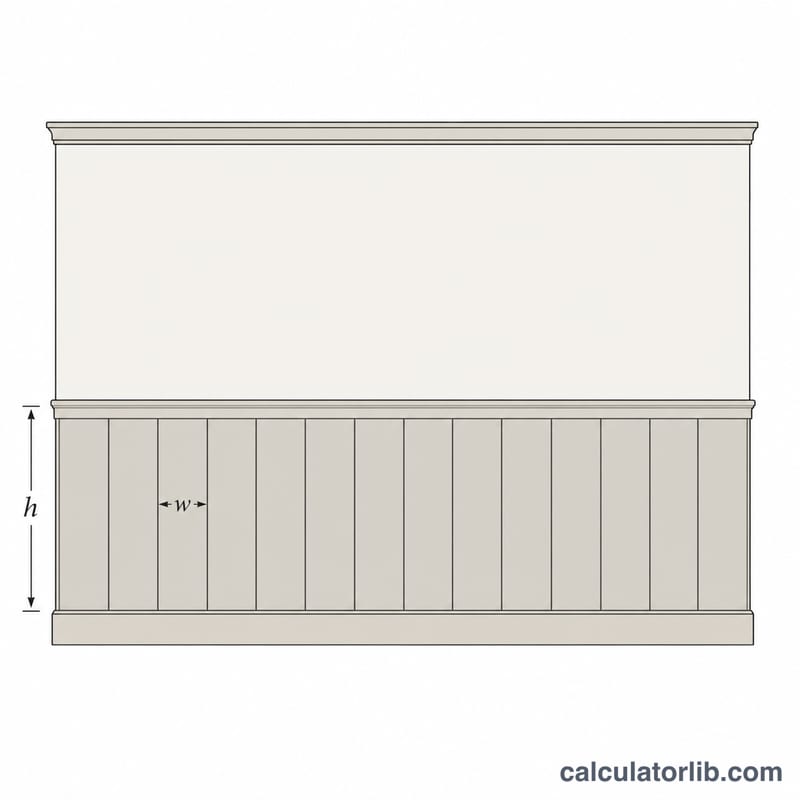
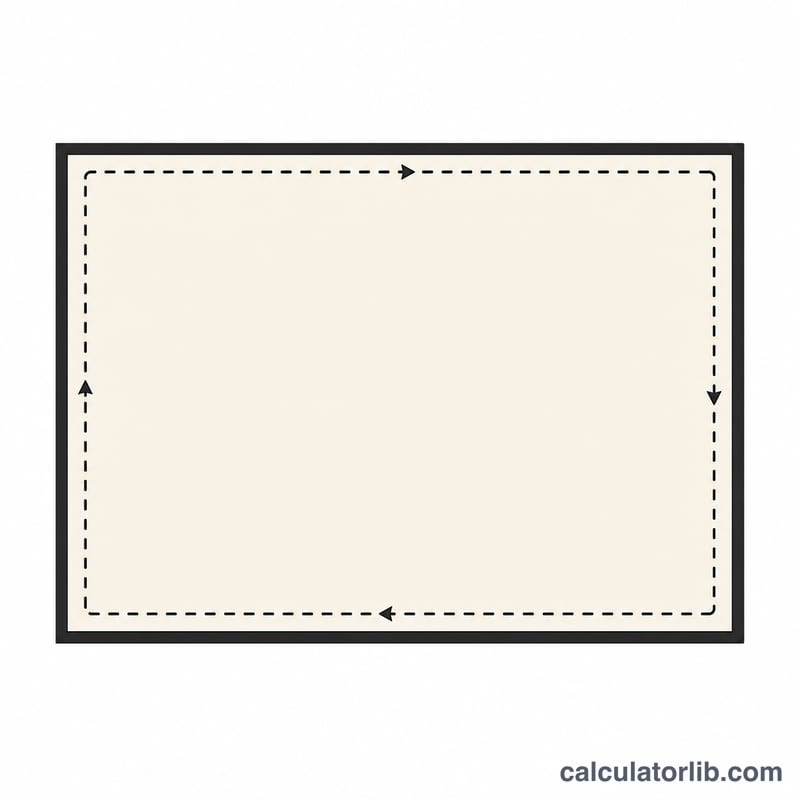
Measure the perimeter of the room (add up the length of every wall you plan to panel) and enter it in feet. Enter the width of a single panel and the height you want the wainscoting to reach from the floor. The calculator divides the perimeter by the panel width and rounds up, because partial panels still require a full board, then multiplies perimeter by height for total coverage.
The Formula Explained
The panel count uses a ceiling function: \(\text{panels} = \left\lceil \frac{\text{perimeter}}{\text{panelWidth}} \right\rceil\). Rounding up guarantees you have enough material to finish the last gap. The coverage area is simply \(\text{area} = \text{perimeter} \times \text{height}\), useful when buying sheet goods or estimating paint, primer and adhesive. For trimmed sections like doors and windows you can subtract those widths from the perimeter before entering it.
Worked Example
Suppose a room has a 40 ft perimeter, you use 1.5 ft wide panels, and want wainscoting 3 ft tall.
$$\text{Panels} = \left\lceil \frac{40}{1.5} \right\rceil = \left\lceil 26.67 \right\rceil = 27 \text{ panels}$$$$\text{Area} = 40 \times 3 = 120 \text{ square feet}$$Buy a couple of extra panels to allow for cuts and waste.
FAQ
Should I account for waste? Yes—add about 10% extra material for cuts, mistakes and matching grain.
Do doors and windows count? Subtract their widths from the perimeter if the wainscoting stops there, or leave them in for a quick over-estimate.
What units should I use? Use consistent feet for all three inputs; the area result is in square feet.