
What Is the Belt Size Calculator?
The Belt Size Calculator helps you find the correct belt size based on your waist measurement. Belts are typically sized about two inches larger than your actual waist (or pant) size, so this simple tool removes the guesswork when shopping for a new belt online or in store.
How to Use It
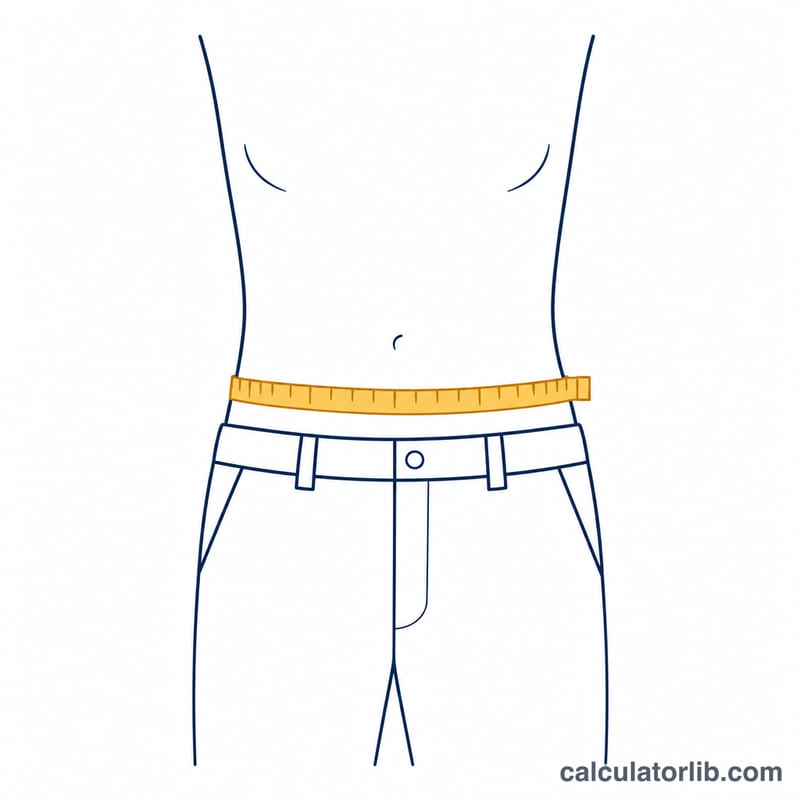
Measure your waist in inches at the point where you normally wear your belt, or simply use your pant waist size. Enter that number into the calculator and it instantly returns your recommended belt size. If you fall between two sizes, round up to the next available belt size for comfort.
The Formula Explained
The calculation is straightforward:
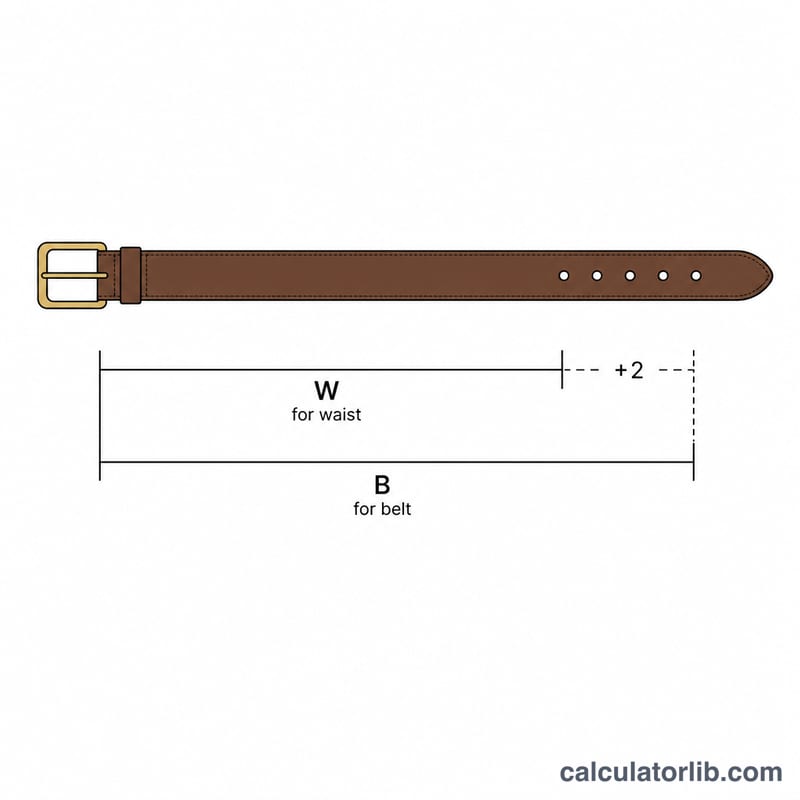
$$\text{Belt Size (inches)} = \text{Waist Size (inches)} + 2$$
The extra two inches account for the belt wrapping through your pant loops and the buckle reaching a comfortable middle hole. This keeps the buckle centered and leaves room for adjustment in either direction.
Worked Example
Suppose your waist measures 34 inches. Adding two inches gives a recommended belt size of 36 inches. When buying, you would choose a size 36 belt, which lets you fasten comfortably in the center hole with extra holes on each side.
$$\text{Belt Size} = 34 + 2 = 36 \text{ inches}$$
Waist-to-Belt Size Reference Chart
The simplest and most widely used rule for buying a belt is to add 2 inches to your measured waist size:
$$\text{Belt Size} = \text{Waist (in)} + 2$$
This accounts for the belt wrapping over clothing and reaching a comfortable middle (third) buckle hole. The table below shows common waist measurements, the recommended belt size, and the approximate equivalent in centimeters. For example, a 34-inch waist gives a belt size of 36 inches.
| Waist (in) | Belt Size (in) | Belt Size (cm) | Typical EU Size |
|---|---|---|---|
| 28 | 30 | 76 | 75 |
| 30 | 32 | 81 | 80 |
| 32 | 34 | 86 | 85 |
| 34 | 36 | 91 | 90 |
| 36 | 38 | 97 | 95 |
| 38 | 40 | 102 | 100 |
| 40 | 42 | 107 | 105 |
| 42 | 44 | 112 | 110 |
| 44 | 46 | 117 | 115 |
Note: Measure your waist where you actually wear the belt (often slightly lower than your natural waistline), not your pants/jeans tag size, which can run smaller than your true measurement. The centimeter values are rounded to the nearest whole number.
Belt Size Conversion (Inches to cm and EU Sizing)
Belt sizing differs by region. US and UK belts are usually labeled by the inch length measured from the buckle fold to the middle hole. European belts are typically labeled in centimeters, with the EU “size code” corresponding to that centimeter length (often rounded to the nearest 5). To convert an inch belt size to centimeters, multiply by 2.54:
$$\text{cm} = \text{Belt Size (in)} \times 2.54$$
For instance, a 36-inch belt converts to 36 inches when checked against 91.44 cm. The table below lists standard belt sizes side by side.
| US/UK Size (in) | Length (cm) | EU Size Code |
|---|---|---|
| 30 | 76 | 75 |
| 32 | 81 | 80 |
| 34 | 86 | 85 |
| 36 | 91 | 90 |
| 38 | 97 | 95 |
| 40 | 102 | 100 |
| 42 | 107 | 105 |
| 44 | 112 | 110 |
| 46 | 117 | 115 |
| 48 | 122 | 120 |
EU belt size codes are commonly issued in 5 cm increments, so a given inch size maps to the nearest standard EU number. When a belt offers multiple holes, the labeled size usually refers to the middle hole, giving roughly ±2 inches of adjustment range in either direction.
FAQ
Should I use my pant size or actual waist? Either works, since pant waist sizes are usually based on the same measurement. If you measure directly, use the point where the belt sits.
What if my size isn't available? Round up to the next size. A belt that is slightly long can be trimmed or fastened on a tighter hole.
Does belt material matter? Thick leather belts may run slightly snug, so if you're between sizes, sizing up is the safer choice.