
What Is the Bulb Spacing Calculator?
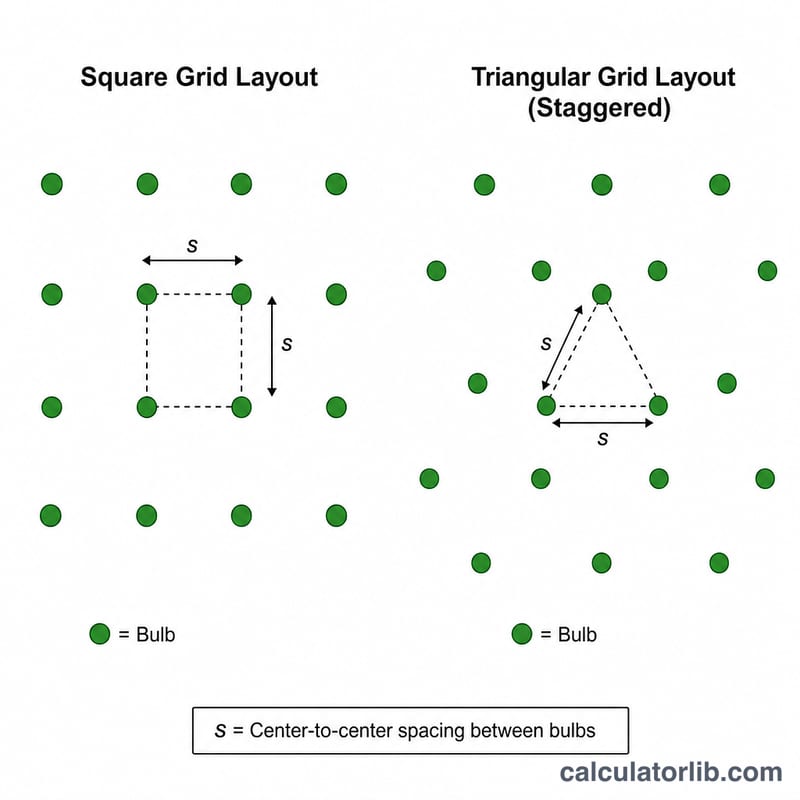
The Bulb Spacing Calculator estimates how many flower bulbs you need to fill a planting bed based on the bed's area and the spacing you want between each bulb. It works for tulips, daffodils, crocuses, alliums, and any bulb where you know the recommended spacing. Choose a square grid for tidy rows or a triangular (staggered) layout for fuller, more natural-looking coverage that fits more bulbs into the same space.
How to Use It
Enter the total planting area and the spacing you want center-to-center between bulbs (use the same length unit for both — e.g., area in cm² and spacing in cm, or area in inches²). Pick a layout pattern and the calculator returns the number of bulbs required, rounded up so you never come up short.
The Formula Explained
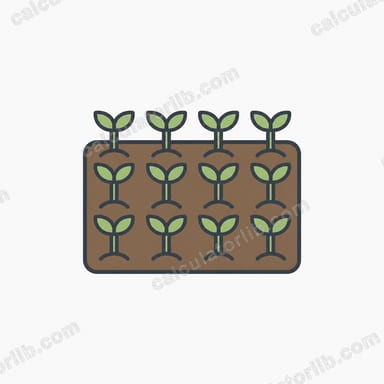
Each bulb in a square grid "owns" a square of side equal to the spacing, so the area per bulb is Spacing × Spacing. Dividing the bed area by this gives the count: $$\text{Bulbs} = \left\lceil \frac{\text{Area}}{\text{Spacing}^2} \right\rceil$$ A triangular layout packs bulbs in offset rows, reducing wasted gaps. The effective area per bulb shrinks by a factor of \(0.866\) (\(\sqrt{3}/2\)), so $$\text{Bulbs} = \left\lceil \frac{\text{Area}}{\text{Spacing}^2 \times 0.866} \right\rceil$$ — roughly 15% more bulbs than a square grid.
Worked Example
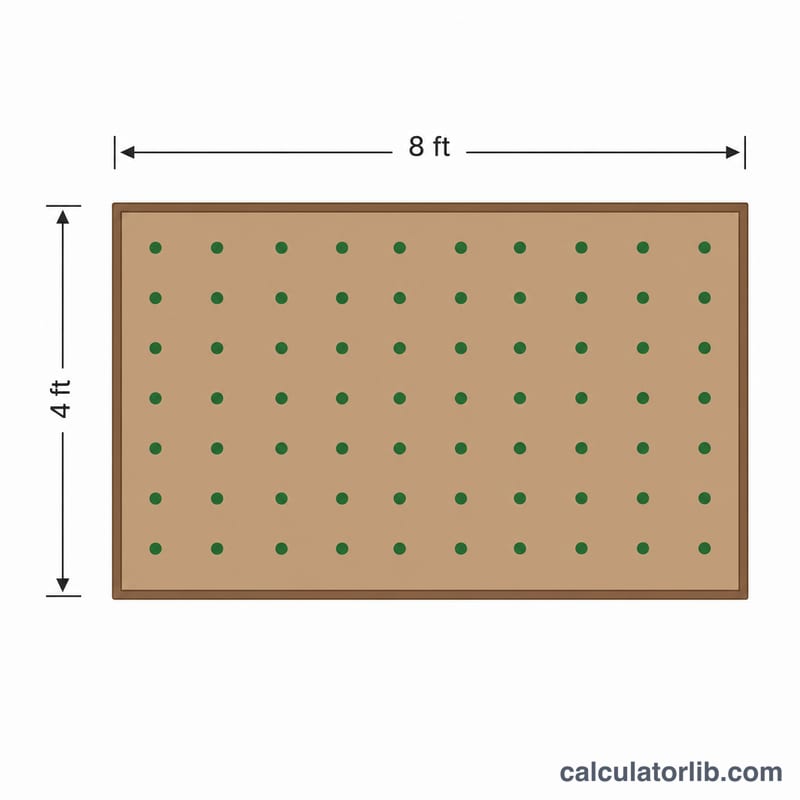
Suppose you have a 10,000 cm² bed and want bulbs spaced 10 cm apart in a square grid. Area per bulb = \(10 \times 10 = 100\) cm². \(\text{Bulbs} = 10{,}000 / 100 = 100\) bulbs. Switch to a triangular layout: $$10{,}000 / (100 \times 0.866) = 115.47$$ rounded up to 116 bulbs.
Recommended Spacing by Bulb Type
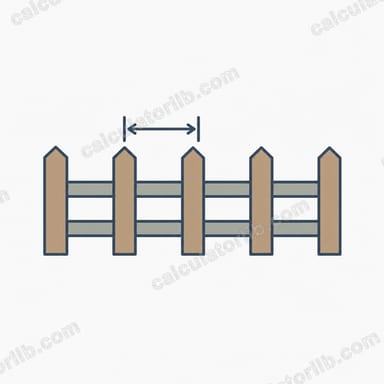
Spacing is measured center-to-center between bulbs. Larger bulbs need wider spacing; small "minor" bulbs can be packed tightly for a carpet effect. As a rule of thumb, planting depth is about 2–3 times the height of the bulb.
| Bulb | Spacing (cm) | Spacing (in) | Depth (cm) | Depth (in) |
|---|---|---|---|---|
| Tulip | 10–15 | 4–6 | 15–20 | 6–8 |
| Daffodil | 10–15 | 4–6 | 15–20 | 6–8 |
| Crocus | 5–8 | 2–3 | 8–10 | 3–4 |
| Allium (large) | 20–30 | 8–12 | 15–20 | 6–8 |
| Hyacinth | 10–15 | 4–6 | 10–15 | 4–6 |
| Grape hyacinth (Muscari) | 5–8 | 2–3 | 8–10 | 3–4 |
| Snowdrop | 5–8 | 2–3 | 8–10 | 3–4 |
When a range is given, use the wider value for fewer, more naturalistic clumps and the tighter value for dense, formal blocks of color.
Practical Planting Recommendations
- Order about 10% extra. Some bulbs arrive damaged, rot, or simply fail to sprout. Buying roughly 10% more than the calculated count ensures you can fill gaps and replace duds without a second order.
- Match the layout to the look. Use a triangular (staggered) arrangement for naturalized drifts and informal borders—it reads as organic and hides bare patches. Use a square grid for formal beds, edging, and geometric color blocks where even rows are desirable.
- Subtract edge margins. Don't plant right to the bed border. Leave a margin of one full spacing (often 8–15 cm) around the perimeter so bulbs aren't disturbed by mowing, trimming, or settling soil. Calculate counts on the plantable area, not the gross bed size.
- Group same-variety bulbs. Clusters of 7, 9, or more bulbs of one variety make far more visual impact than singles scattered across the bed. Plant in odd-numbered clumps and repeat the clumps for rhythm.
- Mind the spacing range. Tighter spacing gives a fuller first-year display but crowds bulbs as they multiply; wider spacing leaves room to naturalize over several seasons.
- Check planting depth too. Correct depth (about 2–3× the bulb's height) protects against frost heave and helps bulbs perennialize.
This is general gardening guidance; adjust for your climate, soil, and the specific cultivar instructions on your bulb packaging.
FAQ
Should I round up or down? Always round up — partial bulbs aren't an option, and a few extra ensures full coverage.
Does this account for edge margins? No — it assumes the whole area is plantable. Leave a border if needed and subtract it from the area first.
Which layout is better? Triangular gives denser, more natural coverage; square is easier to plant in neat rows.