
What Is the Effective Tax Rate?
Your effective tax rate — also called your average tax rate — is the share of your taxable income that you actually pay in tax. Unlike the marginal tax rate (the rate applied to your last dollar of income), the effective rate blends every tax bracket into a single, easy-to-understand percentage. It answers the practical question: "Out of everything I was taxed on, what fraction went to taxes?"
How to Use This Calculator
Enter two figures: the total tax you paid (from your tax return) and your taxable income for the same period. The calculator divides the tax by the income, multiplies by 100, and shows your effective rate along with your after-tax income. This works for any currency and any country since it is a pure ratio.
The Formula Explained
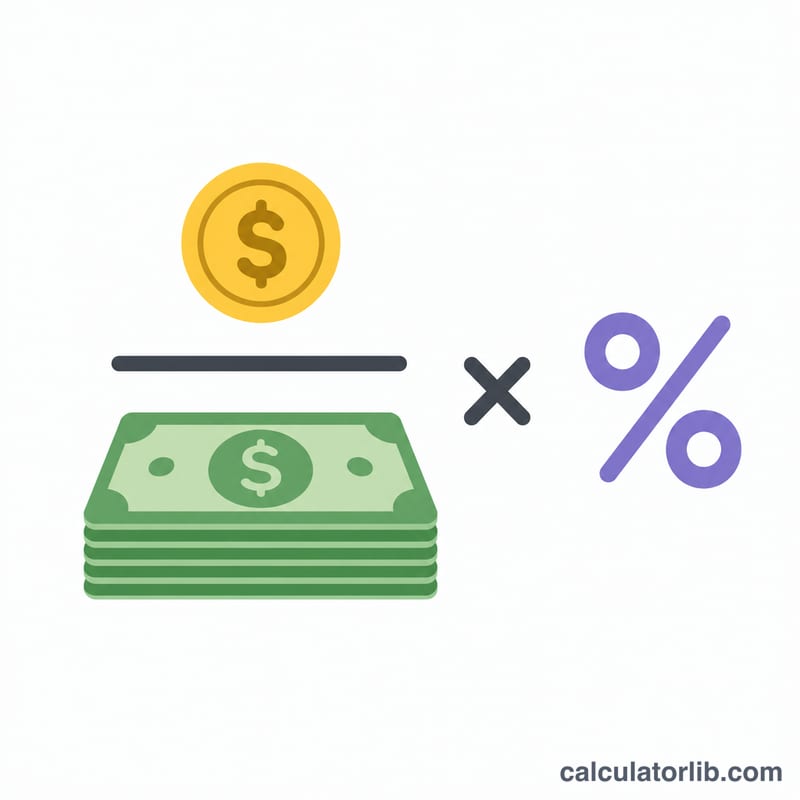
The math is simple: $$\text{Effective Rate} = \frac{\text{Total Tax Paid}}{\text{Taxable Income}} \times 100$$. Because tax systems are usually progressive, your effective rate is almost always lower than your top marginal bracket. For example, only the income above each bracket threshold is taxed at the higher rate, so the overall average ends up below the headline number.
Worked Example
Suppose you paid $9,000 in total tax on a taxable income of $60,000. Dividing 9,000 by 60,000 gives 0.15, and multiplying by 100 gives an effective tax rate of 15%. Your after-tax income is $$\$60{,}000 - \$9{,}000 = \$51{,}000$$. Even if your highest bracket were 22%, your true average burden is just 15%.
FAQ
Is effective rate the same as marginal rate? No. The marginal rate is the rate on your next dollar earned; the effective rate is the average across all your income.
Should I use gross income or taxable income? Use taxable income for the truest effective rate, but you can also compute it against gross income to see your overall burden — just be consistent.
Why is my effective rate lower than my bracket? Progressive systems tax only the income within each bracket at that bracket's rate, plus deductions reduce taxable income, pulling the average down.