
What the DCF Calculator Does
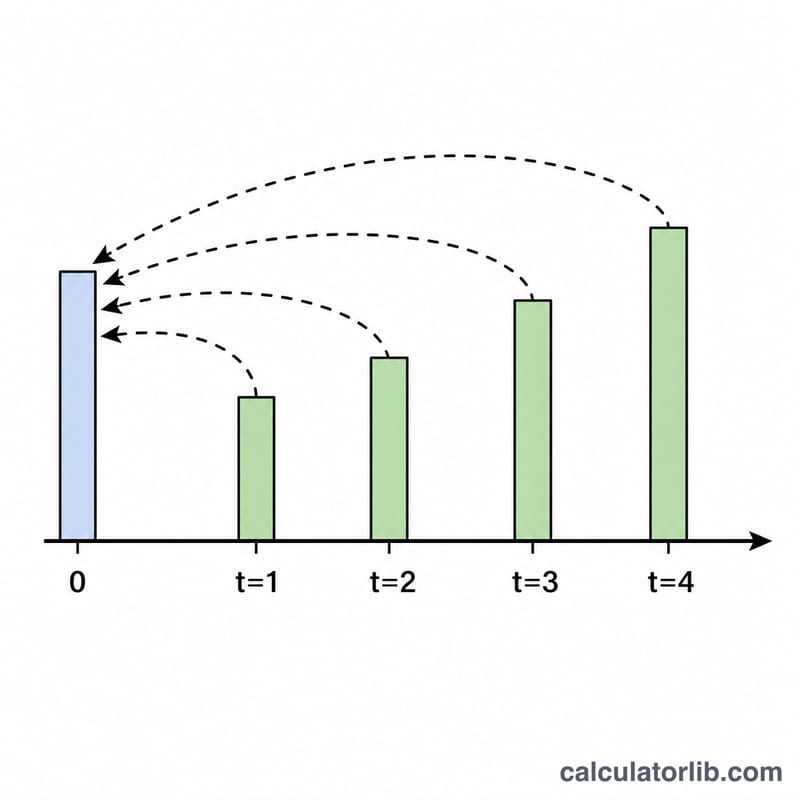
The Discounted Cash Flow (DCF) Calculator estimates the present value of a stream of cash flows that grow at a steady rate each year. It is widely used in finance and valuation around the world to answer one question: what is a series of future cash flows worth in today's money? Because money received later is worth less than money today, each year's cash flow is "discounted" back to the present using a discount rate.
The Inputs You Enter
- Initial Cash Flow – the base amount (CF0) the cash flow grows from.
- Growth Rate (%) – how much the cash flow increases each year (g).
- Discount Rate (%) – your required return or cost of capital used to discount future amounts (r).
- Number of Years – how many years (n) of cash flows to include.
The Formula
The calculator sums the discounted value of each year's grown cash flow:
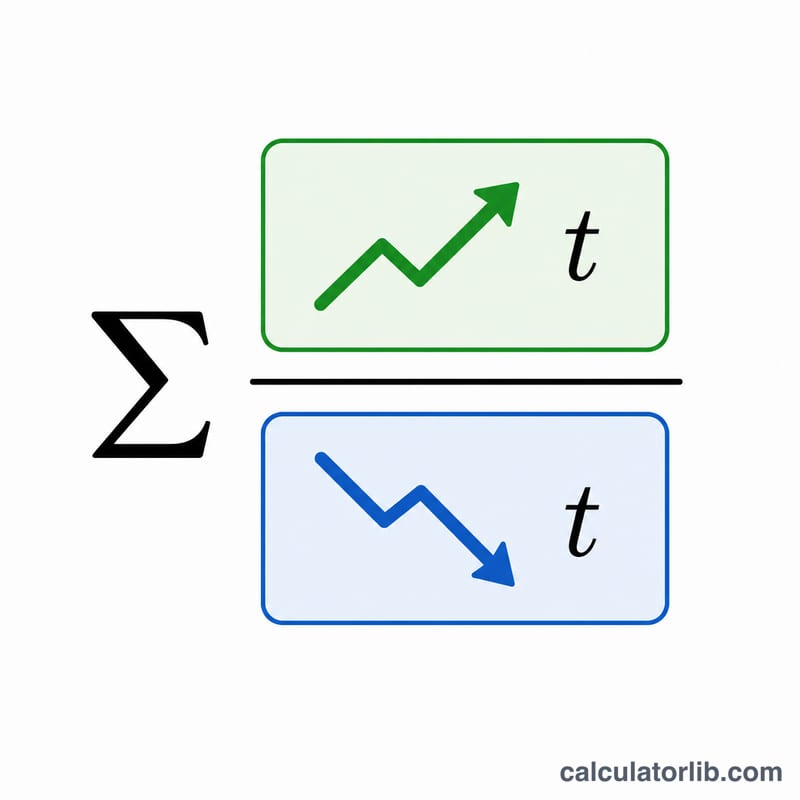
DCF = Σ [ CF₀ × (1 + g)ᵗ ] / (1 + r)ᵗ, for t = 1 to n.
For each year it first grows the cash flow by (1 + g)ᵗ, then multiplies by a discount factor of 1 / (1 + r)ᵗ. Adding up all the yearly present values gives the total present value.
Worked Example
Suppose Initial Cash Flow = 1,000, Growth Rate = 5%, Discount Rate = 10%, over 3 years.
- Year 1: 1,000 × 1.05 = 1,050; ÷ 1.10 = 954.55
- Year 2: 1,000 × 1.05² = 1,102.50; ÷ 1.10² = 911.16
- Year 3: 1,000 × 1.05³ = 1,157.63; ÷ 1.10³ = 869.74
Total present value ≈ 2,735.45. So three growing cash flows totalling 3,310.13 in nominal terms are worth about 2,735 today.
Frequently Asked Questions
Why is the discount rate so important? It reflects risk and opportunity cost. A higher discount rate shrinks future cash flows more, lowering the total present value; a lower rate raises it.
What if growth exceeds the discount rate? The calculator still computes each year correctly, but values won't shrink as quickly. Over many years, persistently g > r produces very large totals, which is usually unrealistic for long horizons.
Does this include a terminal value? No. This tool sums only the explicit years you enter. For a full company valuation you would typically add a separate terminal value beyond the final year.