
What the Deposit Interest Calculator Does
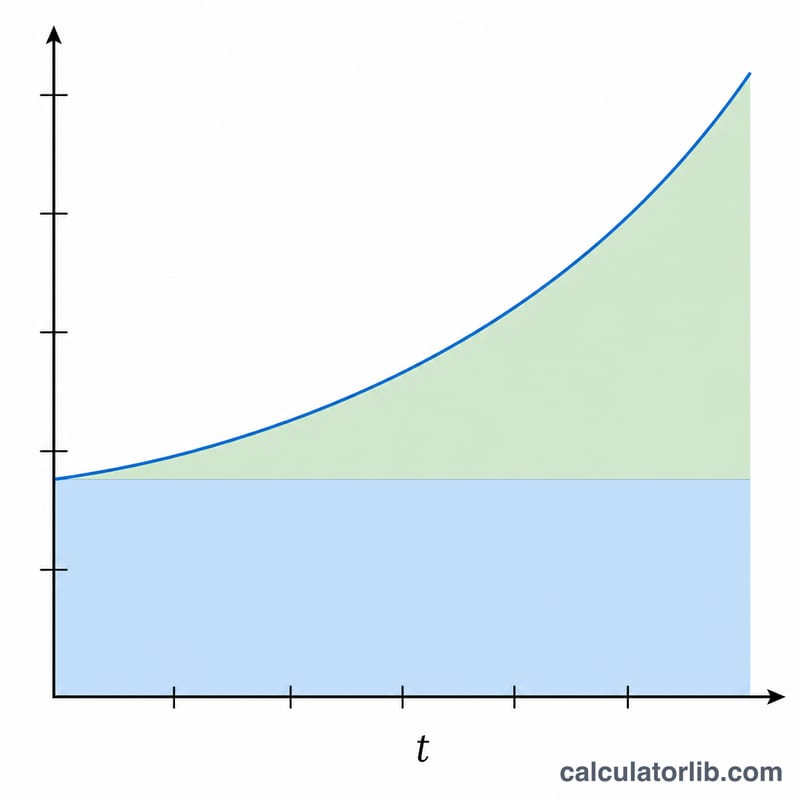
This calculator works out how much a savings deposit or fixed-term investment will grow when interest is compounded. You enter four things — your initial deposit, the annual interest rate, the number of years, and how often interest is added (the compound frequency) — and it returns your final balance plus the total interest you earned. The formula is universal, so it applies regardless of currency or country.
The Inputs Explained
- Initial Deposit Amount (P): the lump sum you put in at the start.
- Annual Interest Rate (%) (r): the stated yearly rate, e.g. enter 5 for 5%.
- Investment Period (Years) (t): how long the money stays invested.
- Compound Frequency (n): how many times per year interest is calculated and added — Annually (1), Semi-Annually (2), Quarterly (4), Monthly (12) or Daily (365).
The Formula
The calculator uses the standard compound interest equation:
A = P(1 + r / (100n))nt
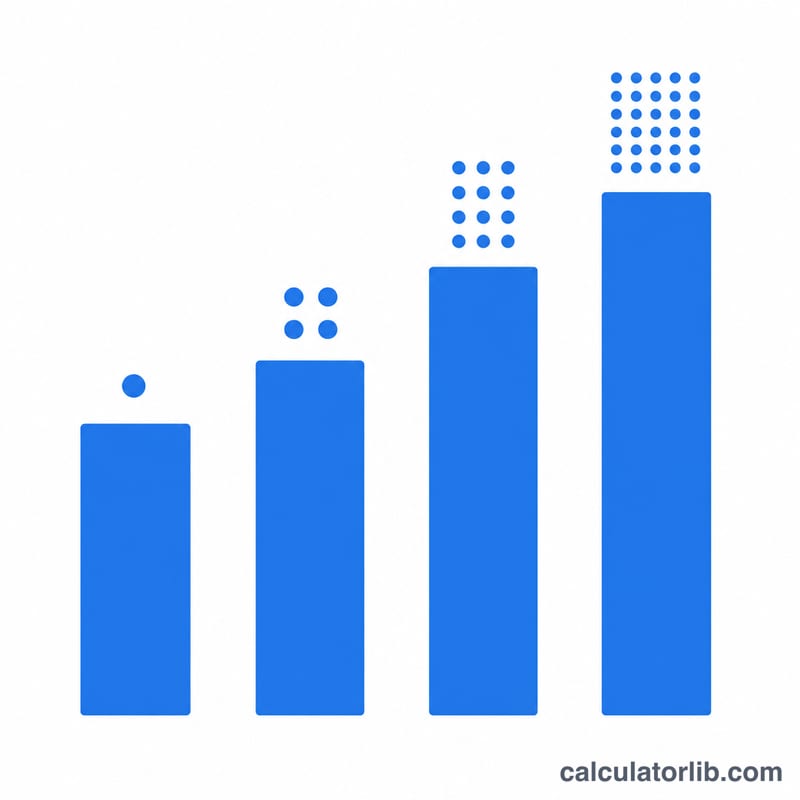
Here the rate is divided by 100 to convert the percentage to a decimal, then by n to find the rate applied at each compounding step. The exponent nt is the total number of compounding periods. Interest earned is simply the final balance minus your original deposit: Interest = A − P.
Worked Example
Suppose you deposit 10,000 at an annual rate of 5% for 3 years, compounded monthly (n = 12):
- Periodic rate = 5 / (100 × 12) = 0.0041667
- Periods = 12 × 3 = 36
- A = 10,000 × (1.0041667)36 ≈ 11,614.72
- Interest earned = 11,614.72 − 10,000 = 1,614.72
If you switched to daily compounding (n = 365), the balance would rise slightly to about 11,618 — showing how more frequent compounding boosts returns.
Frequently Asked Questions
Does more frequent compounding always earn more? Yes, but the gains shrink as you go from annual to daily. The difference between monthly and daily is usually tiny, while annual versus monthly is more noticeable.
Does this account for extra monthly deposits? No. This tool assumes a single initial deposit with no further contributions or withdrawals.
Is the result before or after tax? The figure is gross interest. It does not deduct any tax on savings interest, which varies by country, so check your local rules to estimate your net return.