
What Is the CC to HP Calculator?
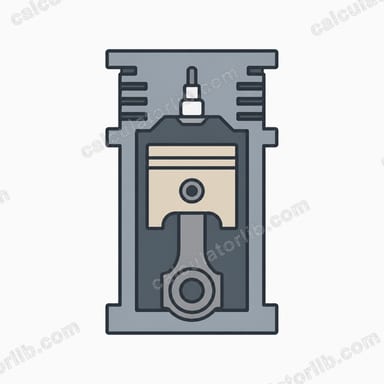
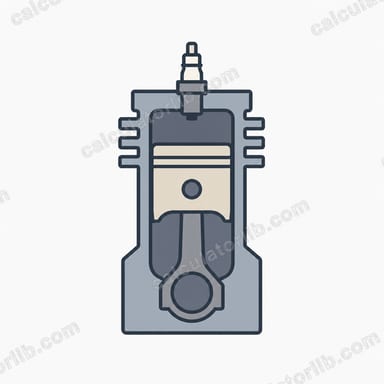
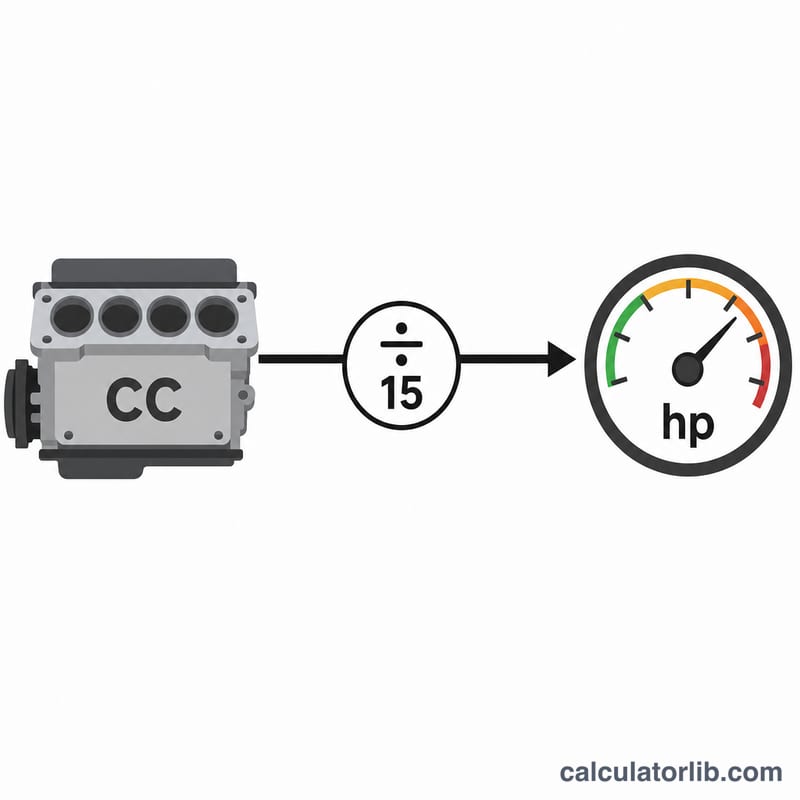
This tool gives a quick, ballpark estimate of an engine's horsepower (hp) from its displacement measured in cubic centimeters (cc). It uses a long-standing mechanic's rule of thumb: a typical naturally aspirated gasoline engine produces roughly one horsepower for every 15 cc of displacement. Because real power output depends on tuning, aspiration, fuel, RPM and design, this is an approximation rather than a spec-sheet figure.
How to Use It
Enter your engine's displacement in cc (for example 1500 for a 1.5-litre engine). The default divisor is 15, which suits everyday gasoline engines. If your engine is high-performance, turbocharged or a diesel, you can lower the divisor (e.g. 8–12) for more output per cc, or raise it for an economy or low-revving engine. The calculator instantly shows the estimated horsepower and the equivalent power in kilowatts.
The Formula Explained
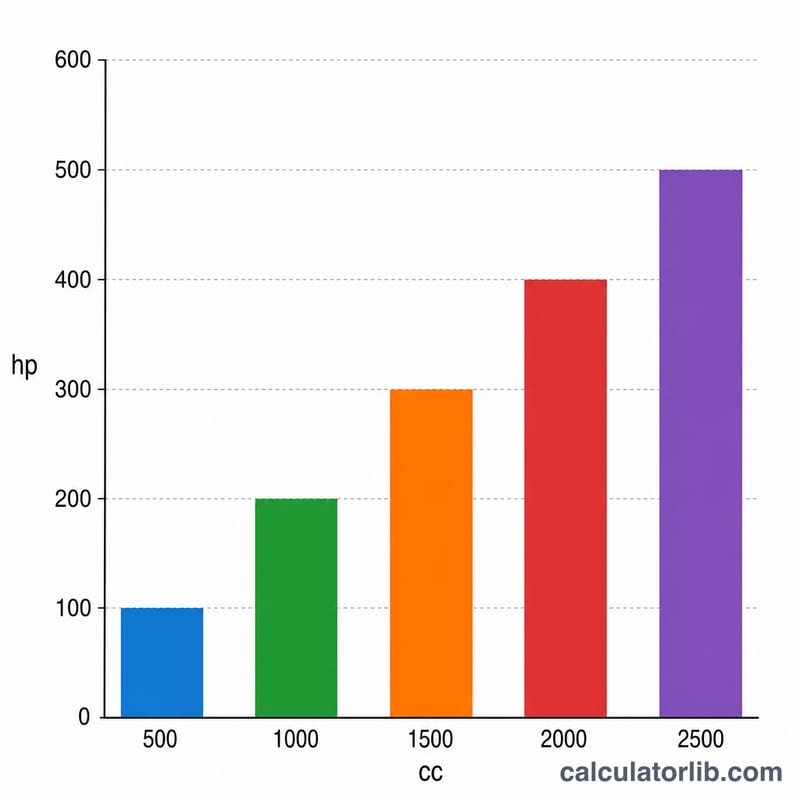
The core relationship is $$\text{HP} = \frac{\text{Displacement (cc)}}{\text{Divisor}}$$. With the standard divisor of 15, a 1500 cc engine gives \(1500 / 15 = 100\) hp. The result is then converted to kilowatts using \(1\ \text{hp} = 0.7457\ \text{kW}\), so \(100\ \text{hp} \approx 74.57\ \text{kW}\).
Worked Example
Suppose you have a 998 cc city-car engine. Using the default divisor: \(998 / 15 \approx 66.5\) hp, which equals about 49.6 kW. A sportier engine of the same size might use a divisor of 10, giving roughly 99.8 hp.
FAQ
Is cc/15 accurate? It is only a rough guide. Modern turbo engines easily exceed it, while older or low-tune engines fall short.
What divisor should I use? About 15 for standard gasoline engines, 8–12 for performance or forced-induction engines, and higher for economy or diesel engines.
Does this work for motorcycles? Yes, the same rule applies, though high-revving bike engines often beat the cc/15 estimate.