
What Is a GVWR Calculator?
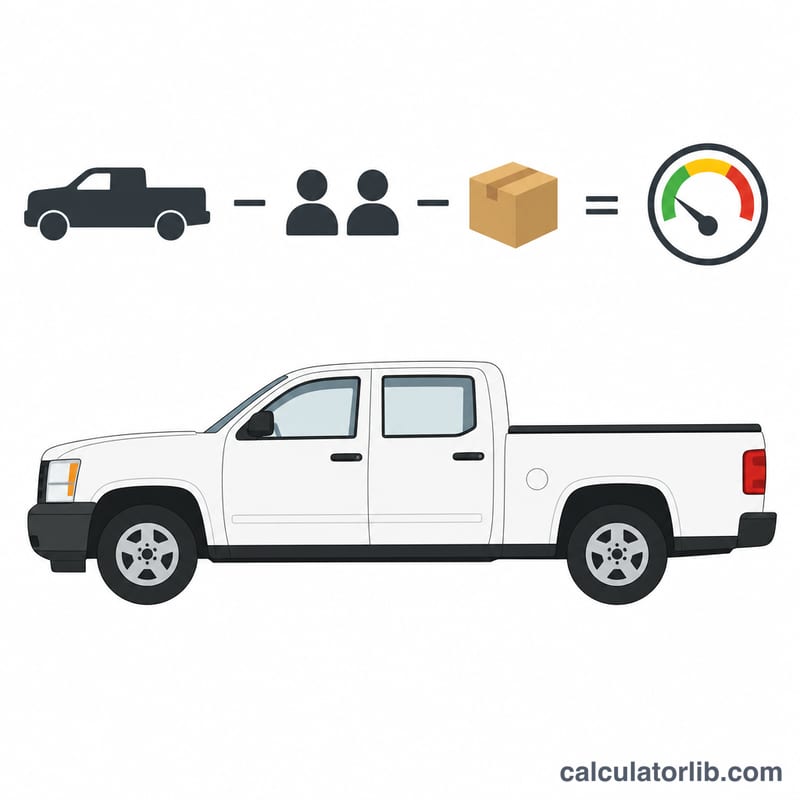
GVWR stands for Gross Vehicle Weight Rating — the maximum total weight a vehicle is designed to safely carry, including the vehicle itself, all passengers, fuel, and cargo. This calculator subtracts the weight you are already carrying from the GVWR to reveal how much payload capacity you have left. Staying under the GVWR protects your brakes, tires, axles, and suspension, and keeps you legal on the road.
How to Use It
Enter four values, all in pounds: the manufacturer's GVWR (found on the driver-door jamb sticker), the vehicle's curb weight (empty weight with fluids), the combined passenger weight, and the cargo weight you plan to load. The calculator returns your remaining available payload. A negative result means you are over the rating and must lighten the load.
The Formula Explained
The math is a simple subtraction:
$$\text{Available Payload} = \text{GVWR} - \left( \text{Curb Weight} + \text{Passenger Weight} + \text{Cargo Weight} \right)$$
GVWR is the ceiling; everything else is weight already accounted for. Note that trailer tongue weight (if towing) should be included in cargo, and remember GVWR is different from GCWR, which also includes a towed trailer.
Worked Example
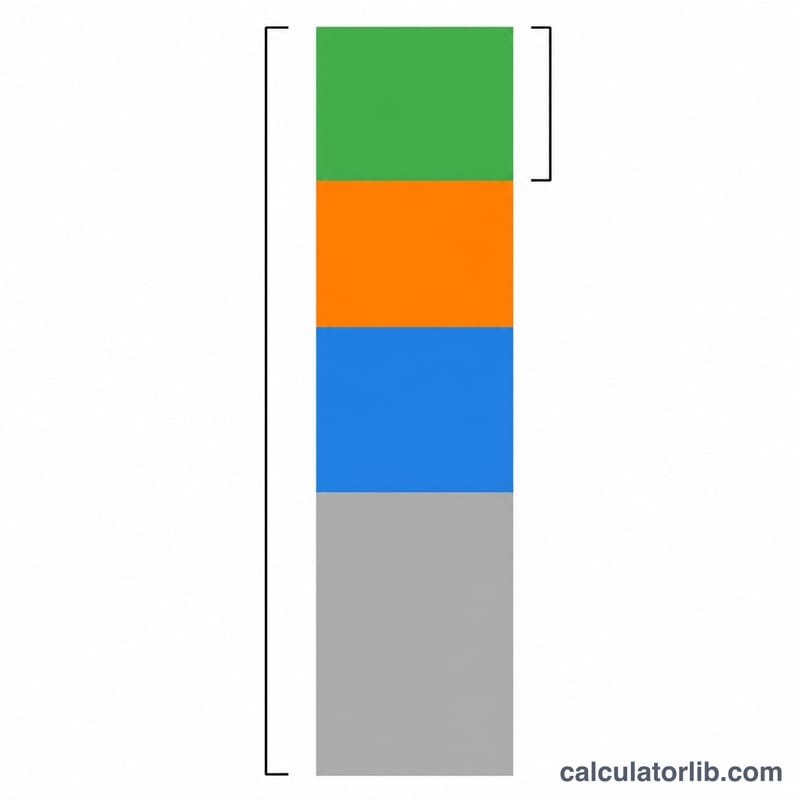
Suppose a pickup has a GVWR of 10,000 lbs and a curb weight of 6,000 lbs. You add 600 lbs of passengers and 1,500 lbs of cargo. Available payload = $$10{,}000 - 6{,}000 - 600 - 1{,}500 = 1{,}900 \text{ lbs}$$ remaining. You could safely add roughly another 1,900 lbs before hitting the rating.
FAQ
Where do I find my GVWR? On the certification label inside the driver's-side door jamb, listed as GVWR.
Is GVWR the same as payload? No. Payload is GVWR minus curb weight. This tool further subtracts the passengers and cargo you are already carrying to show what's left.
What if my result is negative? You have exceeded the GVWR — unsafe and often illegal. Remove cargo or passengers until the number is positive.