
What It Is
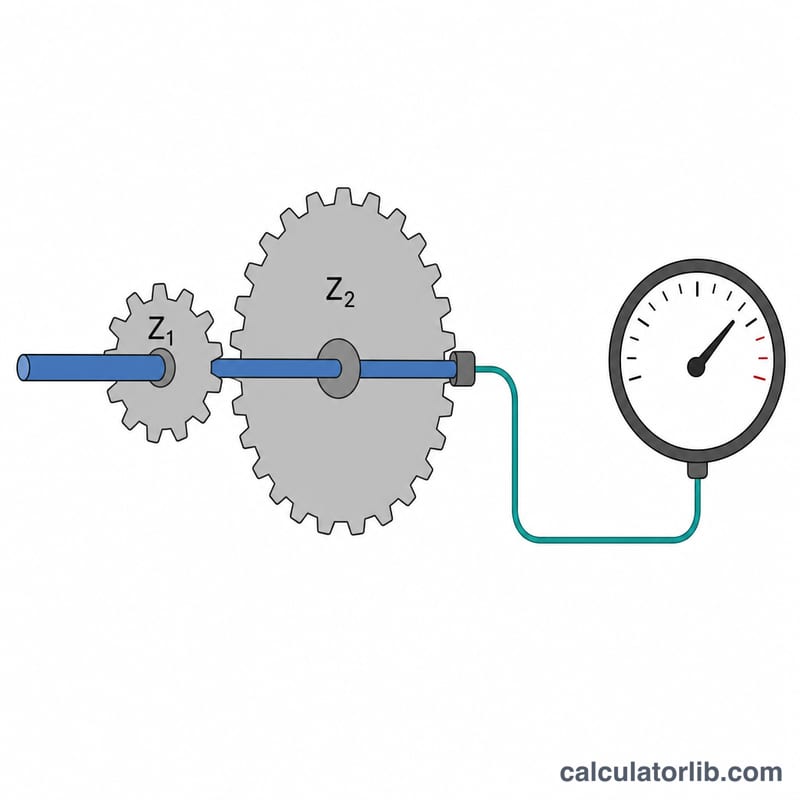
A speedometer gear calculator helps you pick the correct driven gear (the small gear that drives the speedometer cable or sensor) so your speedometer reads accurately. When you change tire size or rear-axle gearing, the number of times the output shaft turns per mile changes, which throws off the speedometer. Swapping the driven gear corrects the error.
How to Use It
Enter three values: the number of teeth on your current drive gear, your tire's actual revolutions per mile, and the speedometer's revolutions-per-mile rating (how many cable turns it expects per mile). The calculator returns the ideal driven gear tooth count, rounded to the nearest available gear, along with the exact unrounded figure.
The Formula Explained
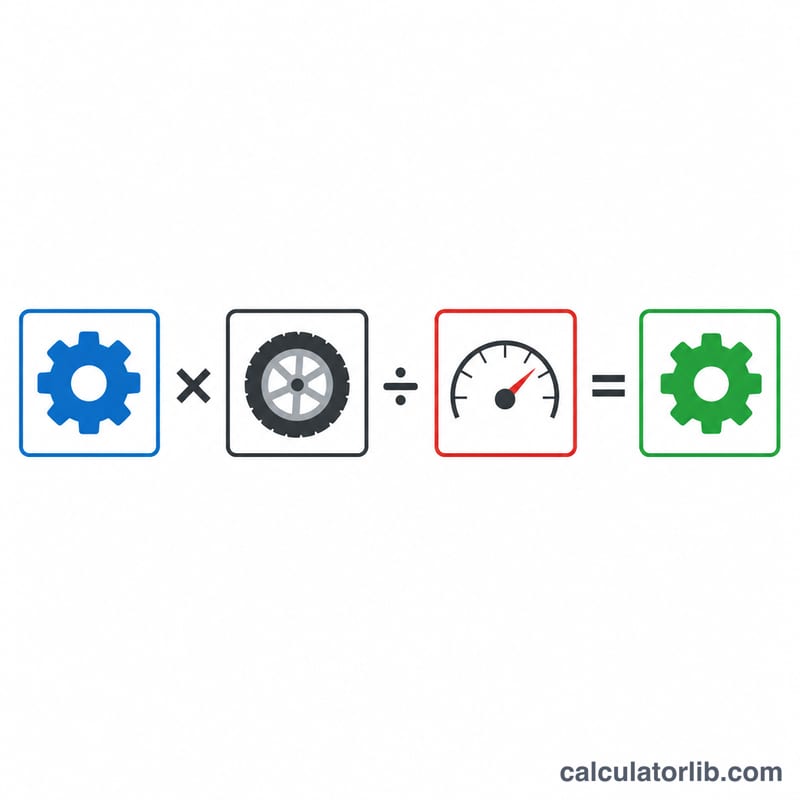
The relationship is a simple proportion: $$N_{driven} = \text{Drive Teeth} \times \frac{\text{Tire Revs/Mile}}{\text{Speedo Revs/Mile}}$$ The ratio of tire revolutions to the speedometer's expected revolutions tells you how much faster or slower the cable should spin; multiplying the drive gear teeth by that ratio yields the driven gear that delivers the right cable speed.
Worked Example
Suppose your drive gear has 8 teeth, your tires turn 700 revolutions per mile, and your speedometer is rated for 1,000 revolutions per mile. Then $$\text{driven teeth} = 8 \times \left(700 \div 1000\right) = 8 \times 0.7 = 5.6,$$ which rounds to 6 teeth. Install the nearest available 6-tooth driven gear for the most accurate reading.
FAQ
What if the result isn't a whole number? Gears come in whole tooth counts, so round to the nearest available gear. A small fraction of a tooth produces only a tiny error.
Where do I find tire revs per mile? Tire manufacturers publish it, or estimate it as \(20168 \div \text{tire diameter (inches)}\).
What is speedo revs per mile? It's the transmission/speedometer specification for how many cable rotations equal one mile, typically printed in the service manual.