

What this calculator does
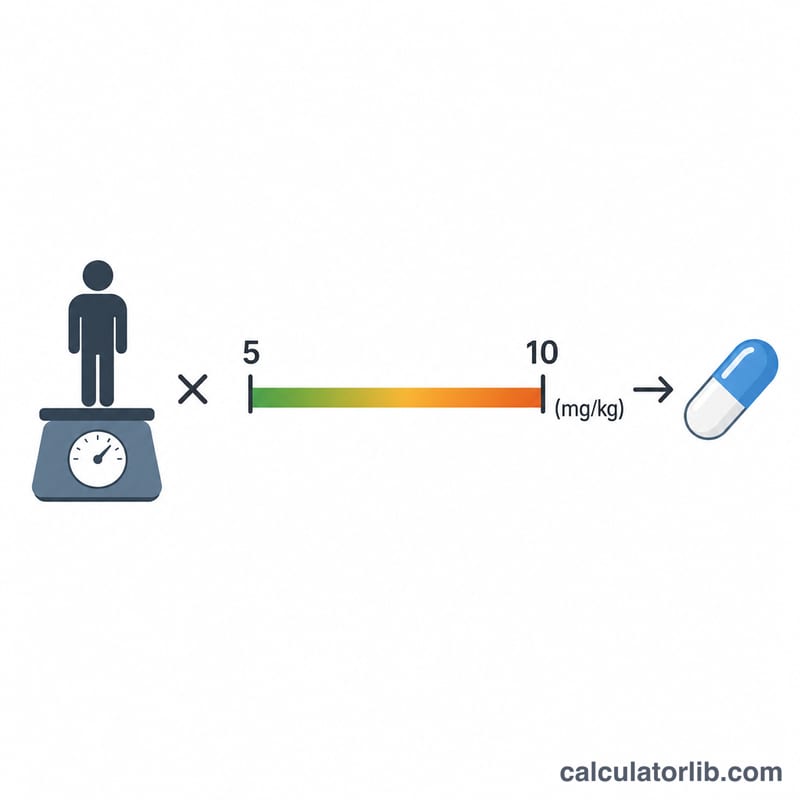
The Ibuprofen Dosage Calculator estimates a weight-based single dose of ibuprofen using the widely cited range of 5–10 mg per kilogram of body weight per dose. It also shows the lower and upper bounds of that range and an estimated daily maximum. This is an educational tool, not medical advice — dosing for children especially should always be confirmed with a clinician, pharmacist, or the product packaging.
How to use it
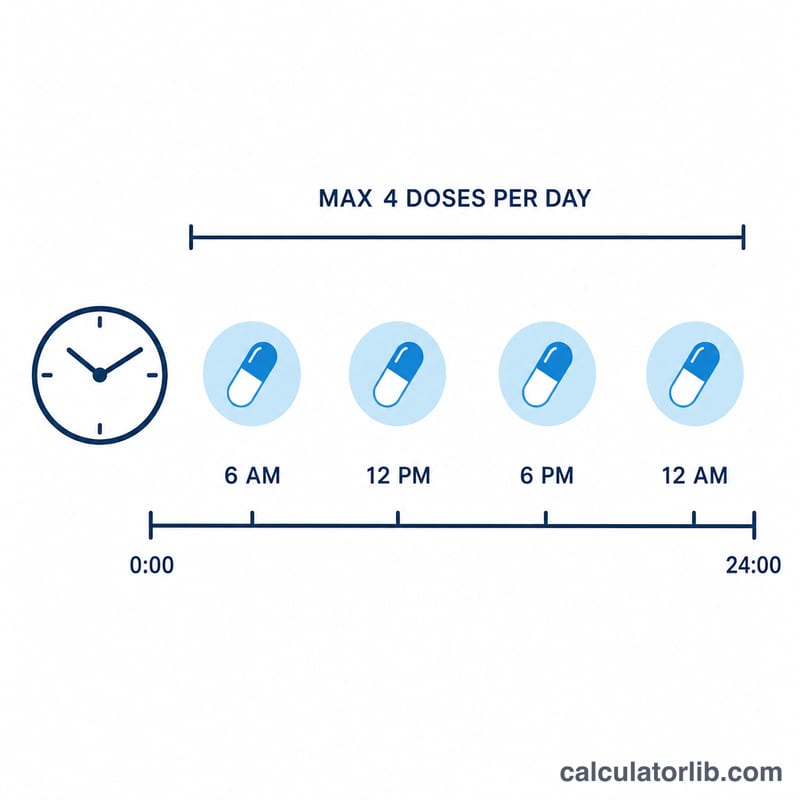
Enter the body weight in kilograms and choose a dose strength: 5 mg/kg (low), 7.5 mg/kg (mid), or 10 mg/kg (standard maximum per dose). The calculator multiplies weight by the selected mg/kg value to give a single dose, then displays the 5–10 mg/kg band and a suggested daily maximum. Ibuprofen is generally taken every 6–8 hours, so doses are spread across the day rather than taken at once.
The formula explained
The core equation is simply $$\text{Dose} = \text{Weight (kg)} \times \text{Dose per kg (mg/kg)}$$ For a per-dose value, the per-kg figure sits between 5 and 10 mg/kg. The daily maximum here uses roughly 40 mg/kg/day, capped at about 3200 mg/day, which approximates common adult ceilings: $$\text{Daily Max} = \min\!\left(40 \times \text{Weight (kg)},\; 3200\,\text{mg}\right)$$ These are general references — actual product limits vary by formulation and country.
Worked example
For a 20 kg child at the standard 10 mg/kg: \(20 \times 10 = 200\) mg per dose. The 5–10 mg/kg band is 100–200 mg. The daily maximum is \(40 \times 20 = 800\) mg/day, well under the 3200 mg adult cap.
FAQ
How often can ibuprofen be taken? Typically every 6–8 hours, not exceeding the daily maximum or label instructions.
Why a range instead of one number? Clinicians choose within 5–10 mg/kg based on pain or fever severity and the person's tolerance.
Is this safe for infants? Ibuprofen is generally not recommended under 6 months. Always consult a healthcare professional for young children.