
What is the Melatonin Dosage Calculator?
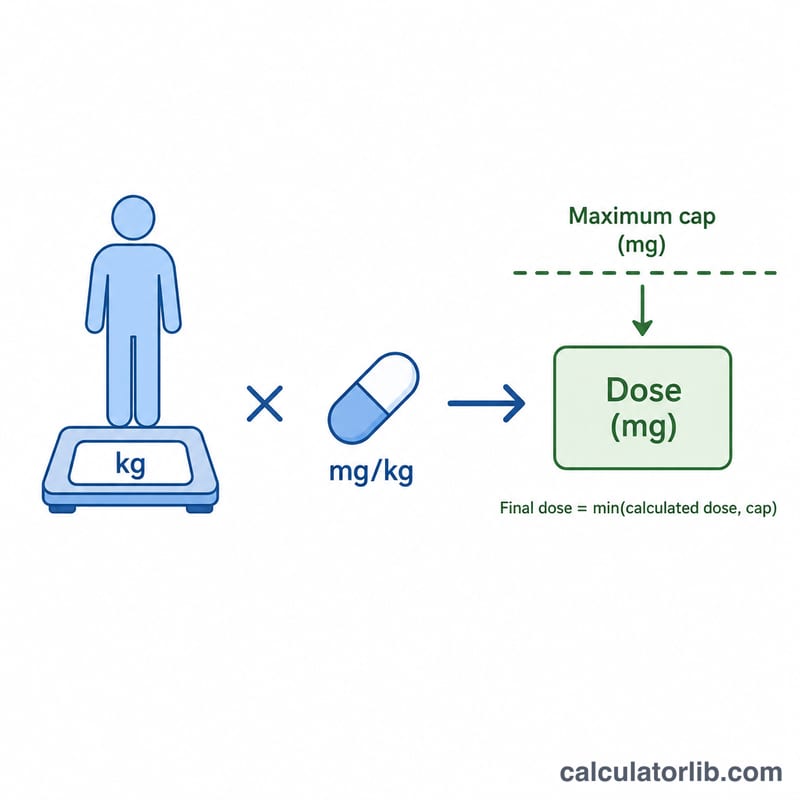
This calculator gives a quick, weight-based estimate of a melatonin dose in milligrams. It multiplies body weight by a chosen dose-per-kilogram value and then limits the result to a maximum safety cap. It is a general educational tool and is not medical advice — melatonin needs and tolerances vary widely between individuals, and you should always confirm any dose with a doctor or pharmacist before use, especially for children.
How to use it
Enter the person's body weight in kilograms, the dose per kilogram you want to apply (a commonly cited starting value is 0.05 mg/kg), and a maximum dose cap (for example 5 mg). The calculator shows the raw weight-based dose, the cap, the final recommended dose, and whether the cap was applied.
The formula explained
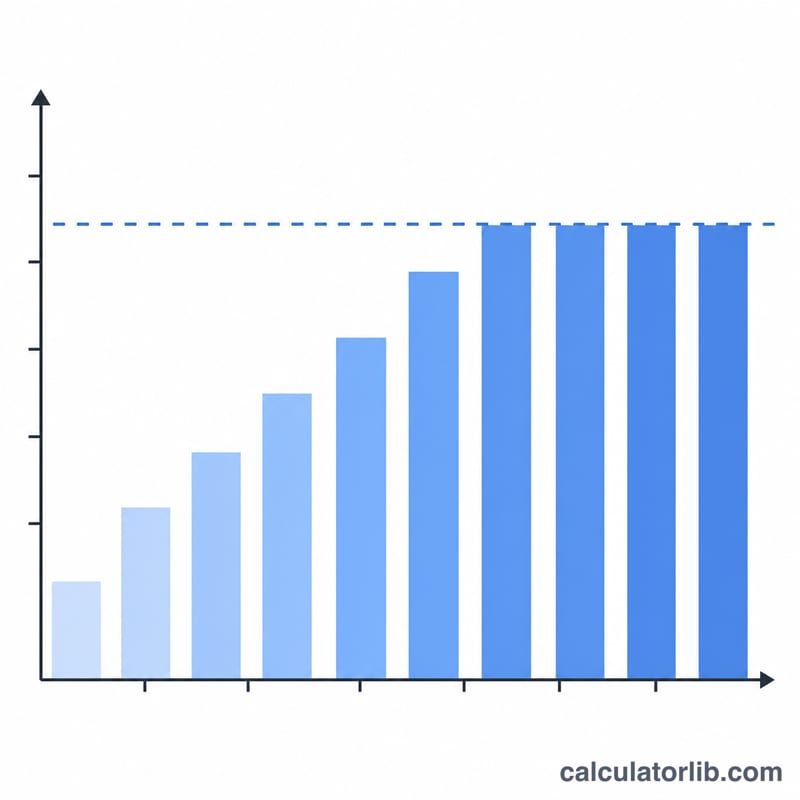
The weight-based dose is simply weight × dose-per-kg. Because higher body weight would otherwise produce very large numbers, the final dose is the minimum of that value and the maximum cap: min(rawDose, max). When the raw dose exceeds the cap, the result is "capped".
$$\text{Dose}_{mg} = \min(\text{weight}_{kg} \times \text{dose}_{mg/kg},\ \text{max})$$
Worked example
A 20 kg child at 0.05 mg/kg: \(20 \times 0.05 = 1.0\) mg. With a 5 mg cap, 1.0 is below the cap, so the final dose is 1.0 mg and it is not capped. A 120 kg adult at 0.05 mg/kg: \(120 \times 0.05 = 6.0\) mg, which exceeds a 5 mg cap, so the final dose is limited to 5 mg (capped).
FAQ
Is 0.05 mg/kg the right dose? It is a commonly referenced starting point in some guidelines, but appropriate doses vary. Follow professional advice.
Why is there a cap? More melatonin is not necessarily better; many recommendations limit doses to a few milligrams to reduce side effects.
Can I use this for adults? Yes, the math works for any weight, but adult melatonin needs are not strictly weight-proportional — treat the output as a rough estimate only.