
What this calculator does
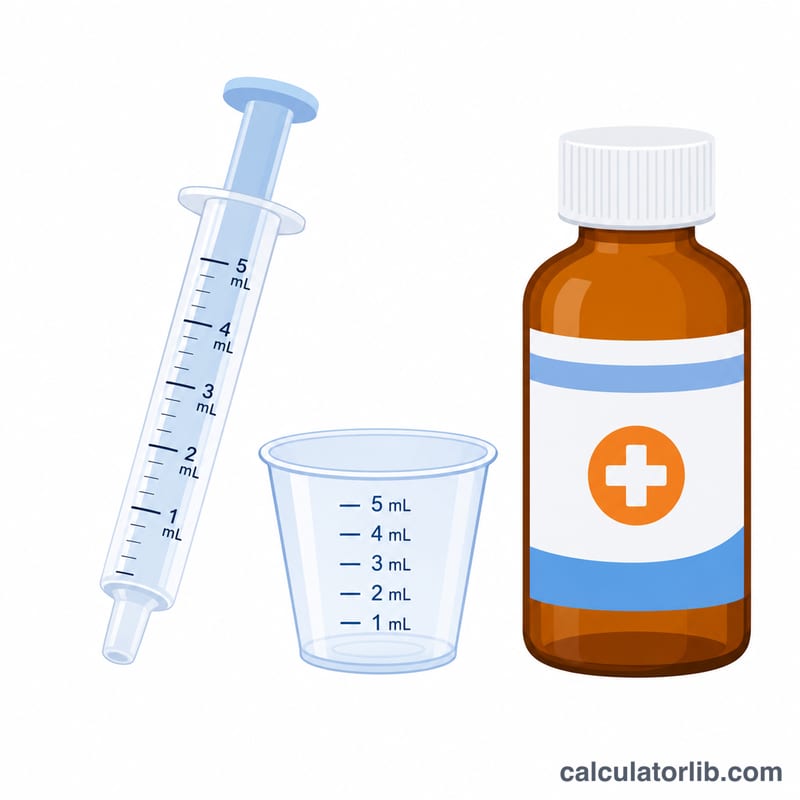
This tool estimates a weight-based single dose of pediatric ibuprofen (e.g. Children's Advil or Motrin) for the United States. It converts a child's weight and the standard milligrams-per-kilogram dosing into both a milligram amount and the actual liquid volume in milliliters to draw up, based on the product concentration you select. This is an educational aid, not medical advice — ibuprofen is generally not given to infants under 6 months.
How to use it
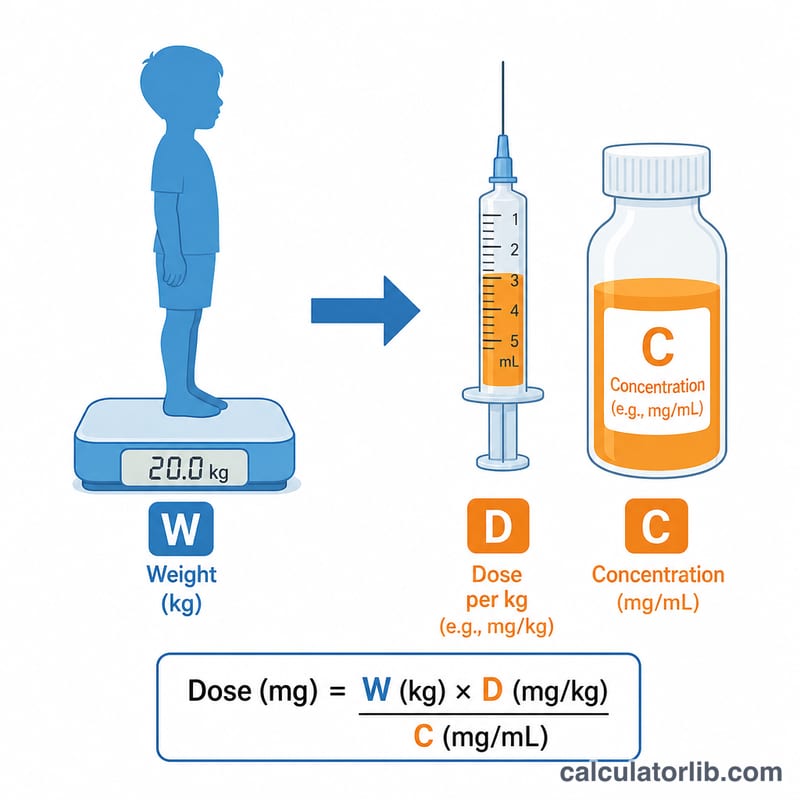
Enter the child's weight in kilograms, the dose per kilogram (the common pediatric range is 5–10 mg/kg per dose), and pick the liquid concentration shown on your bottle. The calculator returns the dose in mg, the volume in mL, the recommended daily maximum (about 40 mg/kg/day), and roughly how many such doses that allows.
The formula explained
The dose in milligrams equals the dose per kilogram times the weight: $$\text{Dose}_{mg} = D \times W$$. To find how much liquid to give, divide the milligram dose by the concentration printed on the label: $$\text{Volume}_{mL} = \frac{\text{Dose}_{mg}}{C}$$. For example a 20 mg/mL suspension means each milliliter contains 20 mg.
Worked example
A child weighs 15 kg and you use 10 mg/kg with a 20 mg/mL suspension. $$\text{Dose} = 10 \times 15 = 150 \text{ mg}$$ $$\text{Volume} = \frac{150}{20} = 7.5 \text{ mL}$$ The daily maximum is \(40 \times 15 = 600\) mg, allowing about 4 doses of 150 mg in 24 hours.
FAQ
How often can ibuprofen be given? Typically every 6–8 hours, up to 4 doses per day, but follow the label and your doctor.
Is this for Aleve (naproxen)? No — this calculator models ibuprofen. Naproxen has different dosing and is not recommended for young children.
What if my bottle uses a different concentration? Choose the matching concentration option so the mL volume matches your product.