
What this calculator does
This tool estimates the intramuscular (IM) epinephrine (adrenaline) dose for a child in anaphylaxis based on body weight, and converts that dose into the volume to draw up for a given vial concentration. It is intended for clinical reference and education only — always follow your local resuscitation protocol and verify the vial label before administration.
How to use it
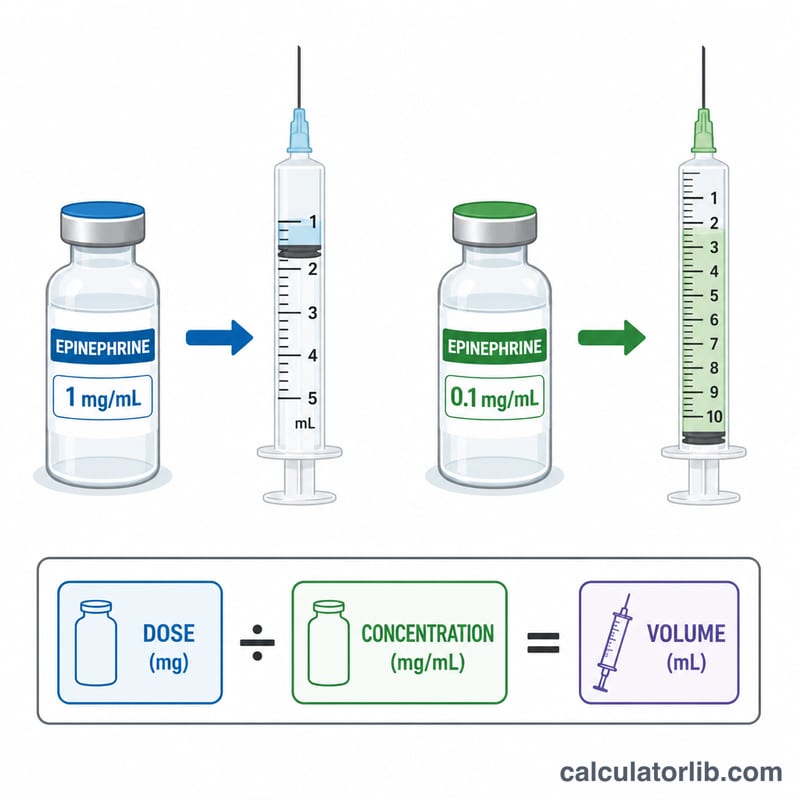
Enter the child's weight in kilograms and choose the epinephrine concentration on your vial: 1 mg/mL (1:1000, the standard IM form) or 0.1 mg/mL (1:10,000). The calculator returns the dose in milligrams and the volume in milliliters to inject.
The formula explained
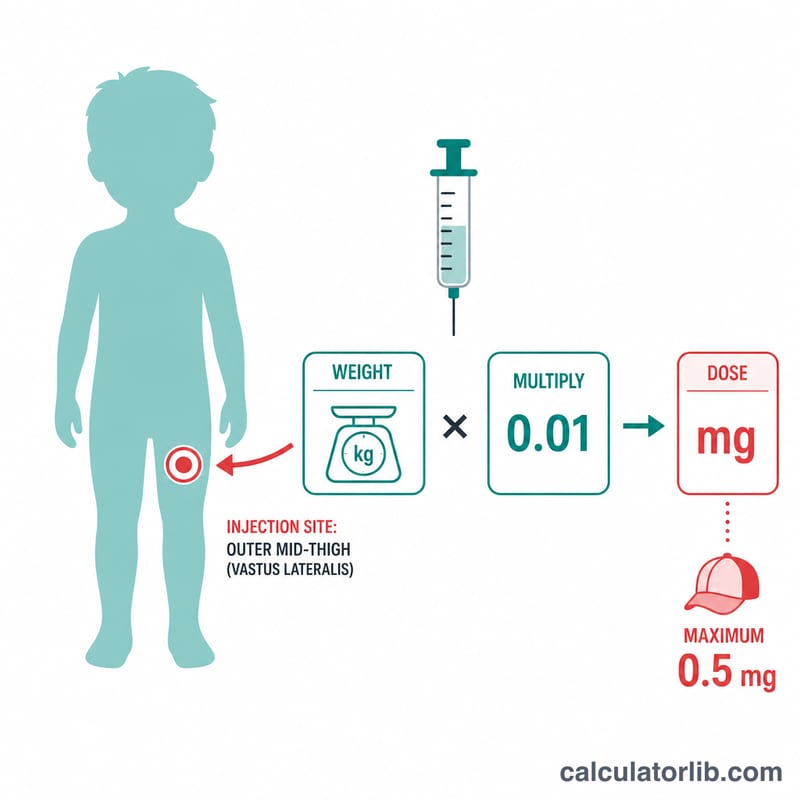
The standard IM anaphylaxis dose is 0.01 mg/kg, with a maximum single dose of 0.5 mg. The volume to administer is the dose divided by the concentration:
$$\text{Volume} = \frac{\text{Dose}}{\text{Concentration}}$$The "cap reached" row tells you whether the weight-based dose exceeded \(0.5\) mg and was therefore limited.
Worked example
A 20 kg child with 1 mg/mL epinephrine:
$$\text{Dose} = 0.01 \times 20 = 0.2 \text{ mg}$$below the 0.5 mg cap.
$$\text{Volume} = \frac{0.2}{1} = 0.2 \text{ mL IM}$$A 70 kg patient gives \(0.7\) mg, which is capped to \(0.5\) mg, so volume = \(0.5\) mL at 1 mg/mL.
FAQ
What concentration is used for IM injection? The 1 mg/mL (1:1000) preparation is standard for IM epinephrine in anaphylaxis. The 0.1 mg/mL (1:10,000) form is typically reserved for IV use in cardiac arrest.
Why is the dose capped at 0.5 mg? 0.5 mg is the maximum recommended single IM dose; heavier children and adults receive this fixed maximum rather than a larger weight-based dose.
Can the dose be repeated? Yes — IM epinephrine can be repeated every 5–15 minutes if there is inadequate response, per protocol. This calculator shows a single dose.