
What This Calculator Does
The Pediatric Dose Volume Calculator converts a weight-based medication order (in mg/kg) into the actual liquid volume (in mL) you need to draw up and give. It is widely used for liquid oral suspensions and injectable solutions where the order is written per kilogram of body weight. This tool is a universal math helper and is not a substitute for professional clinical judgment or local prescribing references.
How to Use It
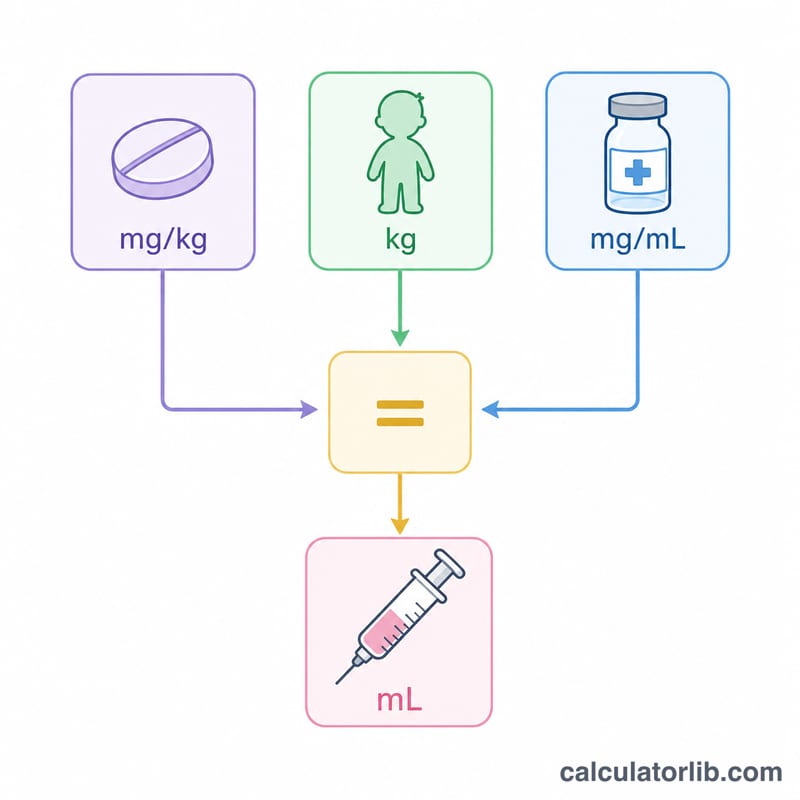
Enter three values: the prescribed dose in mg/kg, the patient weight in kilograms, and the concentration of the medication in mg/mL (read off the bottle or vial label). The calculator multiplies dose by weight to get the total milligrams required, then divides by the concentration to give the volume in millilitres.
The Formula Explained
$$\text{Volume (mL)} = \frac{\text{Dose (mg/kg)} \times \text{Weight (kg)}}{\text{Concentration (mg/mL)}}$$ The numerator (Dose \(\times\) Weight) is the total amount of drug in milligrams. Dividing by concentration cancels the milligrams and leaves millilitres, the volume of liquid containing that amount of drug.
Worked Example
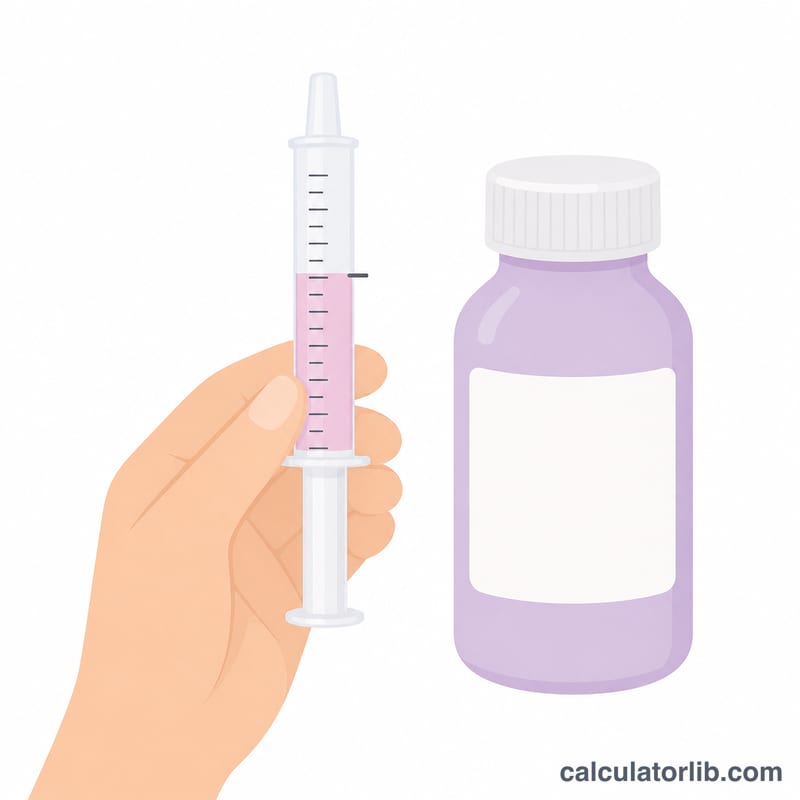
A child weighs 15 kg and is prescribed 10 mg/kg of a medication supplied at 25 mg/mL. Total dose = \(10 \times 15 = 150\) mg. Volume = \(150 \div 25 = 6\) mL. So you would administer 6 mL.
FAQ
What units must I use? Dose in mg/kg, weight in kg, and concentration in mg/mL. Keeping the units consistent is essential for an accurate result.
What if my concentration is given as mg/5 mL? Convert it first: for example 250 mg/5 mL equals 50 mg/mL. Enter the per-mL value.
Does it cap the maximum dose? No. Always check that the calculated dose does not exceed the maximum recommended dose for the patient and medication per your reference.