
What Is the Dose to Volume Calculator?
The Dose to Volume Calculator converts a prescribed (ordered) drug dose into the actual liquid volume you must draw up or administer, based on the concentration of the stock solution on hand. It answers the everyday clinical question: "The order is for X mg — how many mL do I give?" It is a universal arithmetic tool useful to nurses, pharmacists, students, and veterinary staff.
How to Use It
Enter the ordered dose (the amount the prescriber wants, e.g. 250 mg) and the stock concentration (how much drug is in each unit of volume, e.g. 125 mg per mL). The calculator divides the dose by the concentration to give the volume to administer. Make sure the mass units match (mg with mg, or units with units) so the result is in the volume unit of your concentration (usually mL).
The Formula Explained
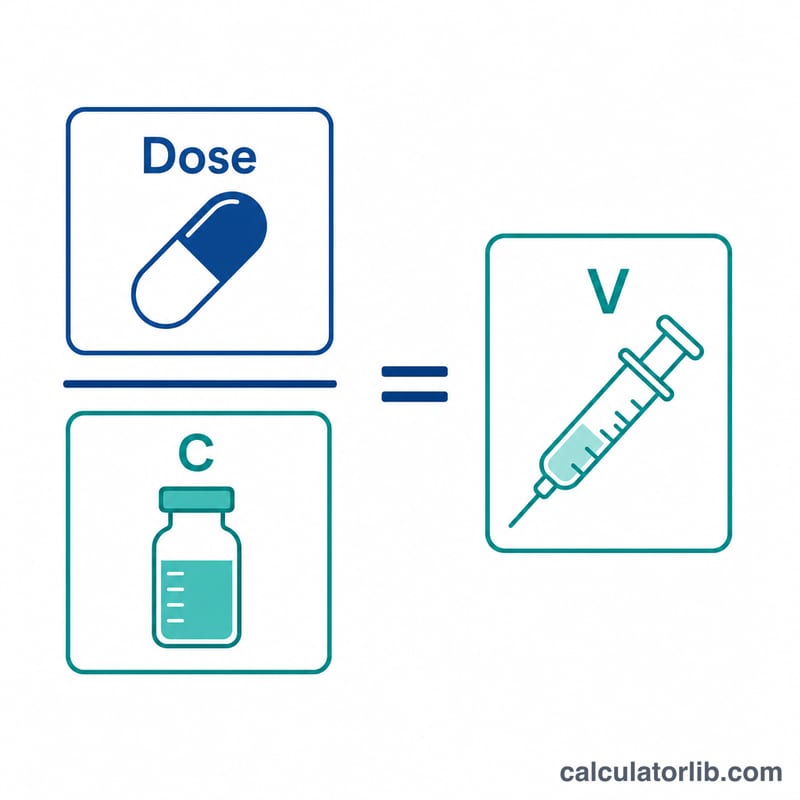
The relationship is simple proportion:
$$\text{Volume} = \text{Ordered Dose} \div \text{Stock Concentration}$$
Concentration is "amount per volume" (mg/mL). Dividing the desired amount by the amount-per-mL leaves you with the number of mL needed. This is the classic "desired over have" nursing dosage formula.
Worked Example
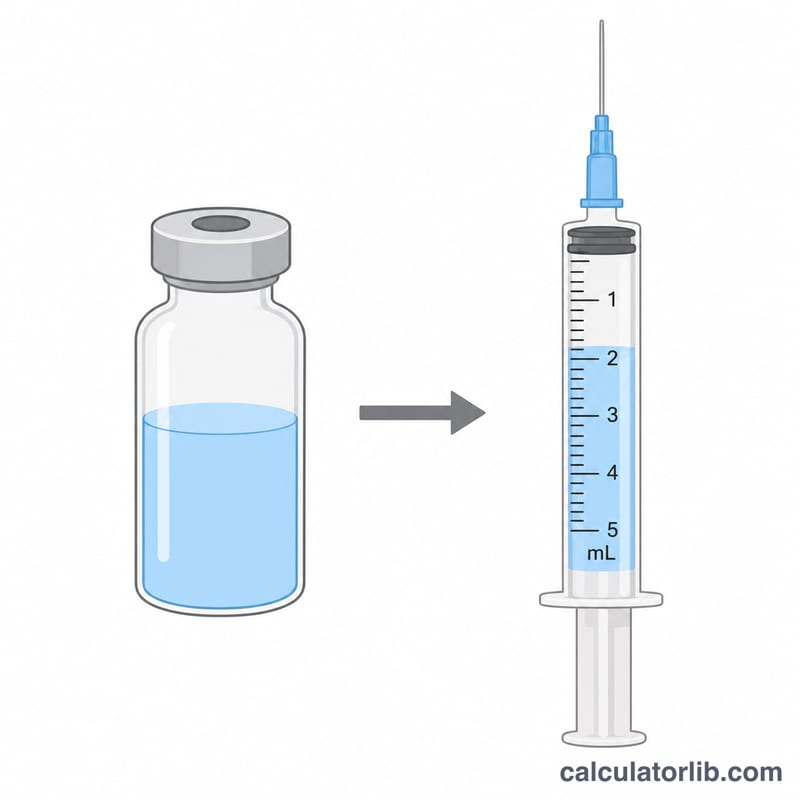
An order reads 250 mg. The vial on the shelf is labelled 125 mg/mL.
$$\text{Volume} = 250 \div 125 = 2\ \text{mL}$$
So you draw up 2 mL to deliver the 250 mg dose.
FAQ
What units should I use? Use any consistent pair. If dose is in mg and concentration is mg/mL, the volume is in mL. If you use micrograms, keep both in micrograms.
What if the answer has many decimals? Round according to your equipment and local policy; the calculator shows the precise value.
Is this a substitute for clinical judgement? No. Always double-check high-risk medications and follow your facility's verification protocol. This tool is an aid, not medical advice.