
What is engagement rate?
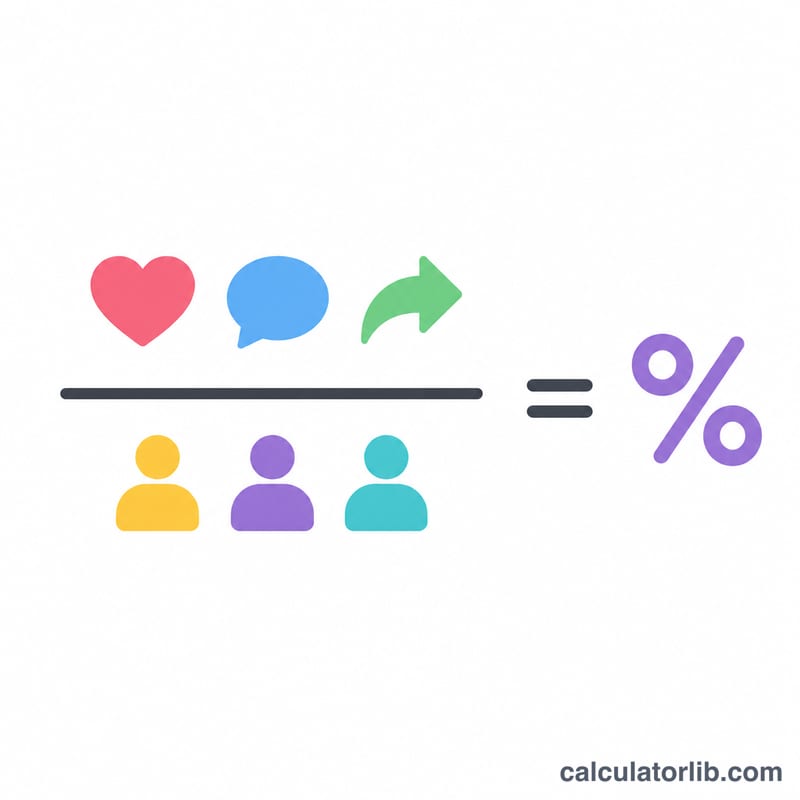
Engagement rate (ER) is the percentage of your audience that actively interacts with a post or account. Interactions include likes, comments, shares, saves and reactions. It is the single most useful metric for judging how well content resonates, because it normalizes raw engagement numbers against the size of your audience — letting a small creator compare fairly against a large brand.
How to use this calculator
Enter the total engagements (add up all likes, comments, shares and saves) and your followers or reach. Using followers gives engagement rate by follower count; using reach or impressions gives engagement rate by reach, which many marketers consider more accurate because it measures only people who actually saw the content. Click calculate to see your ER as a percentage.
The formula explained
The calculation is simple division turned into a percentage:
$$\text{ER} = \frac{\text{Engagements}}{\text{Audience}} \times 100$$
If you choose followers as your audience you get "ER by followers." If you use reach or impressions you get "ER by reach." Both use the same formula — only the denominator changes.
Worked example
Suppose a post earned 500 engagements and the account has 10,000 followers. $$\text{ER} = \left(\frac{500}{10{,}000}\right) \times 100 = 5\%$$ That would be considered an excellent engagement rate on most platforms, where 1–3% is typical.
FAQ
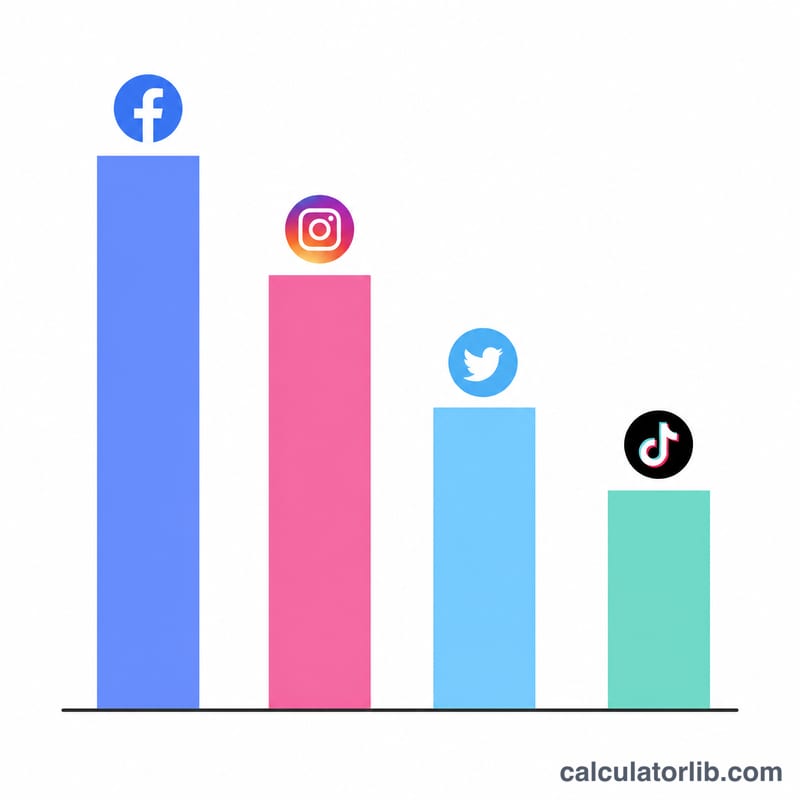
What is a good engagement rate? It varies by platform and audience size, but 1–3% is average, 3–6% is good, and above 6% is excellent for most social networks.
Should I use followers or reach? Reach is generally more accurate because it counts only people who saw the post. Followers is easier and more widely reported. Be consistent so your numbers stay comparable over time.
Why is my engagement rate dropping as I grow? Larger accounts almost always have lower percentage engagement because not every follower sees or interacts with each post. This is normal and expected.