
What This Calculator Does
This tool estimates how many BTUs (British Thermal Units) per hour an air conditioner needs to cool a rectangular room. Sizing an AC correctly matters: an undersized unit runs constantly and never cools the space, while an oversized unit cycles on and off too quickly, wasting energy and leaving the room humid.
How to Use It
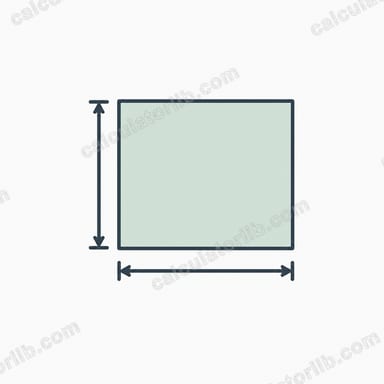
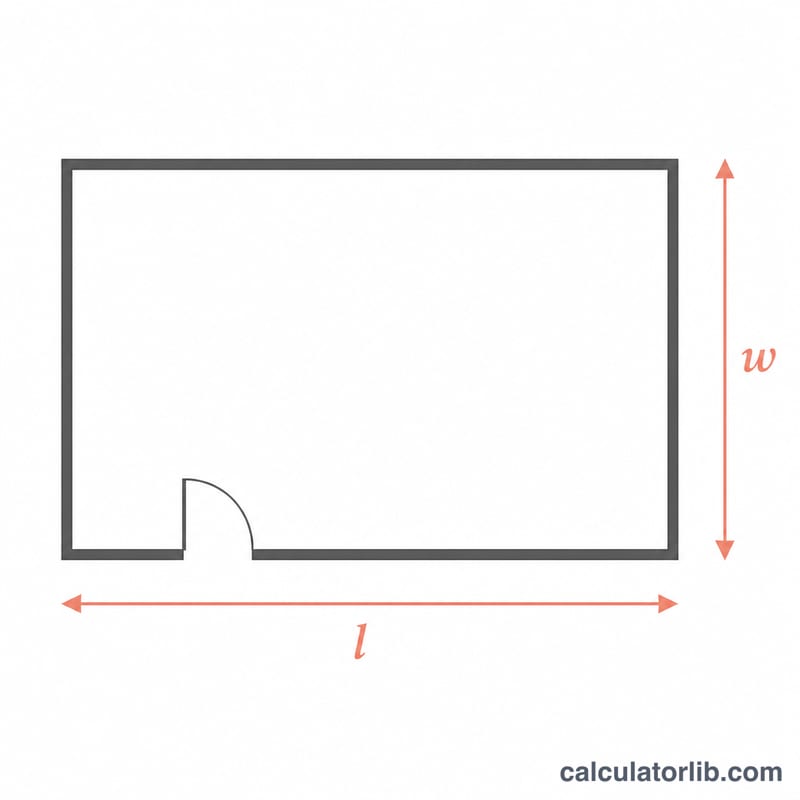
Measure the length and width of your room in feet and enter both values. The calculator multiplies them to get the floor area, then applies the common industry rule of 20 BTU per square foot to recommend a cooling capacity. Round up to the nearest standard AC size when shopping.
The Formula Explained
The equation is simply $$\text{BTU} = \text{Length (ft)} \times \text{Width (ft)} \times 20$$ The product of length and width gives the room's area in square feet, and multiplying by 20 converts that area into a baseline cooling requirement. The 20 BTU/sq ft figure assumes average ceiling height (about 8 ft), normal sun exposure, and moderate climate.
Worked Example
Suppose a living room is 15 ft long and 12 ft wide. Area = \(15 \times 12 = 180\) sq ft. Cooling capacity = \(180 \times 20 =\) 3,600 BTU/hr. You would look for a unit rated at roughly 3,500–4,000 BTU.
FAQ
Should I add BTUs for sunny rooms? Yes — add about 10% for rooms with heavy sun exposure, and subtract 10% for heavily shaded rooms.
What about high ceilings? The 20 BTU/sq ft rule assumes 8 ft ceilings. For taller ceilings, increase the result proportionally.
Does occupancy matter? Add about 600 BTU for each person who regularly occupies the room beyond two people, and 1,000 BTU if the room is a kitchen.