
What Is the Maximum Heart Rate Calculator?
This calculator estimates your maximum heart rate (MHR) — the highest number of times your heart can safely beat per minute during all-out exertion — using the well-known Fox formula: 220 minus your age. MHR is a foundation for setting cardio training intensity, pacing workouts, and planning heart-rate-based exercise zones.
How to Use It
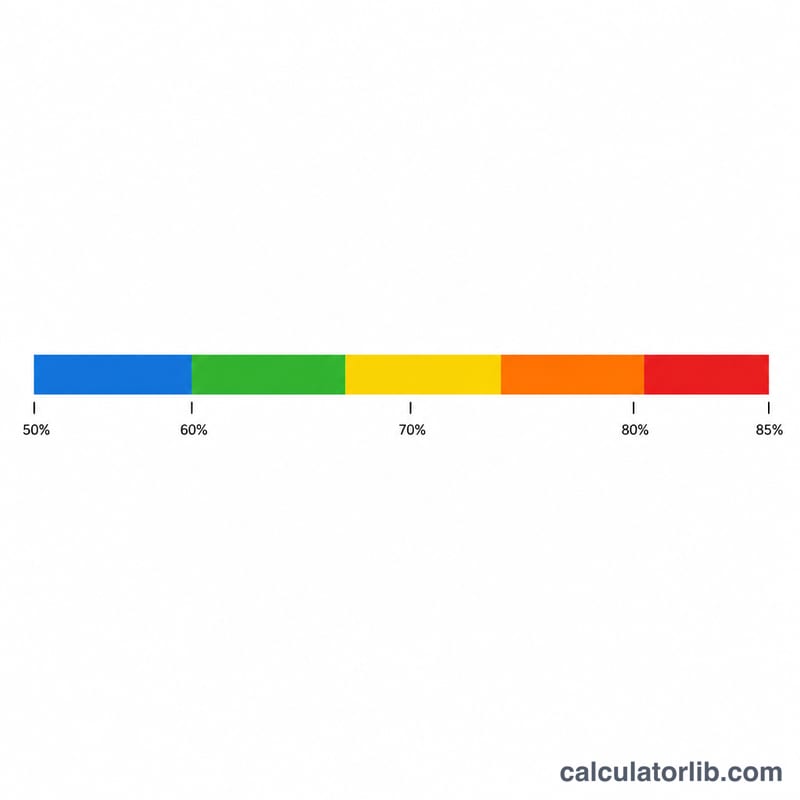
Enter your age in years and the calculator returns your estimated maximum heart rate in beats per minute (bpm). It also shows a broad aerobic training band — 50% to 85% of your MHR — which most general fitness guidelines use as a safe target heart rate zone.
The Formula Explained
The Fox equation is the simplest and most widely cited estimate of maximum heart rate:
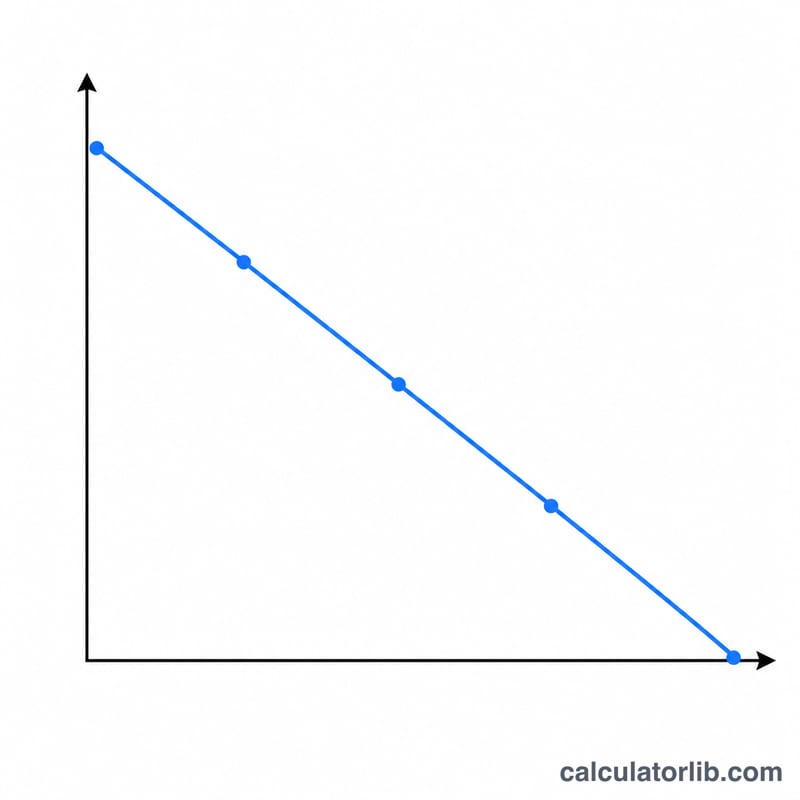
$$\text{MHR} = 220 - \text{Age (years)}$$
So a younger person has a higher predicted maximum, and the estimate decreases by one beat per year of age. Target zones are then a percentage of that maximum, e.g. 50% zone = \(\text{MHR} \times 0.50\) and 85% zone = \(\text{MHR} \times 0.85\).
Worked Example
For a 40-year-old: $$\text{MHR} = 220 - 40 = 180 \text{ bpm}$$ Their 50% zone is \(180 \times 0.50 = 90\) bpm and their 85% zone is \(180 \times 0.85 = 153\) bpm, giving a target training band of roughly 90–153 bpm.
FAQ
Is the 220 - age formula accurate? It is a population estimate and can be off by 10–12 bpm for any individual. It is useful as a starting point, not a precise medical figure.
What is a target heart rate zone? It is the range of heart rates that produce an effective cardio workout — typically 50–85% of maximum for general fitness.
Should I exercise at my maximum heart rate? No. Sustained effort at MHR is unsafe for most people; use it to set comfortable, intensity-based zones below the maximum.