
What is the VAT Return / Payable Calculator?
Value Added Tax (VAT) is a consumption tax collected at each stage of the supply chain. A VAT-registered business charges output VAT on the goods and services it sells, and pays input VAT on the goods and services it buys. At the end of each VAT period (often quarterly) the business reconciles the two figures and either pays the difference to the tax authority or claims a refund. This calculator performs that core reconciliation in one step.
How to use it
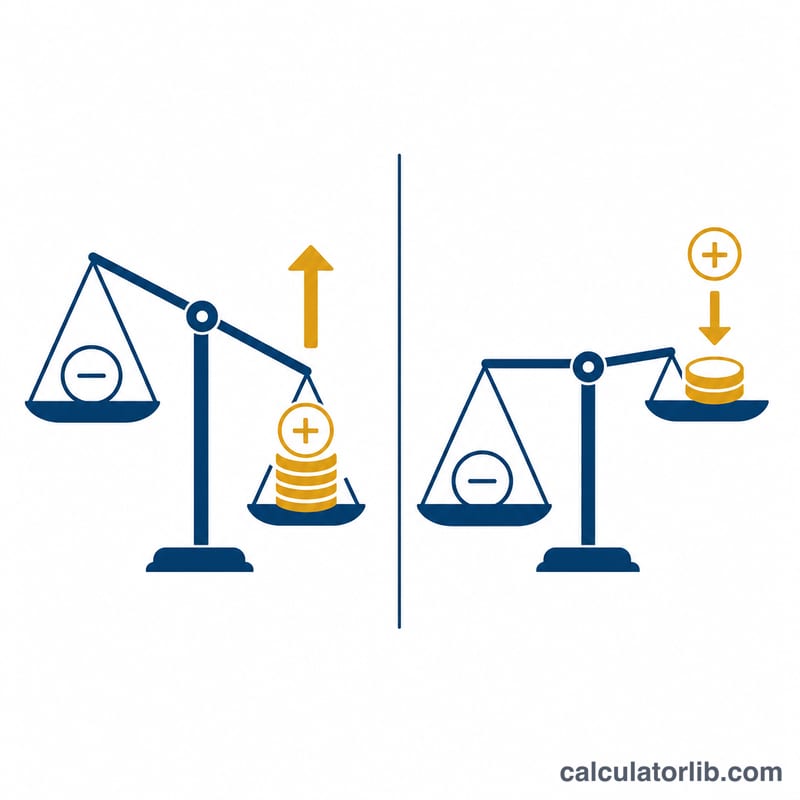
Enter the total output VAT you collected on sales during the period, then enter the total input VAT you paid on eligible purchases and expenses. The calculator subtracts input VAT from output VAT and shows the net result. A positive figure is the amount you owe; a negative figure means you are due a refund or credit.
The formula explained
The calculation is simply:
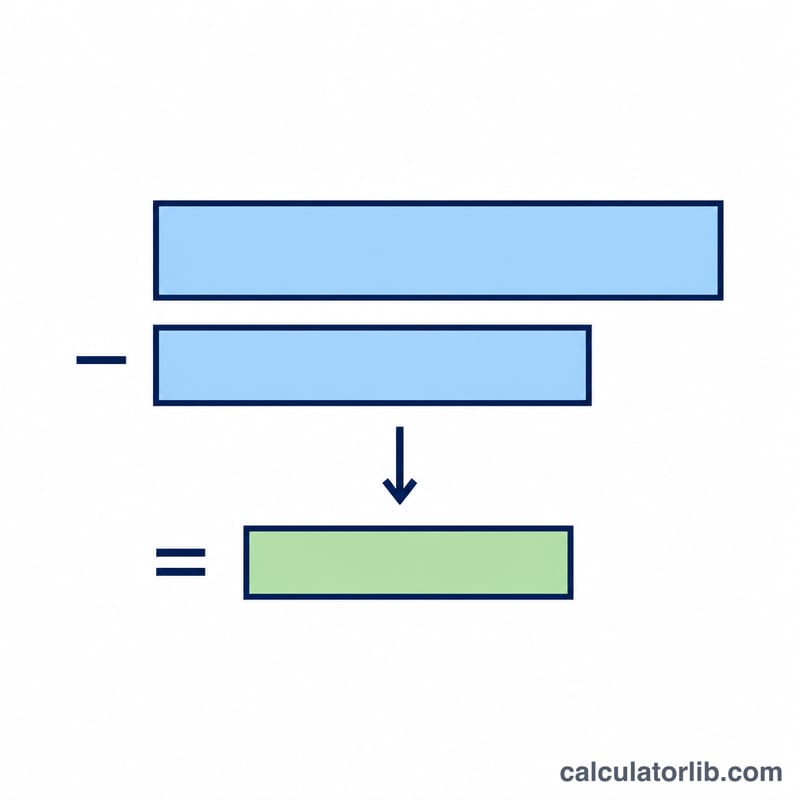
$$\text{VAT Payable} = \text{Output VAT} - \text{Input VAT}$$
Output VAT is the VAT element of your taxable sales. Input VAT is the recoverable VAT on your business purchases. The difference is your liability (or refund) for the return period. This is a universal VAT mechanism; specific rates, deadlines and reclaim rules vary by country and should be confirmed with your local tax authority.
Worked example
Suppose during the quarter you collected 12,000 in output VAT on sales and paid 7,500 in input VAT on stock and overheads. Then $$\text{VAT Payable} = 12{,}000 - 7{,}500 = \textbf{4{,}500}$$ which you remit to the tax authority. If instead your input VAT had been 14,000, the result would be \(12{,}000 - 14{,}000 = -2{,}000\), meaning a 2,000 refund is due to you.
FAQ
What if input VAT is more than output VAT? The result is negative, indicating a repayment or credit position rather than an amount owed.
Does this account for partial exemption or non-recoverable VAT? No — enter only the recoverable input VAT. Exclude any VAT you cannot reclaim before entering the figure.
Is this specific to one country? No. The output-minus-input method is the universal VAT mechanism, but rates, periods and reporting forms differ by jurisdiction.