
What Is Specific Gravity?
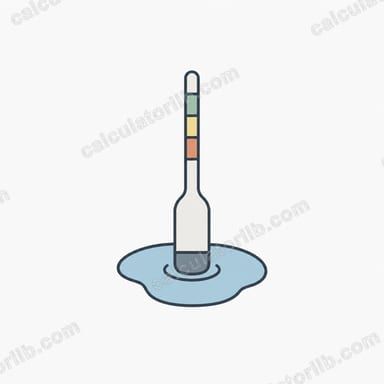
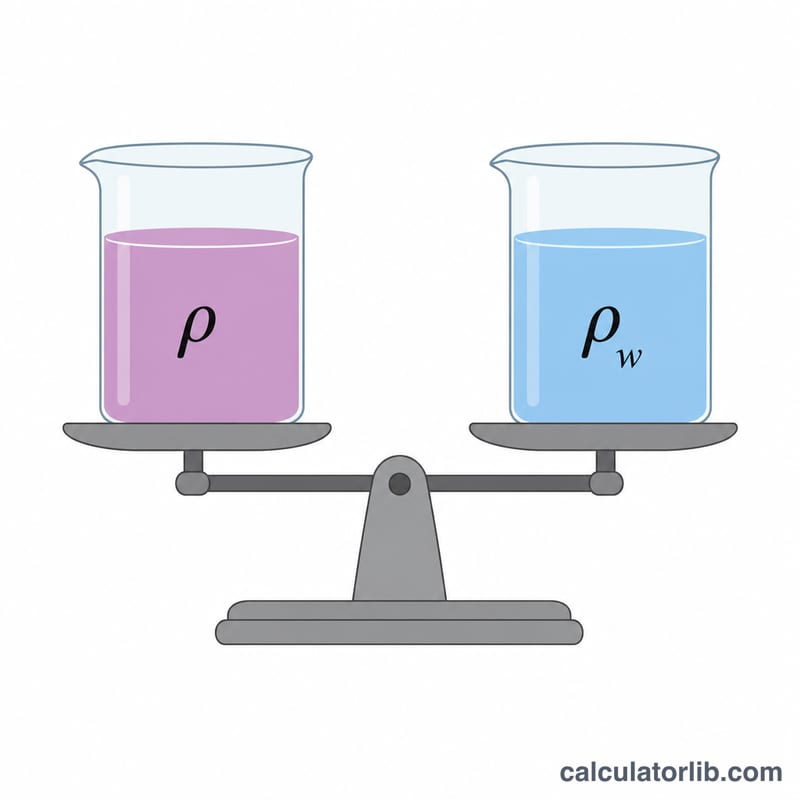
Specific gravity (SG), also called relative density, is the ratio of the density of a substance to the density of a reference material — for liquids, that reference is almost always pure water. Because it is a ratio of two densities, specific gravity is dimensionless: it has no units. A specific gravity less than 1 means the fluid is lighter than water and will float; greater than 1 means it is denser and will sink.
How to Use This Calculator
Enter the density of your fluid in kilograms per cubic metre (kg/m³) and the reference density of water. Water is approximately 1000 kg/m³ at 4 °C, which is the value used by default. Click calculate and the tool returns the specific gravity instantly, along with whether the fluid floats or sinks.
The Formula Explained
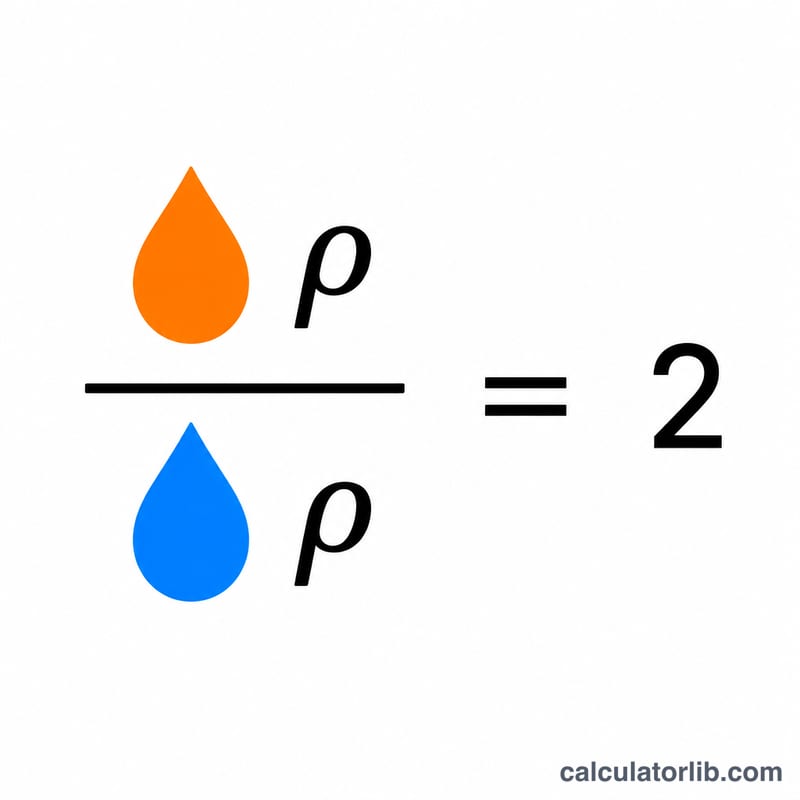
The relationship is simply $$\text{SG} = \frac{\rho_{\text{fluid}}}{\rho_{\text{water}}}$$ Both densities must be expressed in the same units so they cancel cleanly. If you measure density in g/cm³ instead, water is 1.0 g/cm³, so the specific gravity equals the numeric density value directly.
Worked Example
Consider an oil with a density of 850 kg/m³ and water at 1000 kg/m³. Then $$\text{SG} = \frac{850}{1000} = 0.85$$ Since 0.85 is less than 1, the oil floats on water — which is exactly why oil slicks sit on the surface of the ocean.
FAQ
Does temperature matter? Yes. Density varies with temperature, so for precise work specify the temperature of both your fluid and the reference water (commonly 4 °C or 20 °C).
Can specific gravity exceed 1? Absolutely. Seawater (~1.025), glycerin (~1.26), and mercury (~13.6) all have specific gravities above 1 and sink in fresh water.
Is specific gravity the same as density? No. Density has units (kg/m³), while specific gravity is a pure ratio with no units. They are numerically equal only when density is expressed in g/cm³.