
What is WHIP?
WHIP stands for Walks plus Hits per Inning Pitched. It is one of the most widely used pitching statistics in baseball, measuring how many baserunners a pitcher allows for every inning thrown. A lower WHIP means the pitcher is keeping more runners off the bases, which generally correlates with run prevention and overall effectiveness.
How to use this calculator
Enter three numbers: the total walks (bases on balls) the pitcher has issued, the total hits allowed, and the number of innings pitched. Innings can include fractional outs — for example, two outs in an inning is recorded as 0.2 in standard baseball notation, so 6 innings and 2 outs is 6.2 (you may enter 6.67 for a more precise decimal if you prefer). The calculator returns the WHIP rounded to three decimals, the standard display format.
The formula explained
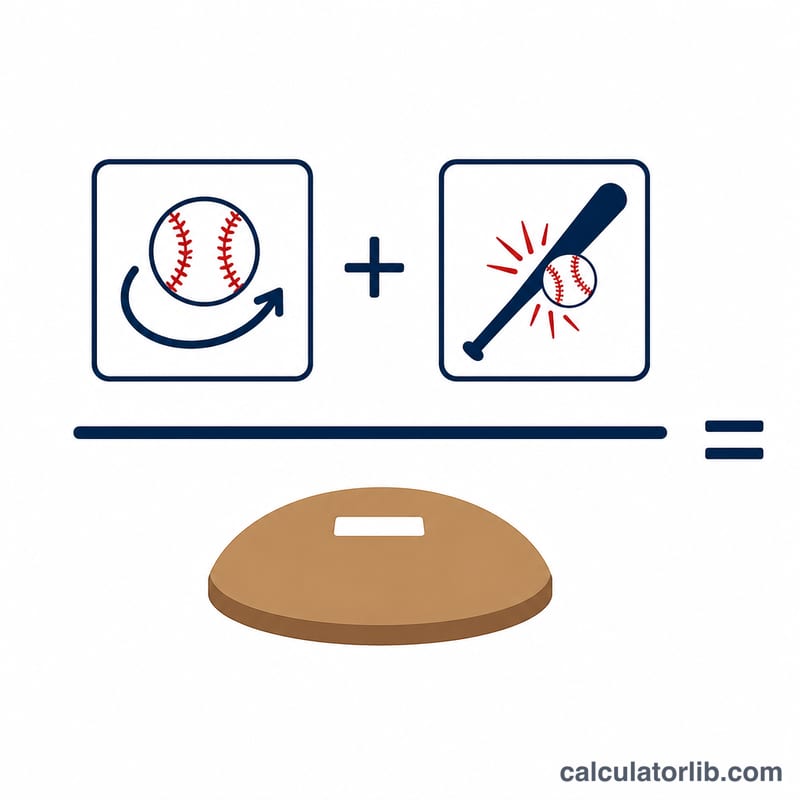
The formula is simply $$\text{WHIP} = \frac{\text{Walks (BB)} + \text{Hits (H)}}{\text{Innings Pitched}}$$ Note that hit batsmen and runners reaching on error are not counted — only walks and hits. This keeps WHIP focused on the two outcomes most directly controlled by the pitcher.
Worked example
Suppose a pitcher has issued 30 walks, allowed 120 hits, and thrown 150 innings. Add walks and hits: \(30 + 120 = 150\) baserunners. Divide by innings: $$\frac{150}{150} = \mathbf{1.000}$$ A WHIP of 1.00 is considered excellent, typically the mark of an ace.
FAQ
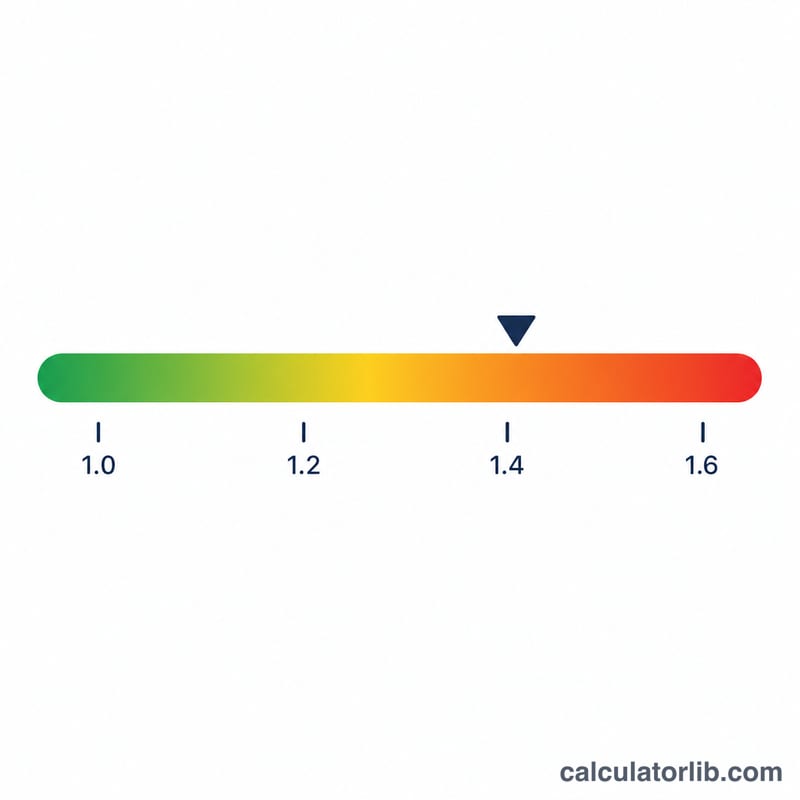
What is a good WHIP? Below 1.00 is elite, 1.00–1.10 is excellent, around 1.30 is league average, and above 1.50 is poor.
Why doesn't WHIP include strikeouts or earned runs? WHIP only measures baserunners allowed via walks and hits; ERA captures runs scored separately.
Do intentional walks count? Yes — all walks, intentional or not, are included in WHIP.