What is an Auto Lease?
An auto lease is a long-term rental contract on a new (or sometimes used) vehicle. Instead of buying the car outright or financing it with a loan, you pay a monthly fee for the right to drive it for a fixed term — typically 24, 36, or 48 months — then return it to the dealer at the end. The fundamental economic premise: you only pay for the portion of the vehicle's value you "use up" during the lease, not its full price.
Lease vs. Loan: Why Payments Differ
If you finance a $40,000 car at 6% over 36 months, you're paying down the entire $40,000 plus interest. With a lease, you only pay down the difference between the car's starting price and its residual value — what the leasing company expects the car to be worth at lease-end. That's why lease payments on the same vehicle are usually 30–50% lower than equivalent loan payments. The catch: you don't own anything at the end.
Key Lease Terminology
- Capitalized Cost (Cap Cost): The negotiated selling price of the vehicle. Just like buying, this is negotiable — never accept MSRP.
- Cap Cost Reduction: Down payment plus trade-in equity, both of which lower the amount you finance.
- Adjusted Capitalized Cost: Cap Cost minus all reductions. The actual amount being financed.
- Residual Value: The car's projected value at lease-end, set by the financing institution (not the dealer). Higher residual = lower depreciation = lower monthly payment.
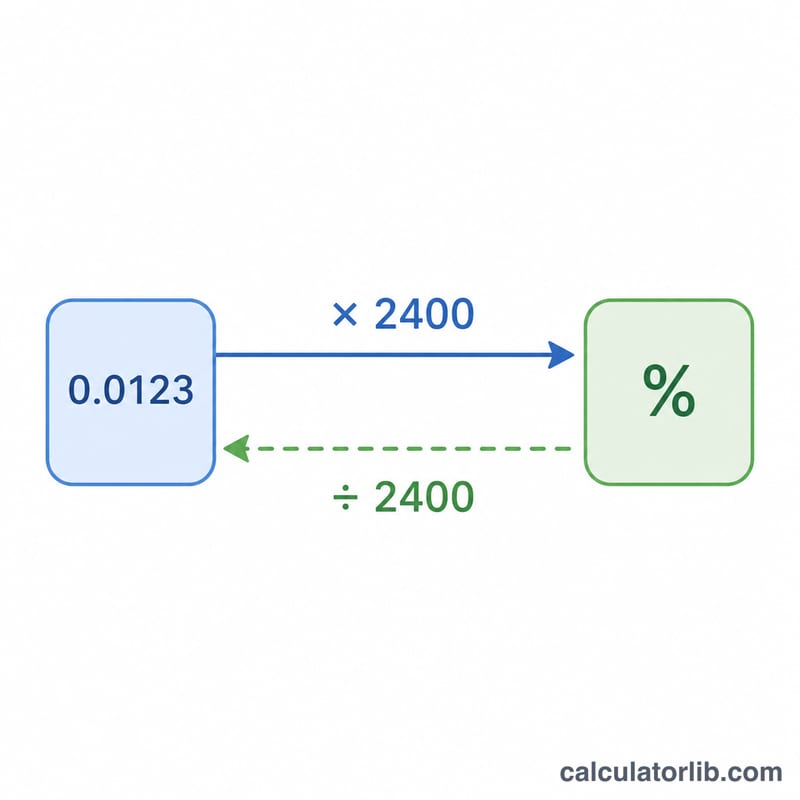
- Money Factor: The lease's equivalent of an interest rate, expressed as a tiny decimal (e.g., 0.00250). Multiply by 2400 to get the equivalent APR.
- Lease Term: Length of the lease in months. Most run 24 to 48; 36 is the sweet spot for warranty coverage.
- Mileage Allowance: Annual miles included (typically 10,000–15,000). Going over costs $0.15–$0.30 per mile at lease-end.
How the Monthly Payment is Calculated
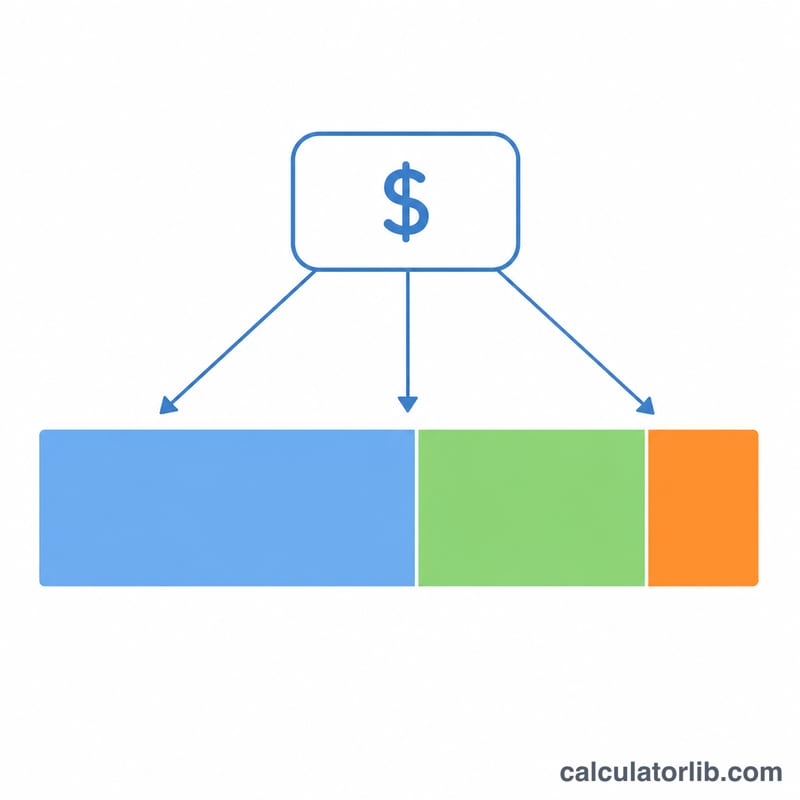
Every monthly lease payment in the U.S. has three components added together:
- Depreciation Fee. The portion of the car's value you "consume" each month: \(\frac{\text{Adjusted Cap Cost} - \text{Residual}}{\text{Term}}\). This is the largest piece for most leases.
- Finance Charge (Rent Charge). Effectively interest on both the financed portion and the residual: \((\text{Adjusted Cap Cost} + \text{Residual}) \times \text{Money Factor}\). The "+ Residual" surprises many people — it's because the lessor is also financing the carry of the residual.
- Monthly Sales Tax. In most U.S. states, sales tax is applied to each monthly payment rather than the full vehicle price upfront: \((\text{Depreciation} + \text{Finance}) \times \text{Tax Rate}\). A few states (NY, NJ, OH, etc.) tax the entire lease at signing instead.
Money Factor and APR
Money factor is just an interest rate dressed up. The conversion is:
$$\text{APR (\%)} = \text{Money Factor} \times 2400$$
So a money factor of 0.00208 equals an APR of about 5.0%, and 0.00250 equals 6.0%. Always ask the dealer for the money factor in writing — some markup is common, and a 0.001 increase ($2.40 APR points) costs hundreds of dollars over a 36-month lease.
Worked Example
Lease a $50,000 car with $8,000 down, $5,000 trade-in, 6% APR (money factor 0.00250), 36-month term, 6% sales tax, and a $25,000 residual:
- Adjusted Cap Cost = \(\$50{,}000 - \$8{,}000 - \$5{,}000 = \$37{,}000\)
- Monthly Depreciation = \(\frac{\$37{,}000 - \$25{,}000}{36} = \$333.33\)
- Monthly Finance = \((\$37{,}000 + \$25{,}000) \times 0.00250 = \$155.00\)
- Monthly Sales Tax = \((\$333.33 + \$155.00) \times 6\% = \$29.30\)
$$\text{Monthly Payment} = \$333.33 + \$155.00 + \$29.30 = \$517.63$$
Solving Backward: How Much Car Can I Afford?
Switch this calculator to "Auto Price from Monthly Payment" mode to ask the inverse question: given a target monthly payment of $600 (and the same term, rate, down payment, residual, and tax assumptions), what's the most expensive car you can lease? The calculator works the depreciation-plus-finance equation in reverse to surface the maximum sticker price your budget can support — useful when you're shopping by payment rather than by vehicle.
When Leasing Makes Sense
- You like driving newer cars. Leasing lets you cycle into a new vehicle every 2–4 years with steadier costs.
- You drive predictable miles. Under the included allowance and you avoid the per-mile penalties.
- You can write it off. Self-employed and small-business owners can deduct lease payments as a business expense more cleanly than depreciation on a purchased vehicle.
- You want the latest safety/tech. Frequent turnover keeps you on the current driver-assist generation.
Leasing makes less sense if you drive heavy miles, customize your cars, plan to keep them past the warranty, or want to build equity in the vehicle.
Common Pitfalls
- Putting cash down on a lease. If the car is totaled or stolen early, that down payment is generally not recoverable. Many lease advisers recommend zero or minimal cap cost reduction.
- Accepting an inflated cap cost. Negotiate the selling price first, before discussing monthly payment — dealers will pad the cap cost and shift the apparent savings to other lines.
- Underestimating mileage. Buy extra miles at signing (often $0.05–$0.10/mi) instead of paying $0.20–$0.30 at turn-in.
- Skipping gap insurance. If the car is totaled, you owe the difference between insurance payout and the remaining lease balance — gap covers it. Many leases include it; verify.
- Excess wear-and-tear charges. Inspect the car carefully before turn-in; repair or document minor damage to avoid surprise fees.
Typical Residual Values by Lease Term
The residual value is the lessor's estimate of what the vehicle will be worth at lease-end, expressed as a percentage of MSRP. It is set by the leasing company (often using guides such as ALG/Residual Value Guides) and is not negotiable — but a higher residual lowers your monthly payment because you finance less depreciation. The table below shows typical ranges; actual figures vary by make, model, trim, and projected mileage.
| Vehicle type | 24 months | 36 months | 48 months |
|---|---|---|---|
| Economy/compact sedan | 62%–68% | 52%–58% | 43%–48% |
| SUV / crossover | 64%–70% | 54%–60% | 45%–50% |
| Pickup truck | 66%–72% | 56%–62% | 47%–53% |
| Luxury sedan | 58%–64% | 48%–54% | 38%–44% |
| Electric vehicle (EV) | 55%–62% | 45%–52% | 36%–43% |
Key points:
- Shorter terms have higher residual percentages because less time has passed, so less depreciation is financed per month.
- Trucks and many SUVs hold value best; luxury cars and EVs typically depreciate faster, lowering their residual.
- Higher annual mileage allowances (e.g. 15,000 vs 10,000 mi/yr) reduce the residual by a few points.
- The dollar residual used in the lease formula is the percentage multiplied by MSRP. For example, a $40,000 SUV with a 57% 36-month residual has a residual of $22,800.