
What Is the Ceiling Area Calculator?
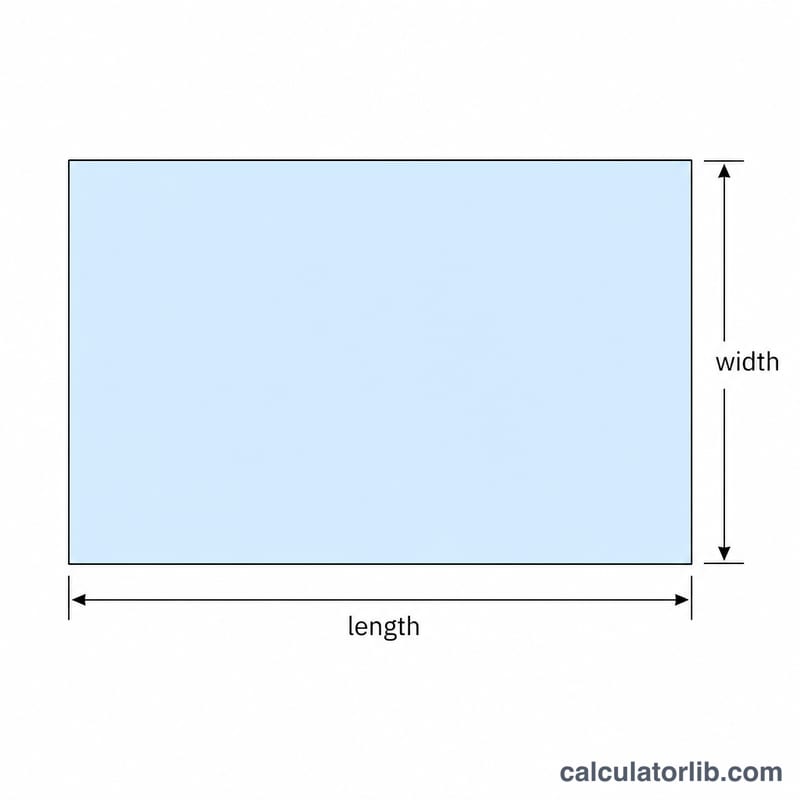
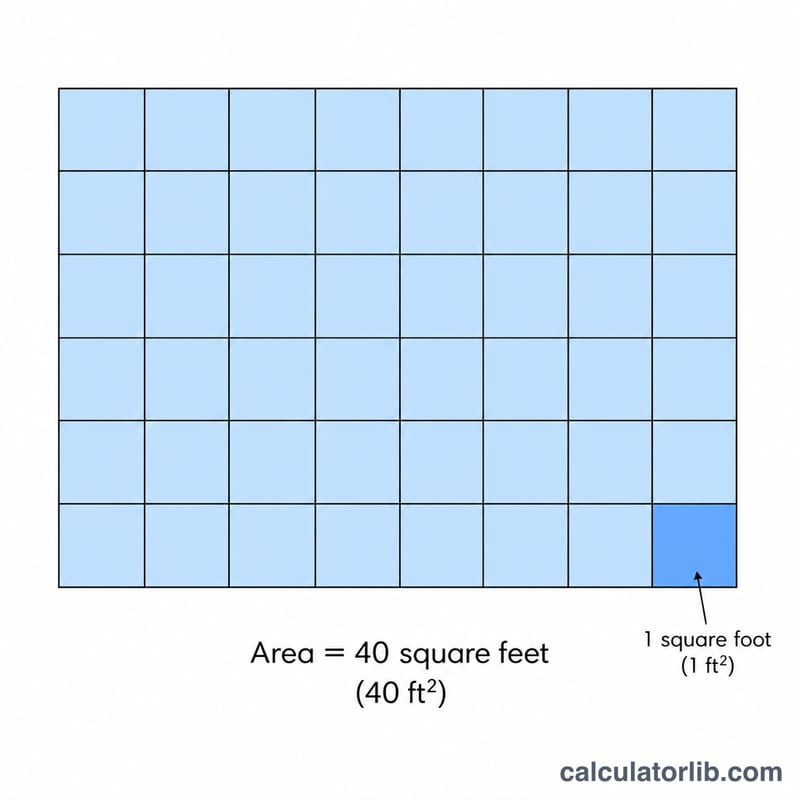
The Ceiling Area Calculator finds the total surface area of a flat, rectangular ceiling using two measurements: its length and its width. The result, expressed in square feet, is exactly what you need when buying paint, ordering ceiling tiles, estimating drywall, or planning insulation. The same number is also shown in square meters and square yards so you can match whatever unit your materials are sold in.
How to Use It
Measure the length and the width of the room at the ceiling level (for most rooms these equal the floor dimensions). Enter both values in feet and the calculator instantly returns the ceiling area. For non-rectangular rooms, split the ceiling into rectangles, calculate each separately, and add the results.
The Formula Explained
A rectangular ceiling's area is simply $$A = \text{length} \times \text{width}$$ If a room is 12 ft long and 10 ft wide, the ceiling area is \(12 \times 10 = 120\) square feet. To convert, multiply square feet by 0.092903 for square meters, or divide by 9 for square yards.
Worked Example
Consider a bedroom that measures 15 ft by 12 ft. The ceiling area is $$15 \times 12 = 180 \text{ square feet}$$ That converts to about 16.72 m² and 20 yd². If a gallon of paint covers 350 ft², a single gallon comfortably covers this ceiling in one coat.
FAQ
Does the ceiling area equal the floor area? For a standard flat ceiling with vertical walls, yes — they share the same length and width.
How do I handle sloped or vaulted ceilings? Measure the actual slanted surface lengths rather than the floor footprint, since the angled area is larger than the floor below it.
Should I subtract for light fixtures or vents? For paint estimates it's safest not to subtract small openings — the extra coverage acts as a useful buffer for touch-ups and waste.