
What the Cylinder Area Calculator Does
This calculator works out the total surface area of a right circular cylinder from two simple measurements: the radius of the circular base and the height of the cylinder. Behind the result, it also breaks the geometry down into the parts that make it up — the curved (lateral) surface, the two flat circular ends, the circumference of the base, and a couple of useful ratios that describe the cylinder's proportions.
The Inputs You Enter
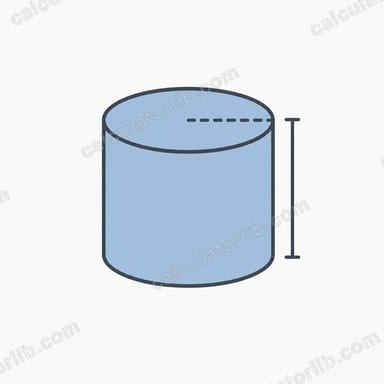
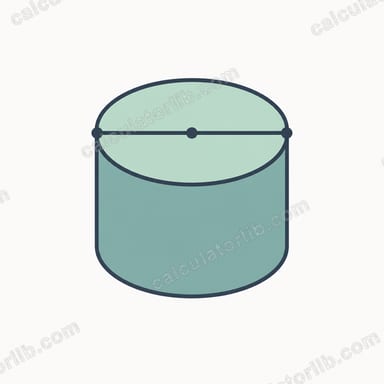
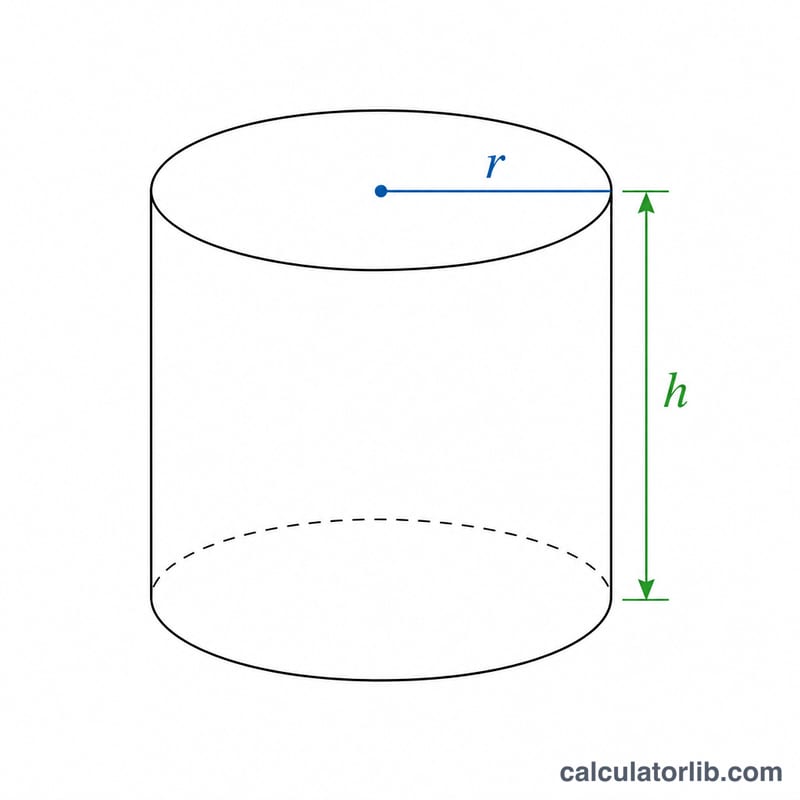
- Radius (r): the distance from the centre of the circular base to its edge.
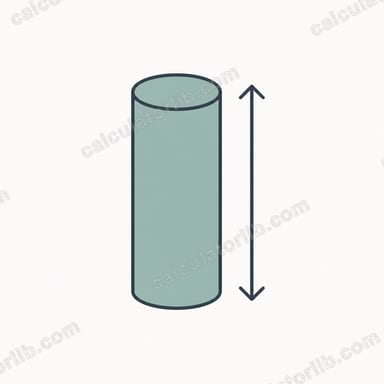
- Height (h): the straight-line distance between the two circular ends.
Use the same unit for both fields (cm, m, inches). Area results come back in those units squared.
The Formula
Total surface area is calculated with:
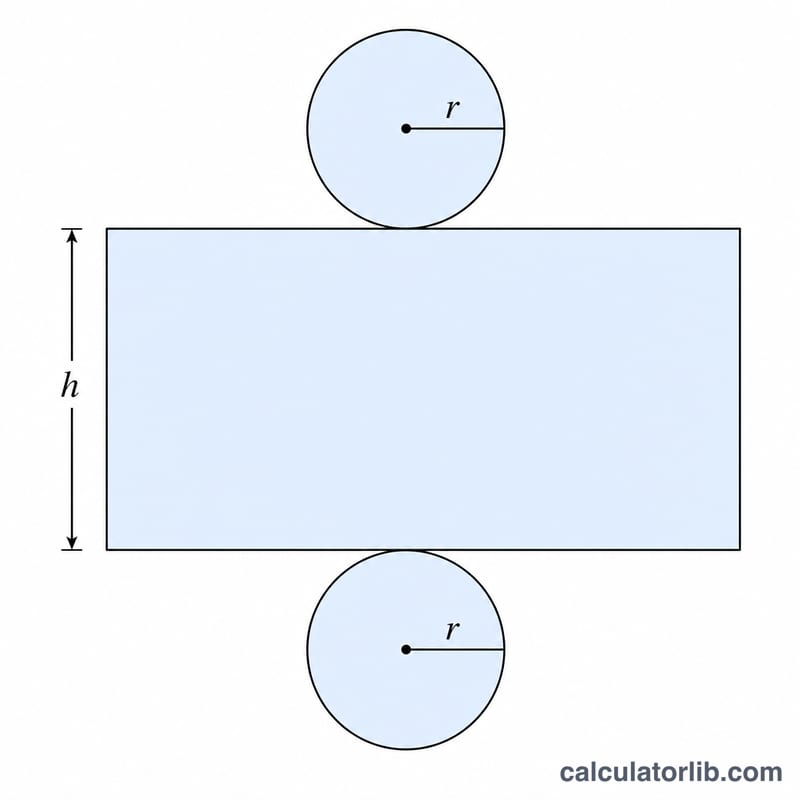
A = 2πrh + 2πr²
The two pieces of that formula each have meaning:
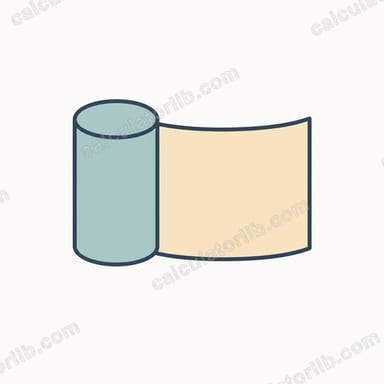
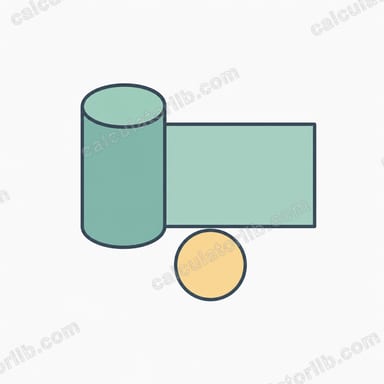
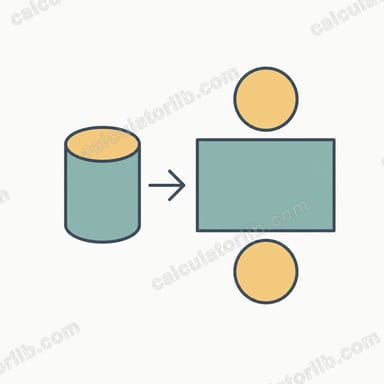
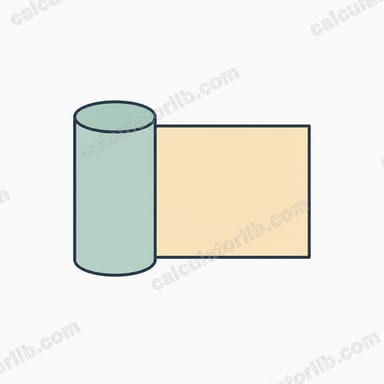
- Lateral surface area = 2πrh — the curved side, like unrolling a label into a rectangle.
- Base area = πr² — the area of one circular end; the calculator counts two (top and bottom), giving 2πr².
It also reports the base circumference (2πr), the height-to-circumference ratio (h ÷ 2πr), and the lateral-to-total ratio (how much of the surface is the curved side).
Worked Example
Take a cylinder with radius r = 3 and height h = 5:
- Lateral area = 2 × π × 3 × 5 = 94.25
- Base area (one end) = π × 3² = 28.27
- Total surface area = 94.25 + (2 × 28.27) = 150.80
- Base circumference = 2 × π × 3 = 18.85
- Lateral-to-total ratio = 94.25 ÷ 150.80 ≈ 0.625 (about 62.5% is the curved side)
Frequently Asked Questions
Does this include both ends of the cylinder? Yes. The 2πr² term adds both the top and bottom circles. For an open-top container, subtract one base area (πr²).
What is lateral surface area? It's just the curved side without the ends — useful for working out how much material a label or wrap needs.
What does the height-to-circumference ratio tell me? It compares how tall the cylinder is to how far around its base goes, giving a quick sense of whether it's tall and thin or short and wide.