
What Is the Surface Area of a Cylinder?
A cylinder's total surface area is the combined area of its curved side plus its two circular ends (the top and bottom). It tells you how much material is needed to cover or wrap the shape — useful for labels, packaging, paint, sheet metal, and geometry homework. This calculator computes the total surface area along with the lateral (side) area and the combined base area, given the radius and height.
How to Use the Calculator
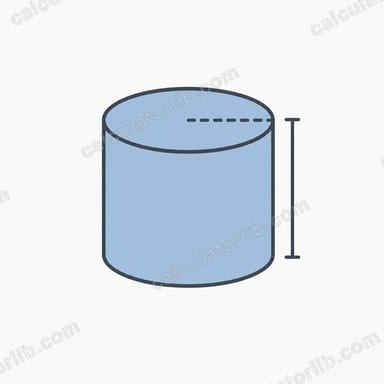
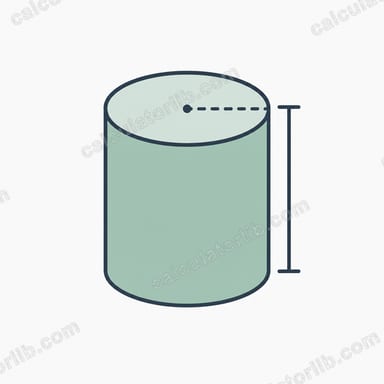
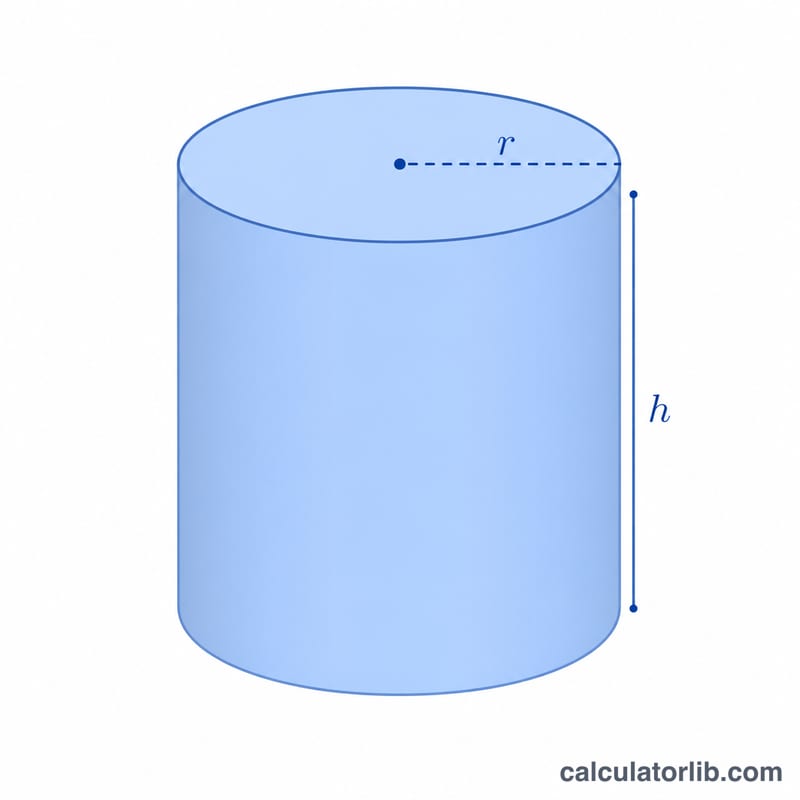
Enter the radius (r) of the circular base and the height (h) of the cylinder in any consistent unit (cm, m, inches, etc.). The calculator instantly returns the total surface area in square units, plus a breakdown of the lateral surface and the two bases.
The Formula Explained
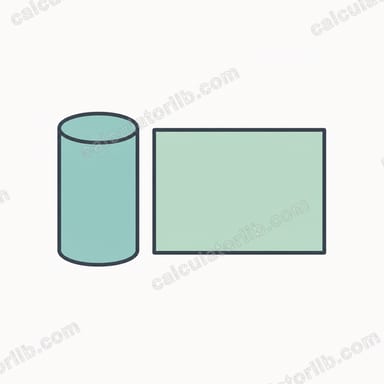
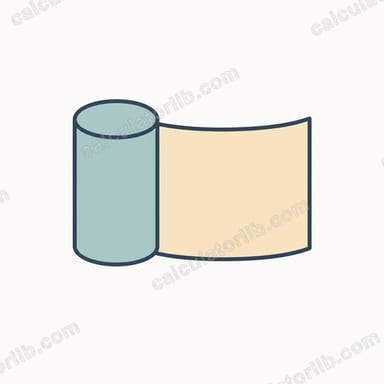
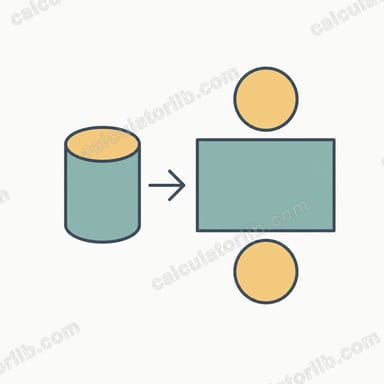
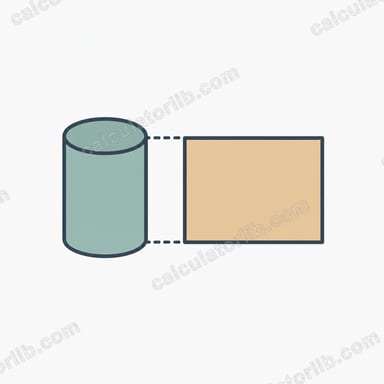
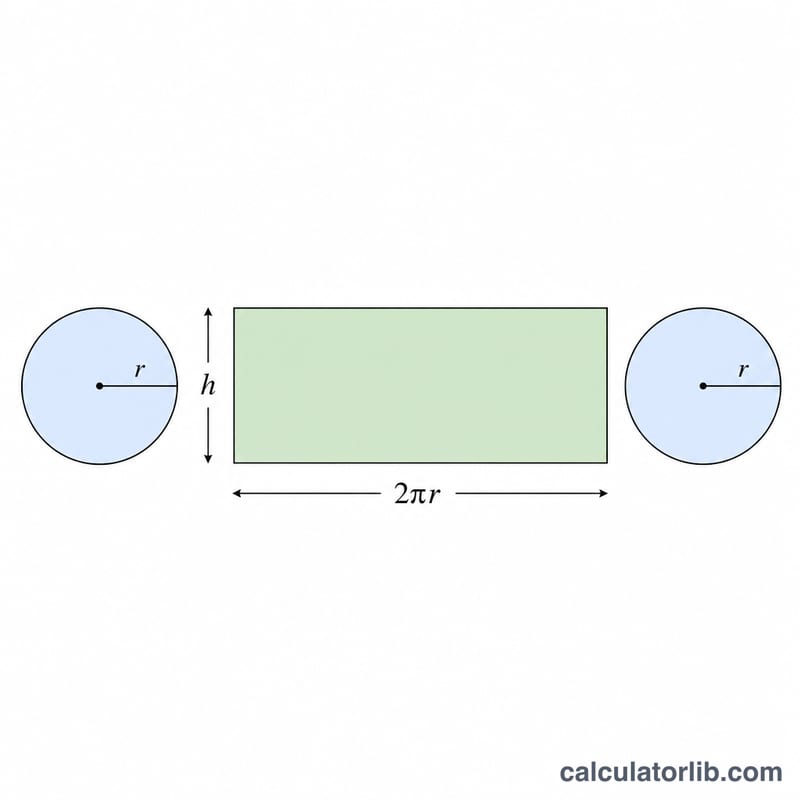
The full formula is $$A = 2\pi r^2 + 2\pi rh$$ The term \(2\pi r^2\) is the area of the two circular ends (each circle is \(\pi r^2\), and there are two). The term \(2\pi rh\) is the lateral surface — imagine unrolling the curved side into a rectangle whose width is the circle's circumference (\(2\pi r\)) and whose height is \(h\).
Worked Example
Suppose \(r = 3\) and \(h = 5\). The two bases give $$2\pi(3^2) = 2\pi(9) \approx 56.55$$ The lateral side gives $$2\pi(3)(5) = 30\pi \approx 94.25$$ Adding them: $$A \approx 56.55 + 94.25 = 150.80 \text{ square units}$$
FAQ
What units does the answer use? Square units of whatever unit you entered — if you used centimeters, the result is in square centimeters.
How do I find only the side area? Use the lateral surface area, \(2\pi rh\), shown in the breakdown table. Use it when the cylinder is open (no top/bottom), like a tube.
What if I have the diameter instead of the radius? Divide the diameter by 2 to get the radius before entering it.