
What Is the Curved Surface Area of a Cylinder?
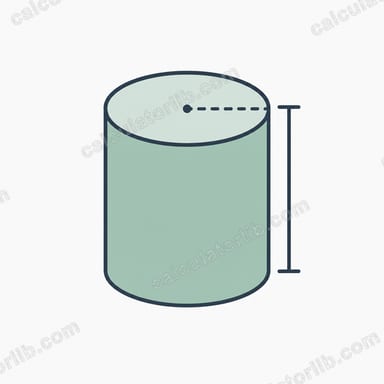
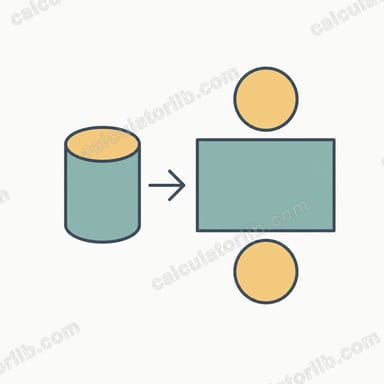
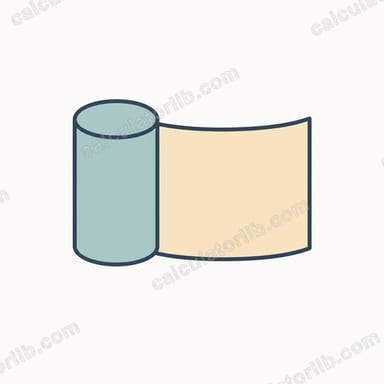
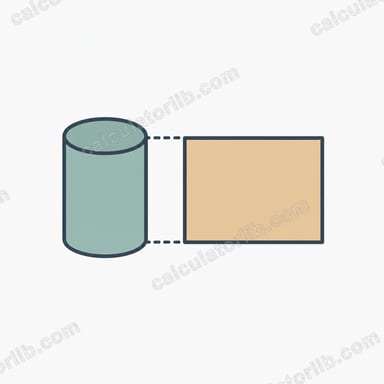
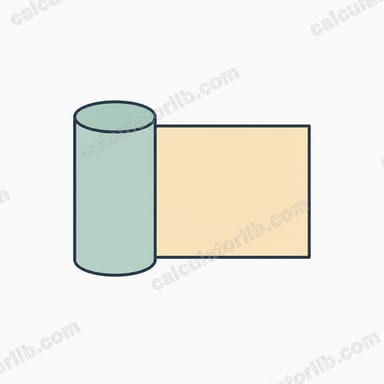
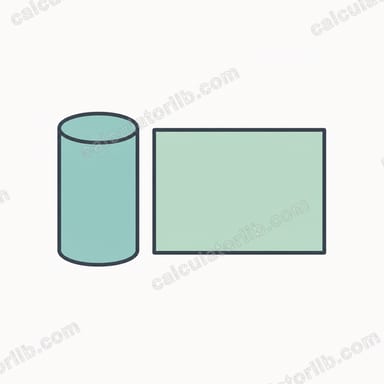
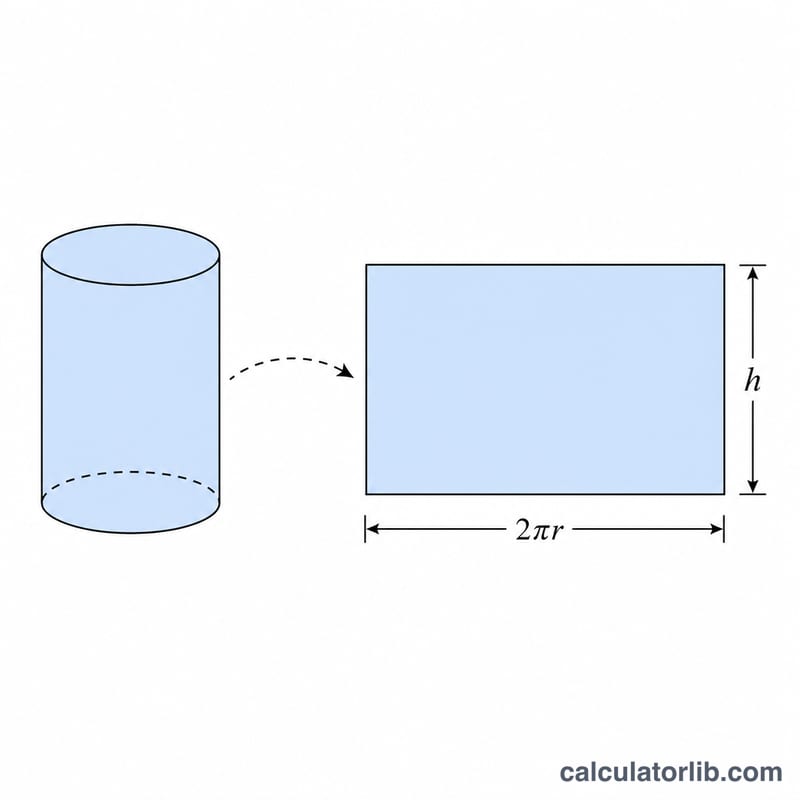
The curved surface area (CSA), also called the lateral surface area, of a cylinder is the area of the curved side that wraps around it — excluding the two circular end caps. If you imagine unrolling the side of a tin can into a flat rectangle, its width equals the circumference of the base (\(2\pi r\)) and its length equals the height (\(h\)). Multiplying these gives the curved surface area.
How to Use This Calculator
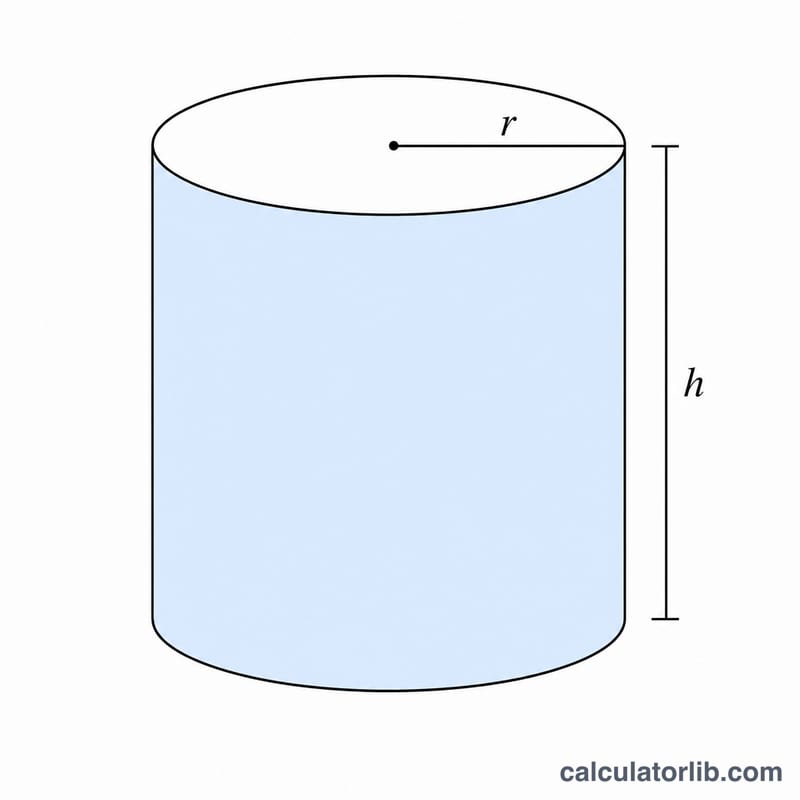
Enter the radius (r) of the circular base and the height (h) of the cylinder using any consistent unit (cm, m, inches, etc.). The calculator returns the curved surface area in the corresponding square units. Both values must be positive numbers.
The Formula Explained
The formula is:
$$\text{CSA} = 2\pi \cdot \text{Radius} \cdot \text{Height}$$
Here, \(2\pi r\) is the circumference of the circular base and \(h\) is the height. Because the side of the cylinder is essentially a rectangle when unrolled, its area is simply circumference × height. Note this differs from the total surface area, which adds the two circle caps: \(\text{TSA} = 2\pi r(r + h)\).
Worked Example
Suppose a cylinder has a radius of 5 cm and a height of 10 cm. Then:
$$\text{CSA} = 2 \times \pi \times 5 \times 10 = 100\pi \approx 314.16 \text{ cm}^2$$
So the curved surface needs about 314.16 square centimetres of material to cover.
FAQ
Does CSA include the top and bottom circles? No. Curved surface area covers only the rounded side. To include both caps, use the total surface area formula \(2\pi r(r + h)\).
What units does the result use? Whatever unit you entered, squared. If r and h are in metres, the CSA is in square metres.
Can I use this for a pipe or tube? Yes — for the outer surface of a pipe, use its outer radius. For a hollow tube you would calculate inner and outer surfaces separately.