
What Is a Floor Area Calculator?
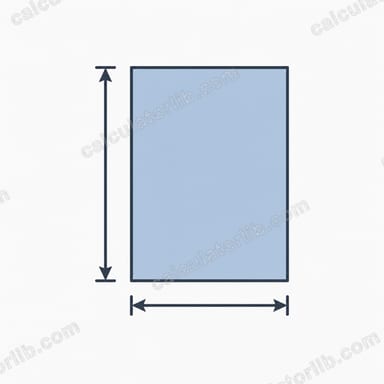
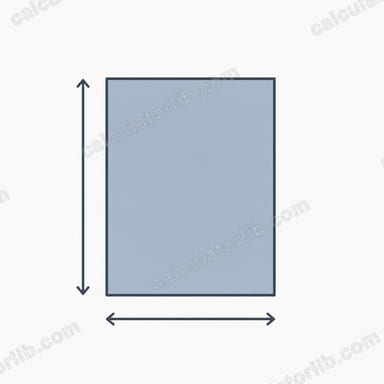
A floor area calculator works out the total surface area of a rectangular room or space from two simple measurements: its length and its width. The result, commonly called square footage, is essential for buying flooring, paint, tiles, carpet, or for estimating rent, HVAC sizing, and property listings.
How to Use It
Measure the room's length and width in feet. Enter both numbers into the calculator and it instantly returns the area in square feet, along with handy conversions to square meters and square yards. For L-shaped or irregular rooms, split the space into rectangles, calculate each one separately, and add the results together.
The Formula Explained
The core equation is \(A = \text{length} \times \text{width}\). Because both measurements share the same unit (feet), the product is automatically in square feet (ft²). To convert to metric, multiply the square footage by 0.09290304 to get square meters. To get square yards, divide square feet by 9 (since one yard equals three feet, one square yard equals nine square feet).
$$\text{Area} = \text{Length (ft)} \times \text{Width (ft)}$$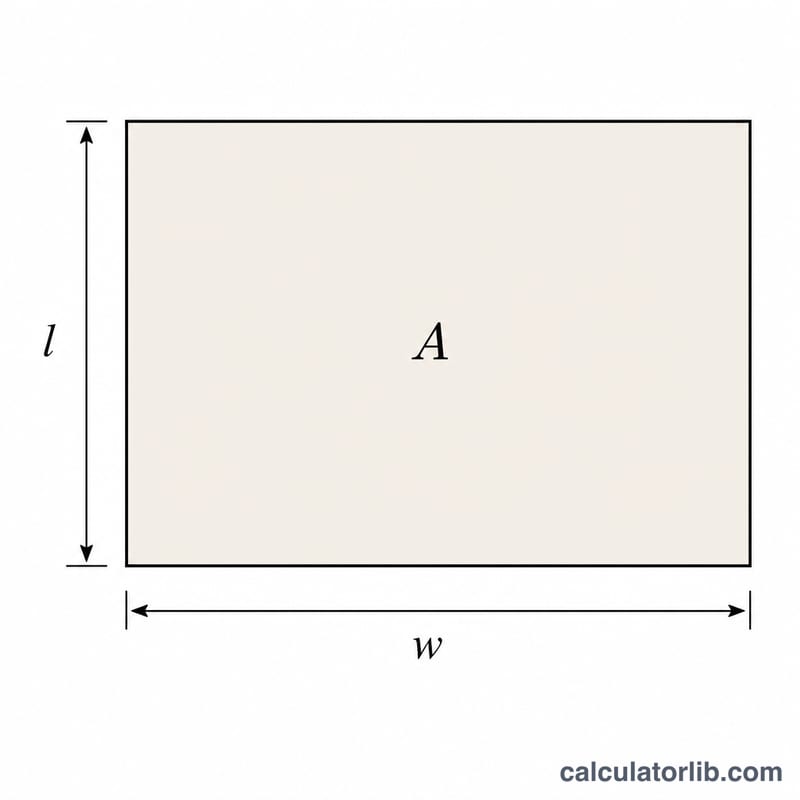
Worked Example
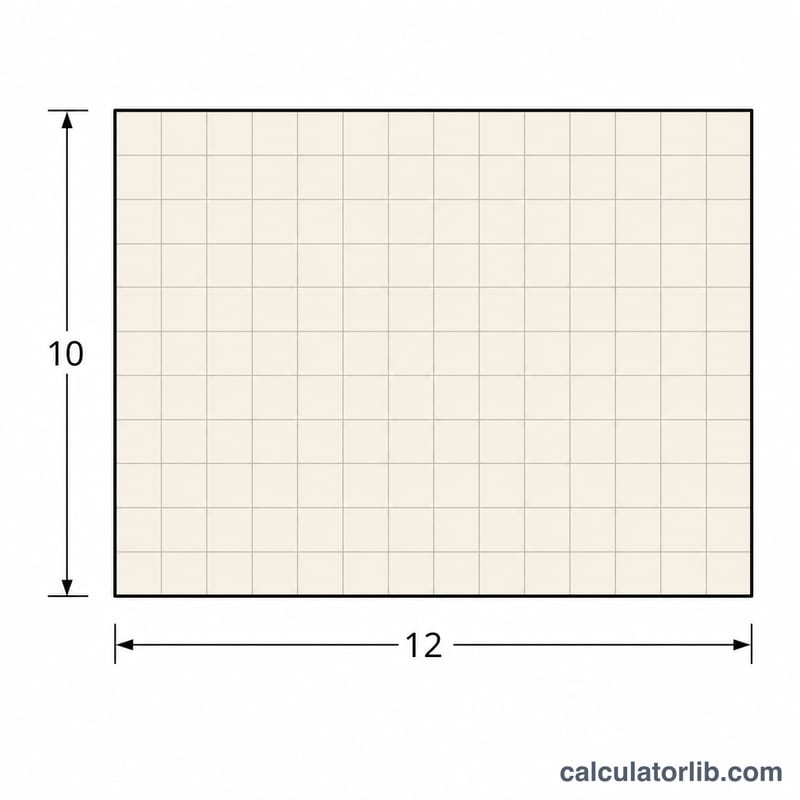
Suppose a living room measures 12 ft long by 10 ft wide. The floor area is $$12 \times 10 = 120 \text{ square feet}.$$ That equals roughly 11.15 m² or about 13.33 square yards. If carpet costs $4 per square foot, this room would need about $480 of carpet before waste.
FAQ
How do I measure an irregular room? Break it into rectangles, calculate each area, then sum them. Subtract any cut-outs like alcoves you won't cover.
Should I add extra for waste? Yes — for flooring and tile, add 5–10% to account for cuts, breakage, and pattern matching.
Can I use meters instead of feet? The math is identical: \(\text{length} \times \text{width}\) gives the area in whatever unit you enter. Just label the result accordingly.