
What the Cylinder Height Calculator Does
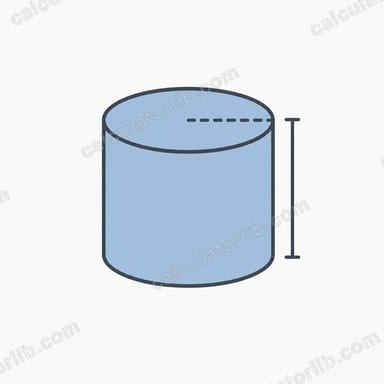
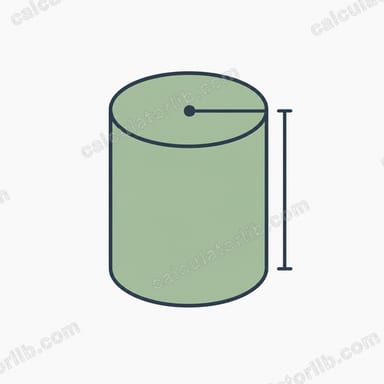
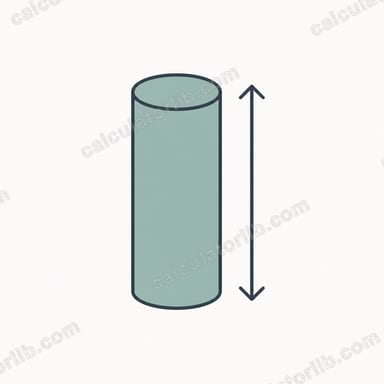
This calculator finds the height of a cylinder when you already know its volume and the radius of its circular base. Instead of rearranging the volume formula by hand, you enter two numbers and get the vertical dimension instantly — along with several useful extras the tool computes automatically: the base area, the total surface area, and the lateral (side) surface area.
It is handy for engineers, designers, students and anyone sizing tanks, pipes, columns, containers or storage vessels where the capacity is fixed but you need to know how tall the shape must be.
The Inputs You Enter
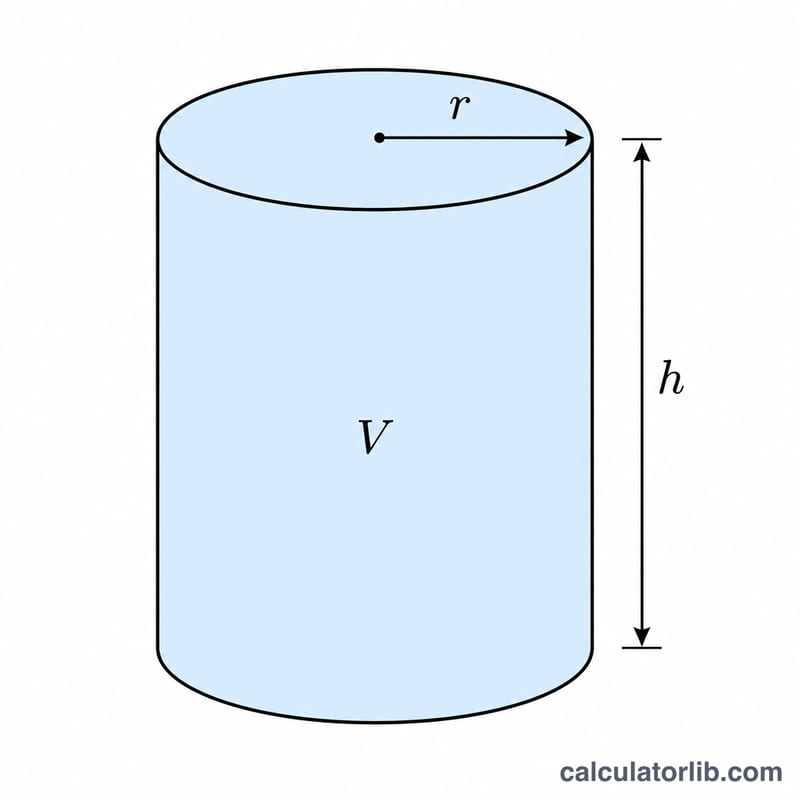
- Cylinder Volume — the total capacity of the cylinder in cubic units (for example cubic metres, cubic centimetres or cubic inches).
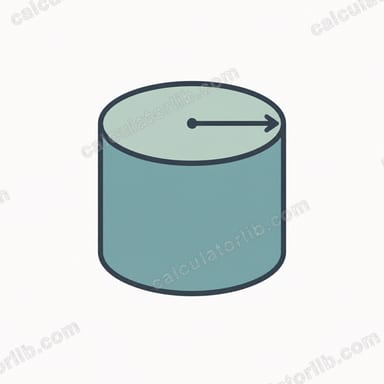
- Cylinder Radius — the distance from the centre of the circular base to its edge, in matching linear units.
Keep your units consistent: if the volume is in cubic centimetres, enter the radius in centimetres so the resulting height comes out in centimetres.
The Formula Explained
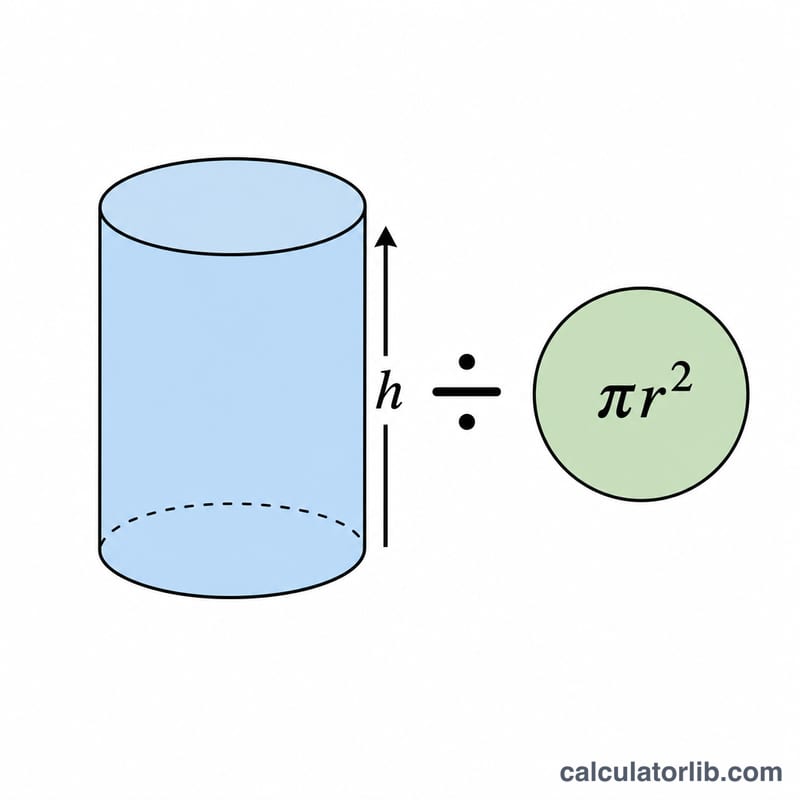
The volume of a cylinder is V = πr²h. Solving that for height gives the formula this tool uses:
h = V / (π × r²)
The denominator πr² is simply the area of the circular base. So height is just the volume divided by the base area — pour a known volume into a known footprint and this tells you how high it stacks. The calculator also reports:
- Base area = πr²
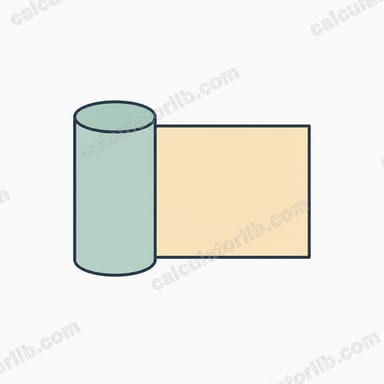
- Lateral surface area = 2πr × h
- Total surface area = 2πr × (r + h)
Worked Example
Suppose a cylindrical tank holds a volume of 500 cubic units and has a radius of 5 units.
- Base area = π × 5² = 78.54 square units
- Height = 500 / 78.54 = 6.37 units
- Lateral surface area = 2 × π × 5 × 6.37 = 200.1 square units
- Total surface area = 2 × π × 5 × (5 + 6.37) = 357.2 square units
So a 500-unit cylinder with a 5-unit radius must be about 6.37 units tall.
Frequently Asked Questions
Why is the radius squared? Because the base is a circle, and a circle's area grows with the square of its radius. Doubling the radius quadruples the base area and therefore quarters the required height for the same volume.
What if I only know the diameter? Divide the diameter by two to get the radius before entering it. The formula always uses the radius.
What units does the height come out in? The same linear unit as your radius, provided your volume uses the cube of that unit (e.g. radius in inches and volume in cubic inches gives height in inches).